DPD
Productions
Makers of the...
"MilTenna"
Air Band Antennas
|
|
|
Official Photos- NASA Dryden -
Page 3
|
|
This page contains photos of aircraft
flown at NASA Dryden Flight Research Facility, past and
present. All North Spin photographs are Copyright © by
the photographers that took them, and are not to be
re-posted or redistributed.
|
|
|
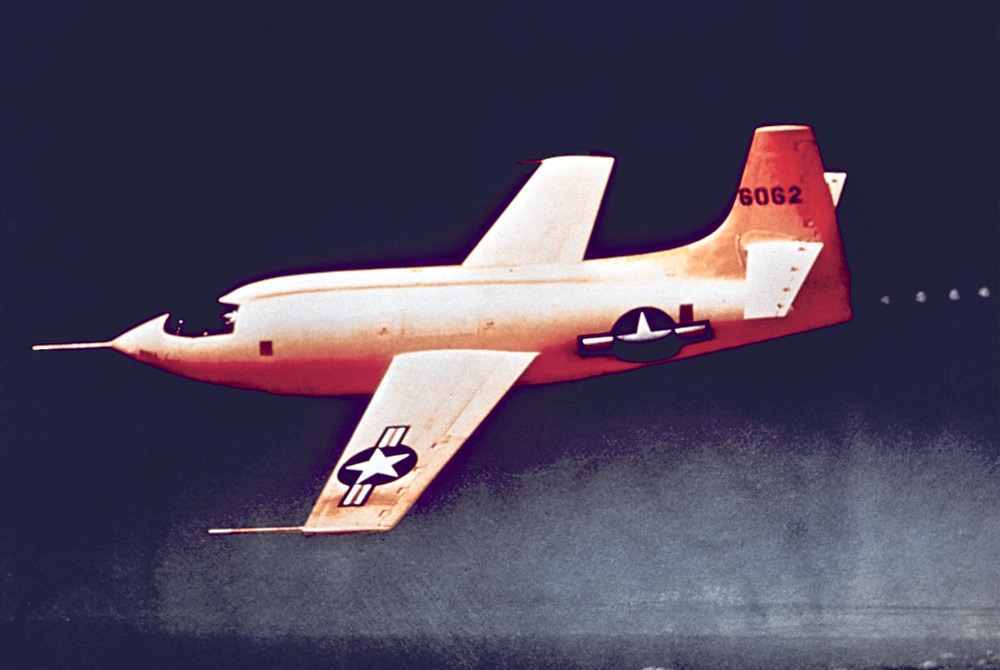
| Subject:
X-1-1 - AFFTC/NACA #46-0062 (Ship 1) -
NACA #? |
| Location: NASA
Dryden FRC - Edwards AFB, CA |
| Date: ?/?/1947 |
| Credit: NASA |
|
Notes: This X-1
was nicknamed "Glamorous Glennis" by
Chuck Yeager in honor of his wife.
X-1-1 was the first of three X-1's
built by Bell.
|
|
|
|
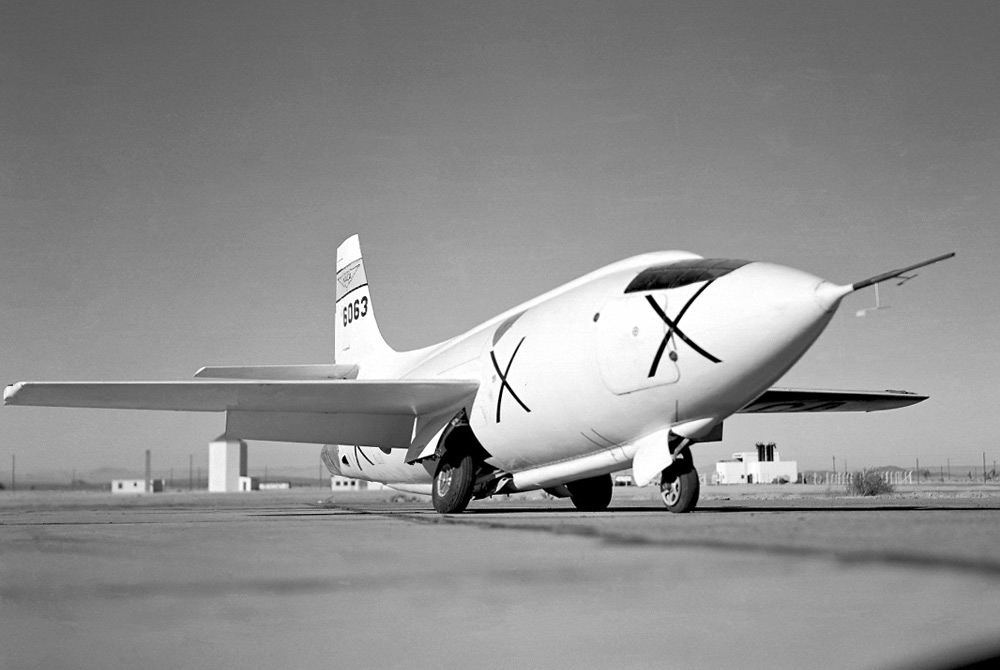
| Subject:
X-1-2 - AFFTC/NACA #46-0063 (Ship 2) -
NACA #? |
| Location: South
Base - Edwards AFB, CA |
| Date: ?/?/1951 |
| Credit: NASA |
|
Notes: The X-1-2
was the second X-1 delivered, and
flew until 10/23/1951, which
included 74 powered and un-powered
flights, with nine different pilots.
|
|
|
|
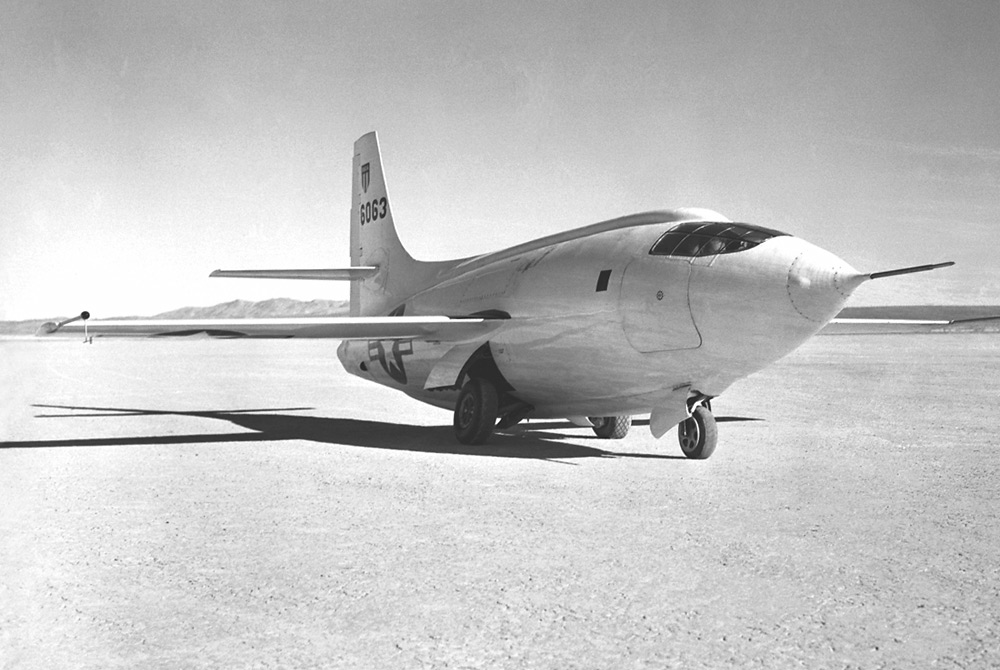
| Subject:
X-1-2 - AFFTC/NACA #46-0063 (Ship 2) -
NACA #? |
| Location: NASA
Dryden FRC - Edwards AFB, CA |
| Date: ?/?/1949 |
| Credit: NASA |
|
Notes: The X-1
aircraft were originally designated
XS-1 for 'Experimental Supersonic'.
All three aircraft were delivered in
white paint.
|
|
|
|
|
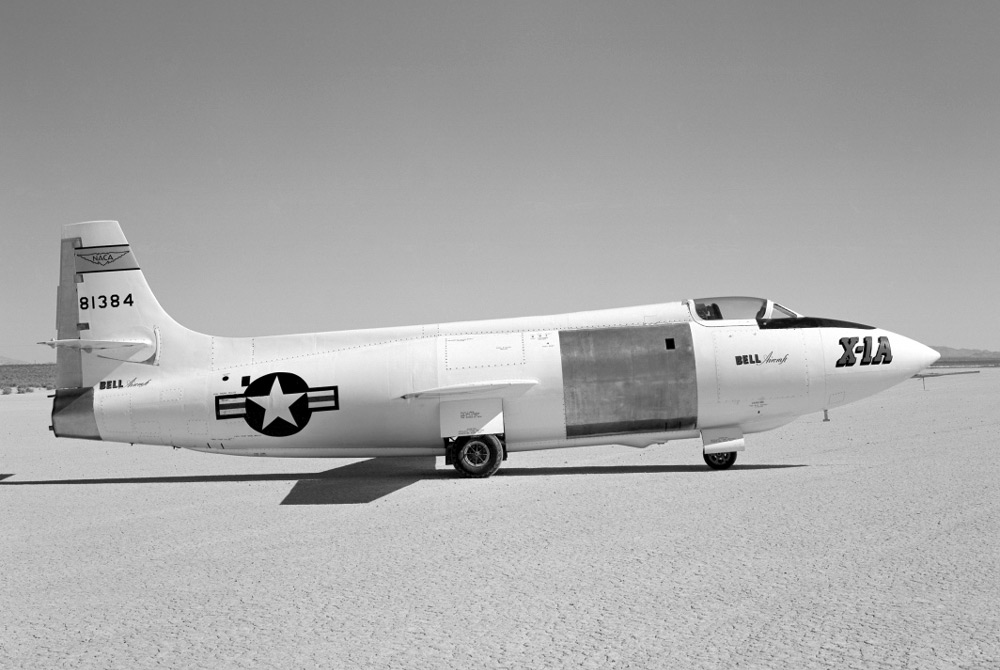
| Subject:
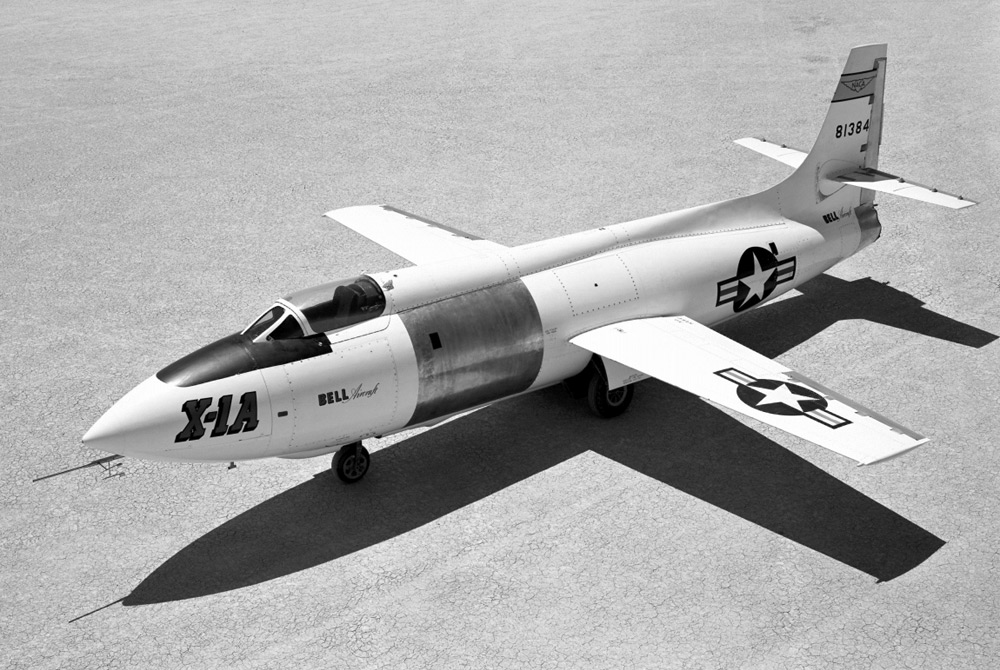
X-1A - AFFTC/NACA #48-1384 - NACA #? |
| Location: NASA
Dryden FRC - Edwards AFB, CA |
| Date: 7/?/1955 |
| Credit: NASA |
|
Notes: The X-1A
was similar to the X-1 series
aircraft. Visual differences were a
new canopy and longer fuselage. Due
to the extreme cold of the liquid
oxygen and its effect on paint, a
bare metal section was used over the
propellant tank.
|
|
|
|
| Subject:
X-1A - AFFTC/NACA #48-1384 - NACA #? |
| Location: NASA
Dryden FRC - Edwards AFB, CA |
| Date: ?/?/1955 |
| Credit: NASA |
|
Notes: During a
test flight that NACA test pilot Joe
Walker was to have made on
7/20/1955, an explosion damaged the
X-1A while still connected to the
JTB-29A mother-ship. The X-1A was
jettisoned and destroyed.
|
|
|
|
|
| Subject:
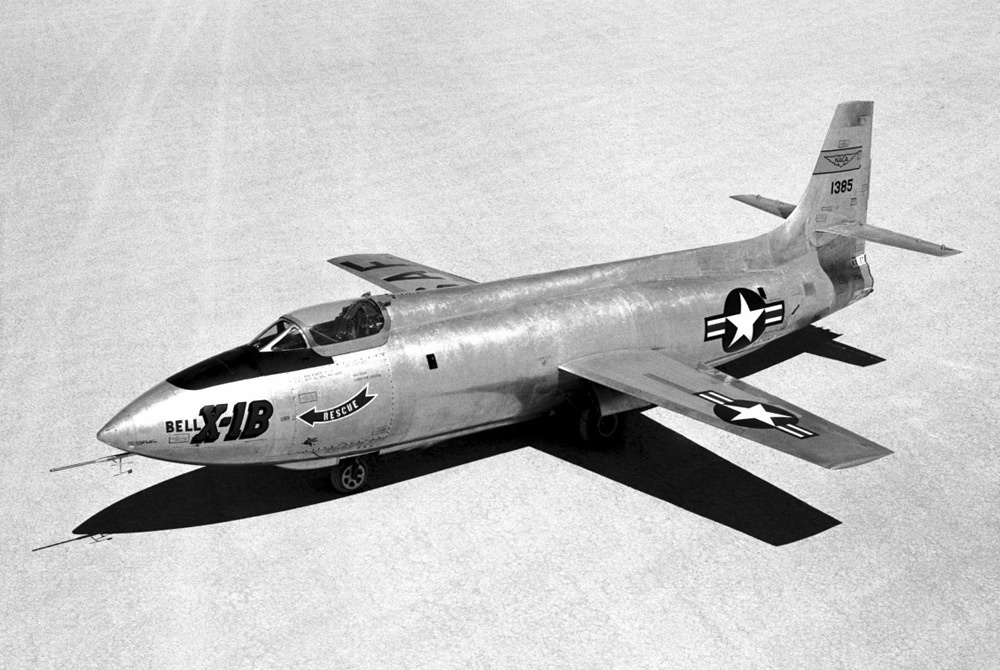
X-1B - AFFTC/NACA #48-1385 - NACA #? |
| Location: NASA
Dryden FRC - Edwards AFB, CA |
| Date: ?/?/1956 |
| Credit: NASA |
|
Notes: The Bell
X-1B had better propulsion, greater
fuel capacity, a more traditional
cockpit and canopy, and was almost
5' longer than the original X-1.
|
|
|
|
| Subject:
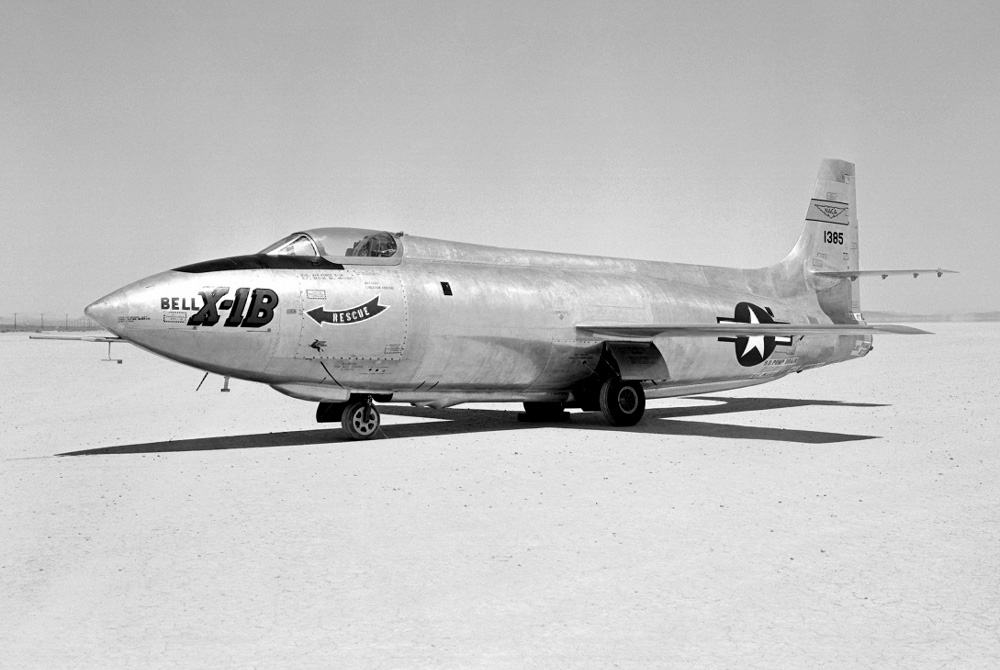
X-1B - AFFTC/NACA #48-1385 - NACA #? |
| Location: NASA
Dryden FRC - Edwards AFB, CA |
| Date: ?/?/1956 |
| Credit: NASA |
|
Notes: The X-1B
completed a total of 27 powered and
un-powered flights, by eight USAF
test pilots and two NACA test
pilots.
|
|
|
|
|
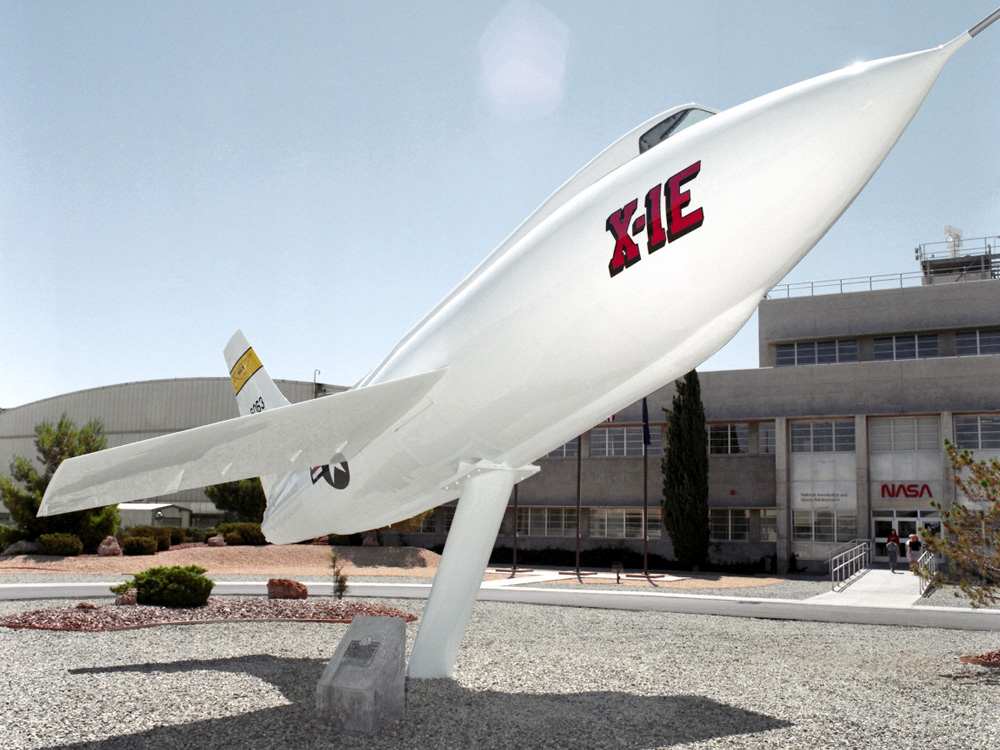
| Subject:
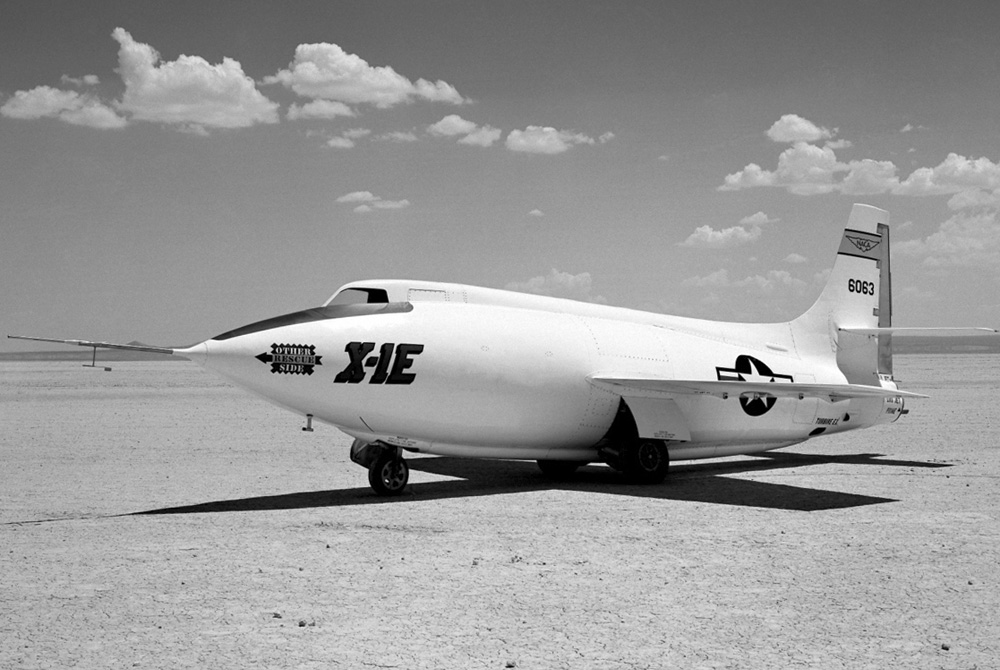
X-1E - AFFTC/NACA #46-0063 - NACA #? |
| Location: NASA
Dryden FRC - Edwards AFB, CA |
| Date: ?/?/1955 |
| Credit: NASA |
|
Notes: The X-1E
was the X-1-2 rebuilt with a thinner
wing, stepped canopy, and
low-pressure fuel system. It flew
through 1958 at the center, and was
the last of the X-1 series aircraft
to be tested.
|
|
|
|
| Subject:
X-1E - AFFTC/NACA #46-0063 - NACA #? |
| Location: NASA
Dryden FRC - Edwards AFB, CA |
| Date: ?/?/1988 |
| Credit: NASA |
|
Notes: The X-1E
was eventually mounted in front of
the Dryden main administration
building.
|
|
|
|
|
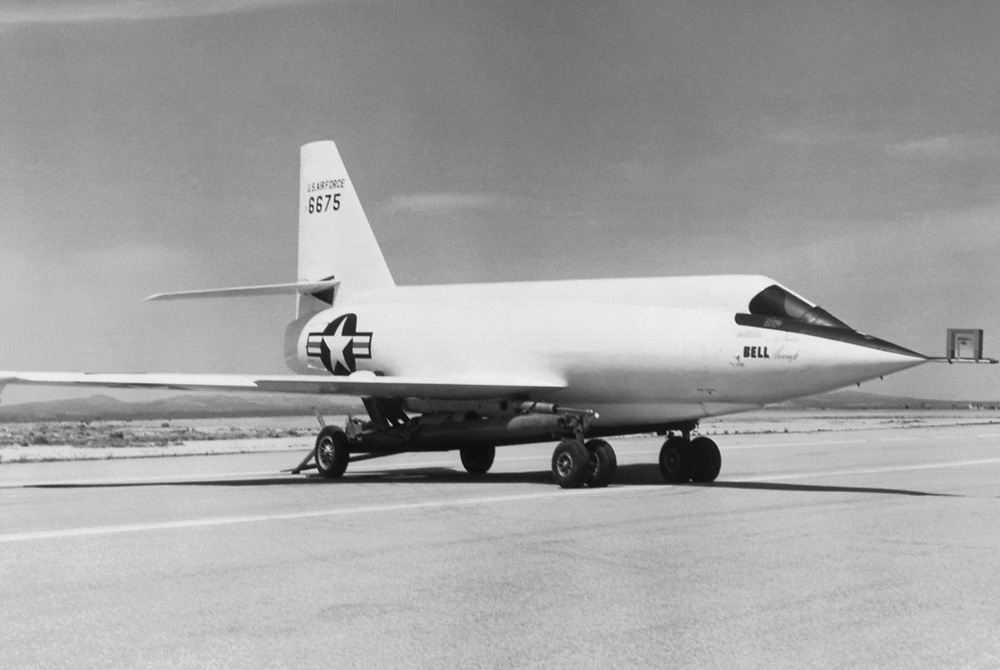
| Subject:
X-2 - AFFTC/NACA #46-0675 (Ship #2) -
NACA #? |
| Location: NASA
Dryden FRC - Edwards AFB, CA |
| Date: ?/?/1952 |
| Credit: NASA |
|
Notes: Bell
aircraft built two X-2 swept-wing
aircraft, that were designed to
exceed Mach 3. #46-0674 was the #1
ship, and #46-0675 was the #2 ship.
|
|
|
|
|
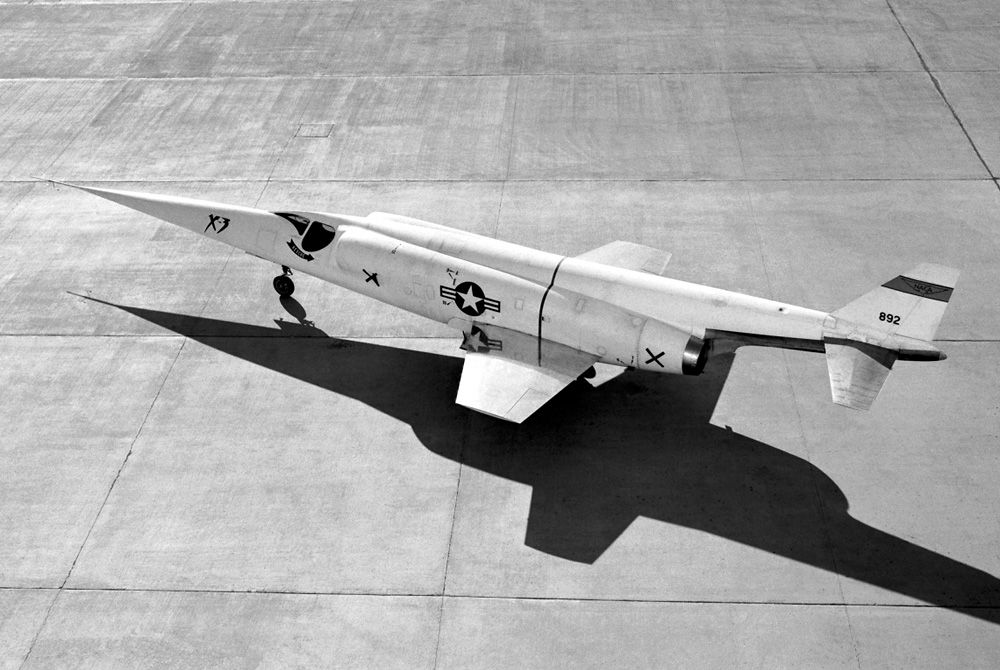
| Subject:
X-3 - AFFTC/NACA #49-2892 (Ship #1) -
NACA #? |
| Location: NASA
Dryden FRC - Edwards AFB, CA |
| Date: ?/?/1956 |
| Credit: NASA |
|
Notes: Douglas
built two X-3 "Stiletto" aircraft.
#49-2893 was ship #2.
|
|
|
|
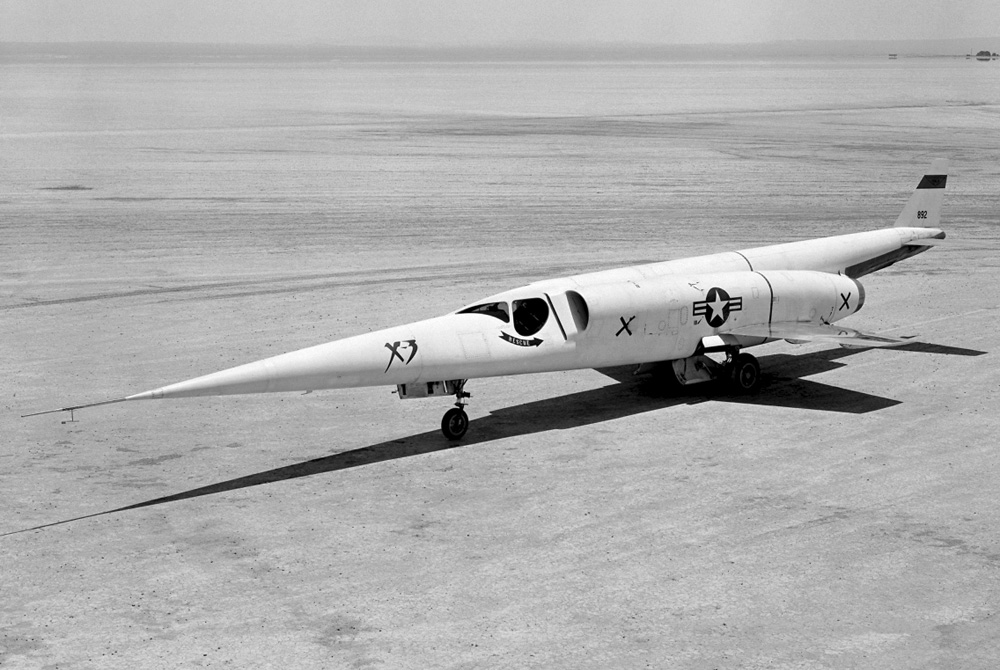
| Subject:
X-3 - AFFTC/NACA #49-2892 (Ship #1) -
NACA #? |
| Location: NASA
Dryden FRC - Edwards AFB, CA |
| Date: ?/?/1955 |
| Credit: NASA |
|
Notes: The X-3
was intended for sustained flight
research above Mach 2, but due to
the use of underpowered Westinghouse
J34 turbojet engines, it never
exceeded Mach 1 in level flight.
|
|
|
|
|
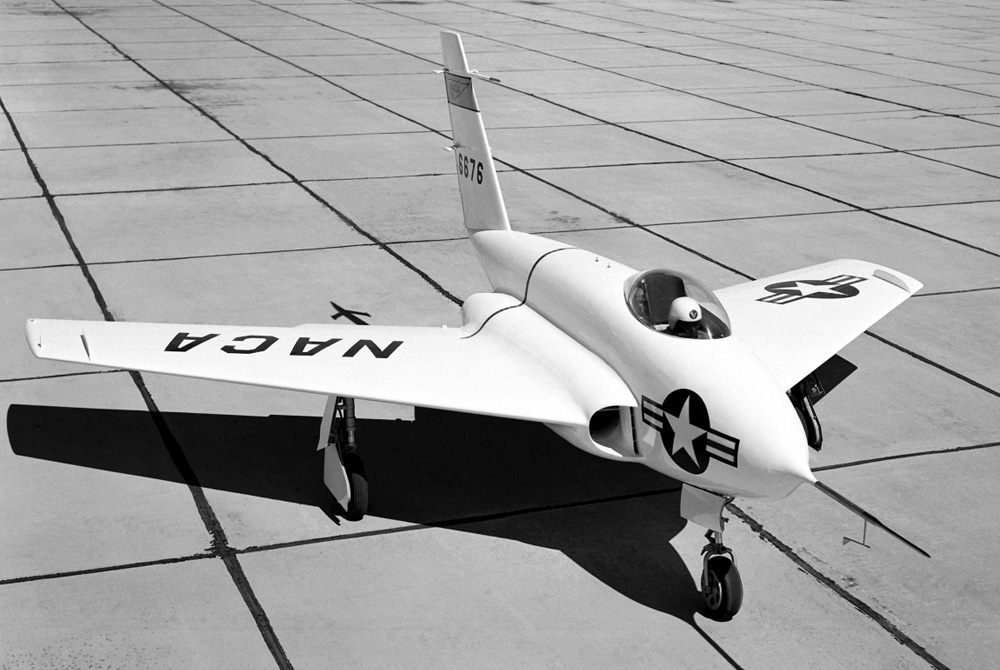
| Subject:
X-4 - AFFTC/NACA #46-0676 (Ship #1) -
NACA #? |
| Location: NASA
Dryden FRC - Edwards AFB, CA |
| Date: 8/?/1950 |
| Credit: NASA |
|
Notes: The
Northrop X-4 Bantam was a swept-wing
design that lacked vertical stabs,
and was built to investigate such a
configuration at transonic speeds.
Two aircraft were built, #46-0677
being the second.
|
|
|
|
|
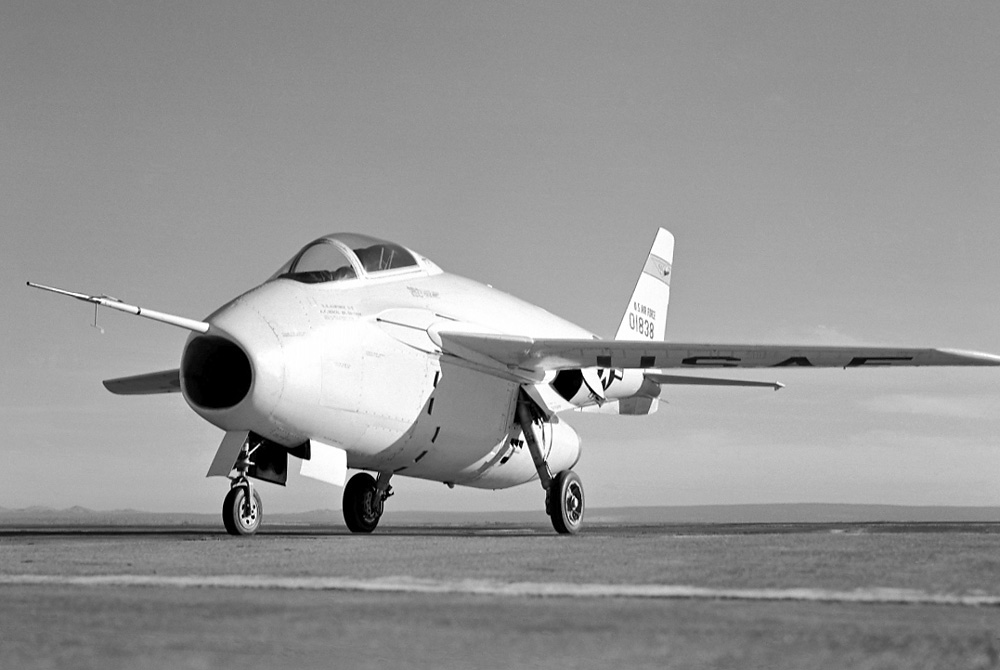
| Subject:
X-5 - AFFTC/NACA #50-1838 (Ship #1) -
NACA #? |
| Location: NASA
Dryden FRC - Edwards AFB, CA |
| Date: ?/?/1952 |
| Credit: NASA |
|
Notes: The X-5
was the first aircraft capable of
sweeping its wings in flight.
|
|
|
|
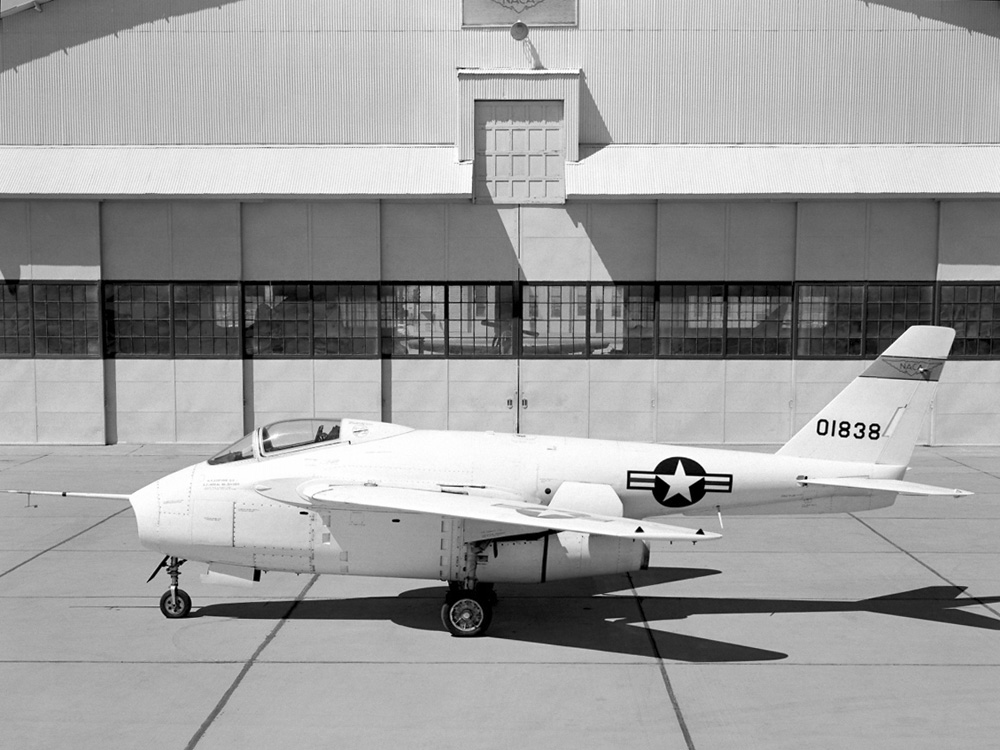
| Subject:
X-5 - AFFTC/NACA #50-1838 (Ship #1) -
NACA #? |
| Location: NASA
Dryden FRC - Edwards AFB, CA |
| Date: 1/?/1952 |
| Credit: NASA |
|
Notes: Two X-5's
were built by Bell... Ship #1
(50-1838) was flown at the NACA from
1951 to 1955. Ship #2 (50-1839) was
operated by Bell and the USAF.
|
|
|
|
|
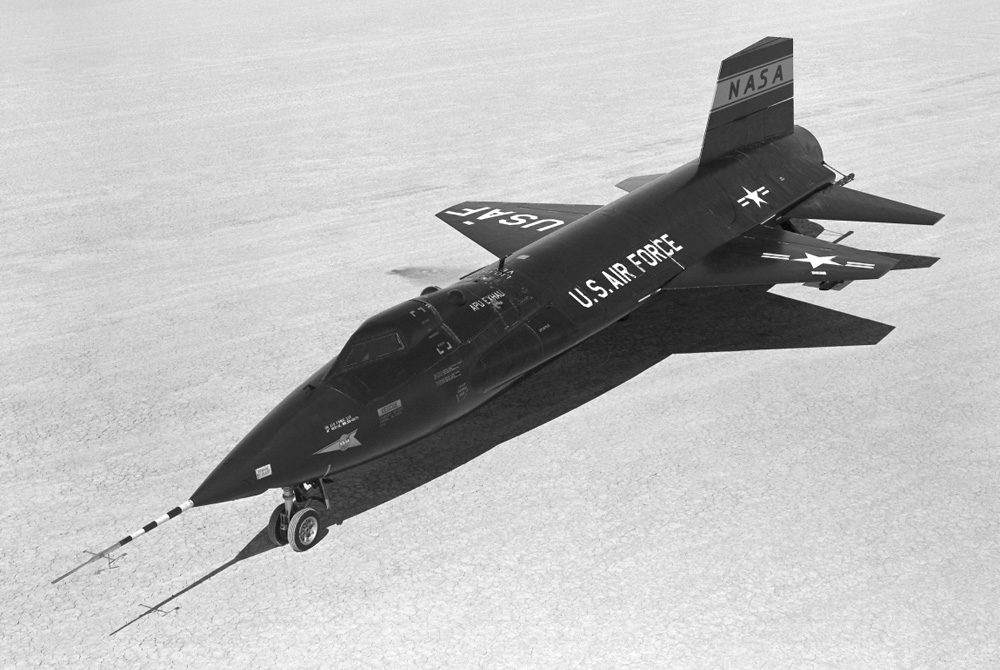
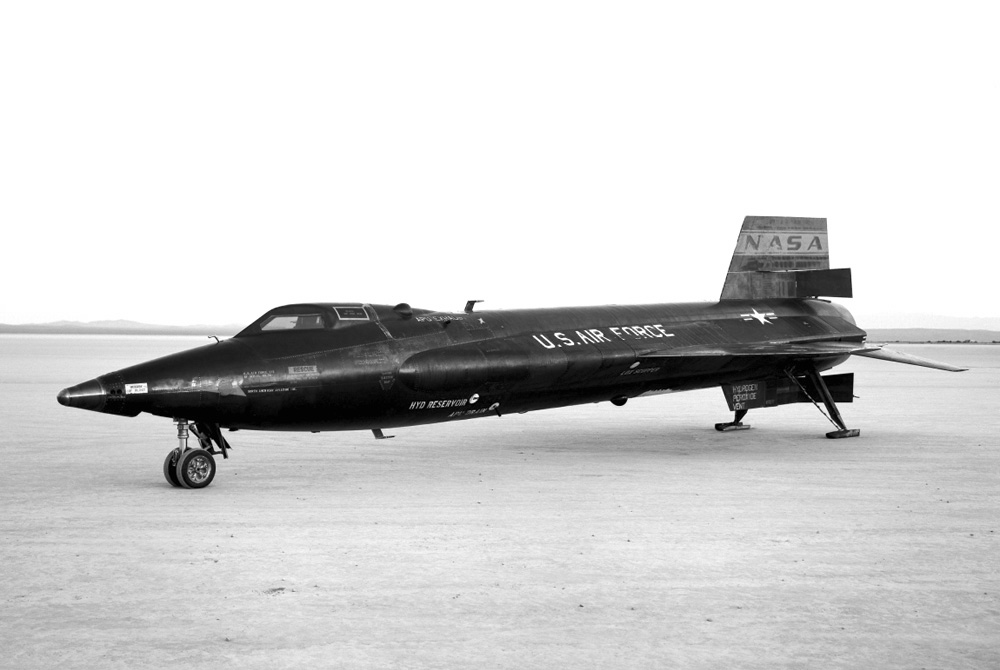
| Subject:
X-15-1 - AFFTC/NACA #56-6670 (Ship #1)
- NACA #? |
| Location: NASA
Dryden FRC - Edwards AFB, CA |
| Date: ?/?/1960 |
| Credit: NASA |
|
Notes: The three
combined North American built X-15's
made a total of 199 test flights
throughout the program.
|
|
|
|
|
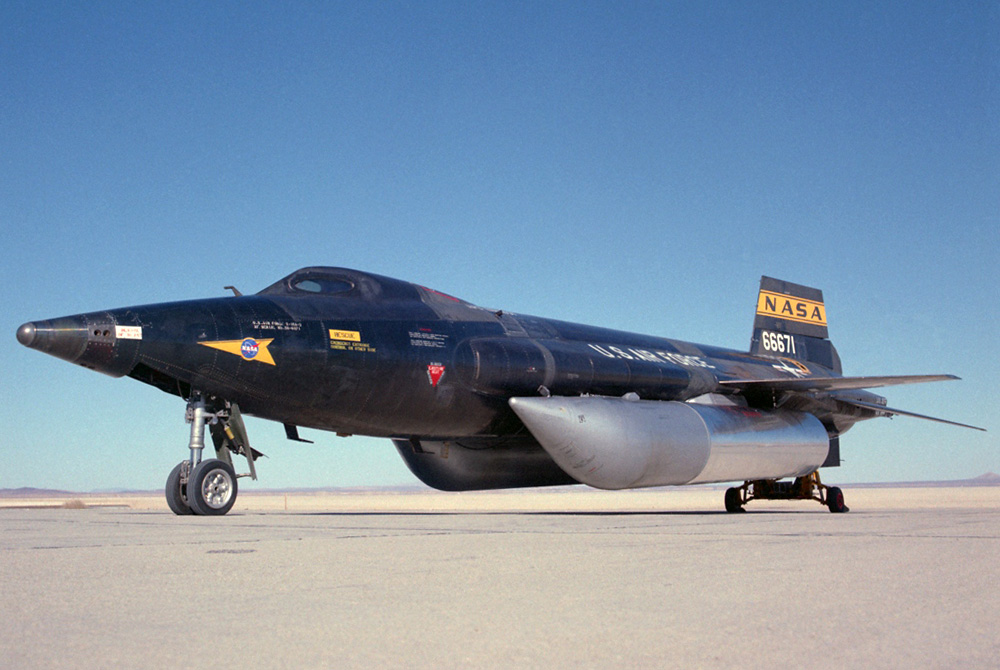
| Subject:
X-15A-2 - AFFTC/NACA #56-6671 (Ship
#2) - NACA #? |
| Location: NASA
Dryden FRC - Edwards AFB, CA |
| Date: ?/?/1965 |
| Credit: NASA |
|
Notes: #671 was
the second of three X-15 aircraft
built by North American. The
aircraft is pictured here with two
external fuel tanks, which were
added during its conversion to the
X-15A-2 configuration in the
mid-1960's.
|
|
|
|
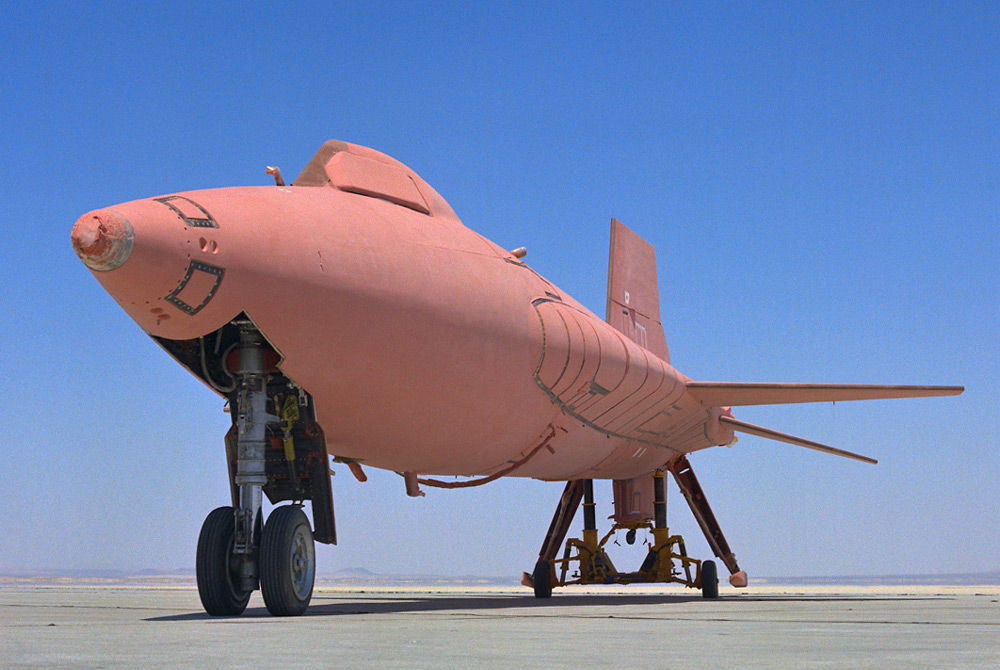
| Subject:
X-15A-2 - AFFTC/NACA #56-6671 (Ship
#2) - NACA #? |
| Location: NASA
Dryden FRC - Edwards AFB, CA |
| Date: 6/21/1967 |
| Credit: NASA |
|
Notes: The #2
ship is pictured after receiving a
full-scale ablative coating, which
would protect the aircraft from the
high temperatures in supersonic
flight. This ablative coating was
used when the #2 aircraft reached a
record speed of 4,520 mph (Mach
6.7).
|
|
|
|
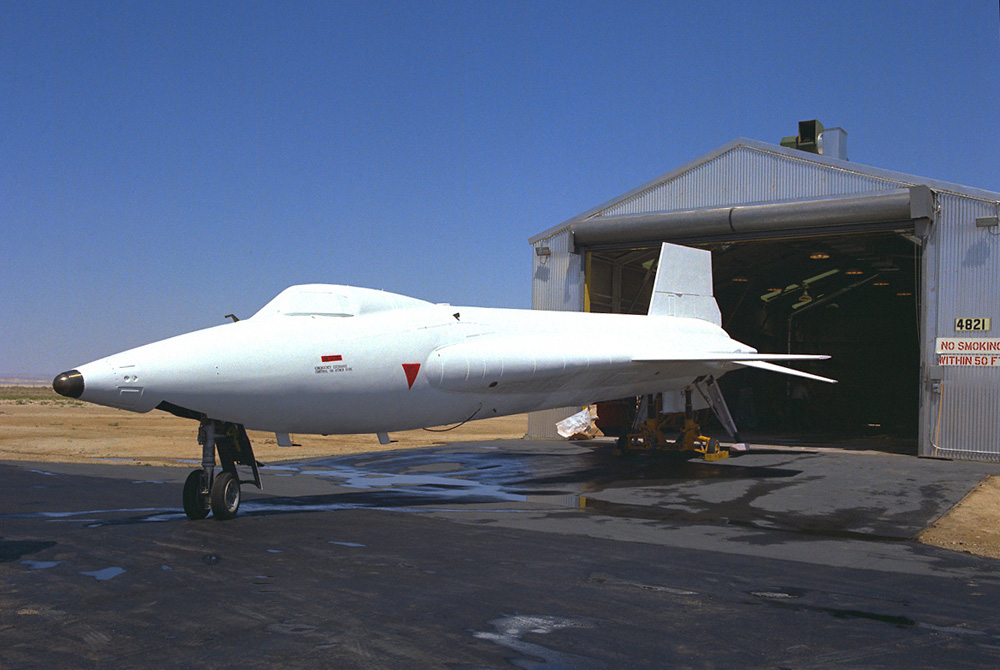
| Subject:
X-15A-2 - AFFTC/NACA #56-6671 (Ship
#2) - NACA #? |
| Location: NASA
Dryden FRC - Edwards AFB, CA |
| Date: 6/26/1967 |
| Credit: NASA |
|
Notes: Days after
receiving a full-scale ablative
coating, a white sealer coating was
then applied to the aircraft.
|
|
|
|
|
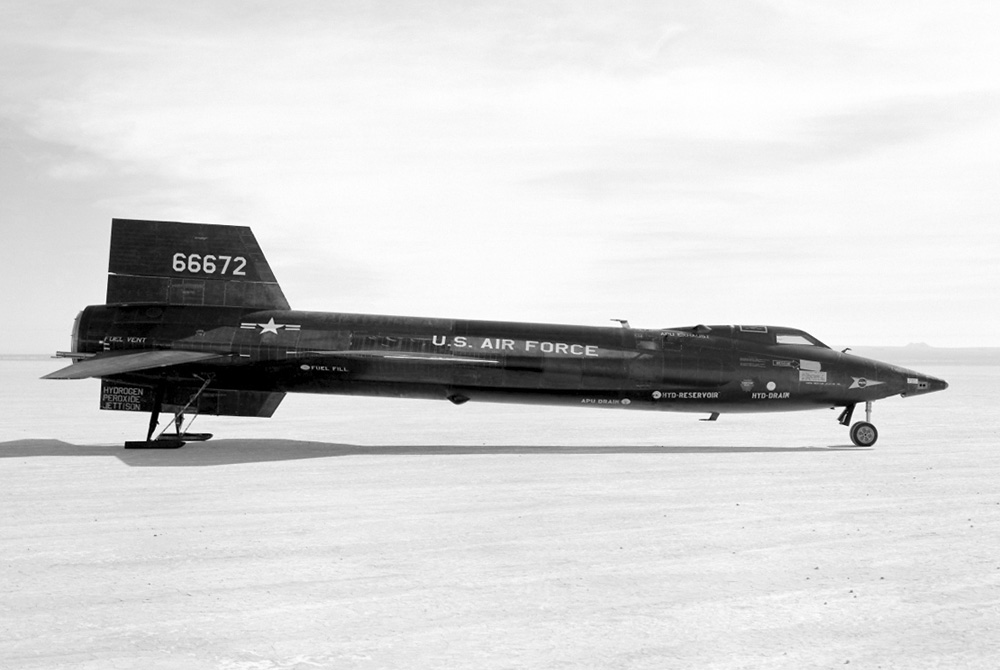
| Subject:
X-15-3 - AFFTC/NACA #56-6672 (Ship #3)
- NACA #? |
| Location: NASA
Dryden FRC - Edwards AFB, CA |
| Date: ?/?/1961 |
| Credit: NASA |
|
Notes: Ship #3
made 65 flights during the program,
attaining a top speed of Mach 5.65
and a maximum altitude of 354,200
feet.
|
|
|
|
| Subject:
X-15-3 - AFFTC/NACA #56-6672 (Ship #3)
- NACA #? |
| Location: NASA
Dryden FRC - Edwards AFB, CA |
| Date: ?/?/1962 |
| Credit: NASA |
|
Notes: The X-15-3
was destroyed during a flight on
11/15/1967, resulting in the death
of Maj. Michael J. Adams.
|
|
|
|
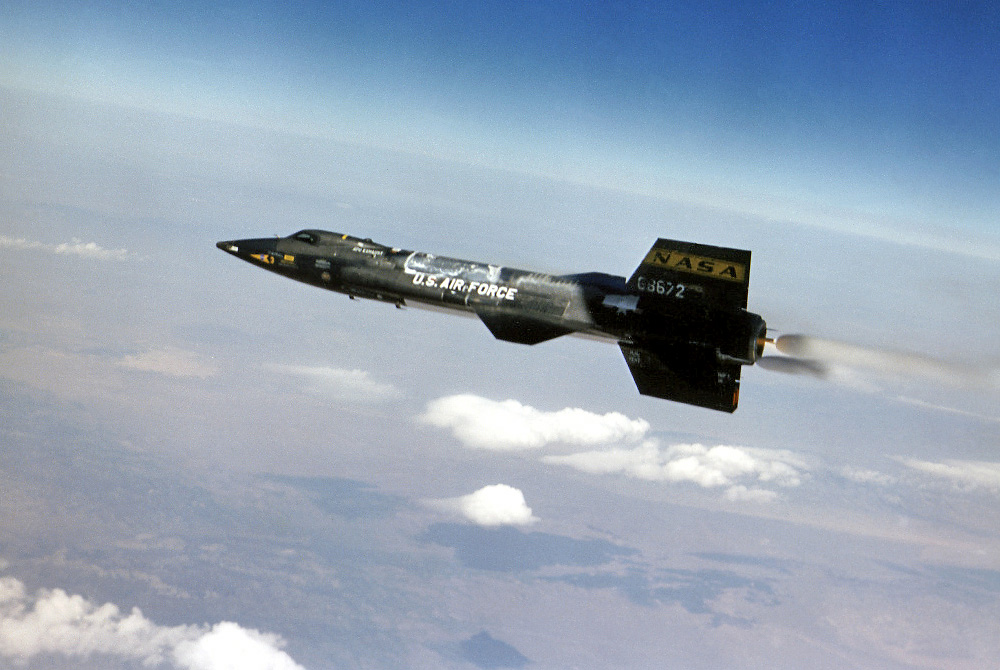
| Subject:
X-15-3 - AFFTC/NACA #56-6672 (Ship #3)
- NACA #? |
| Location: NASA
Dryden FRC - Edwards AFB, CA |
| Date: N/A |
| Credit: NASA |
|
Notes: X-15 #3 is
airborne on one of its flights over
the desert.
|
|
|
|
|
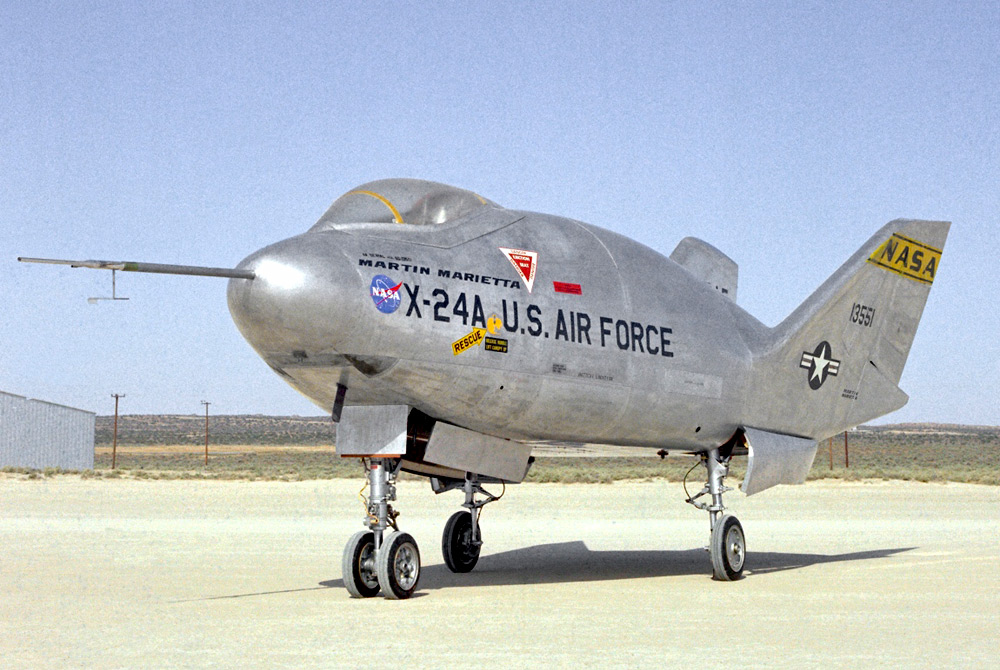
| Subject:
X-24A - AFFTC/NACA #66-13551 - NASA #? |
| Location: NASA
Dryden FRC - Edwards AFB, CA |
| Date: ?/?/1968 |
| Credit: NASA |
|
Notes: One X-24A
was built by Martin. This aircraft
was part of the 'lifting bodies'
program, and was used to demonstrate
the concept of landing wingless
vehicles returning from space.
|
|
|
|
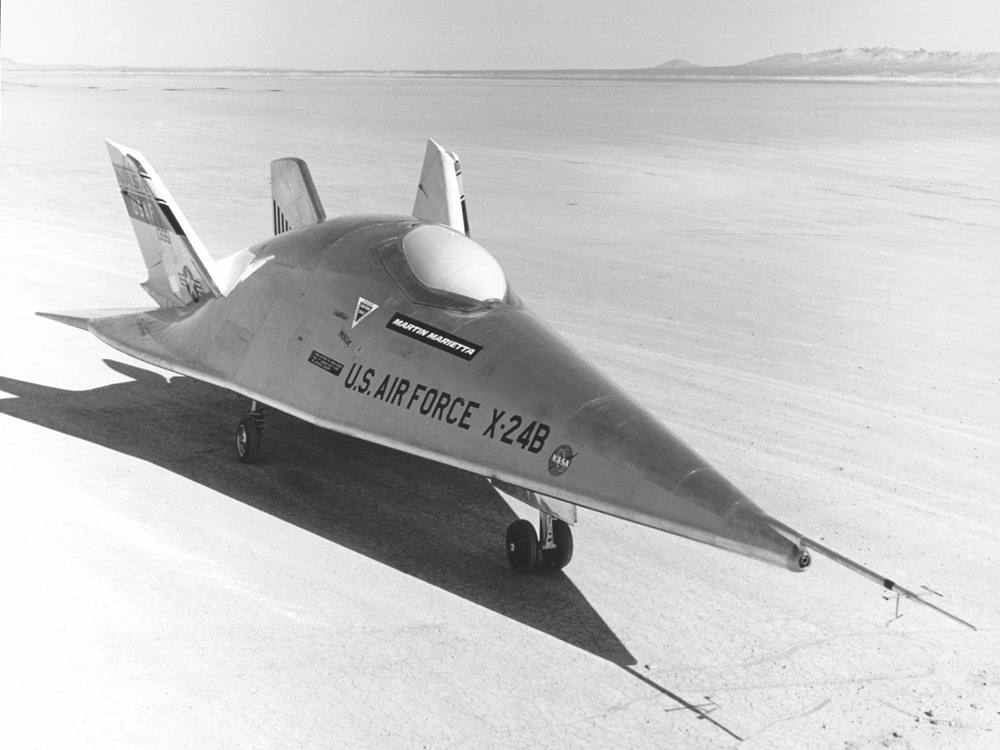
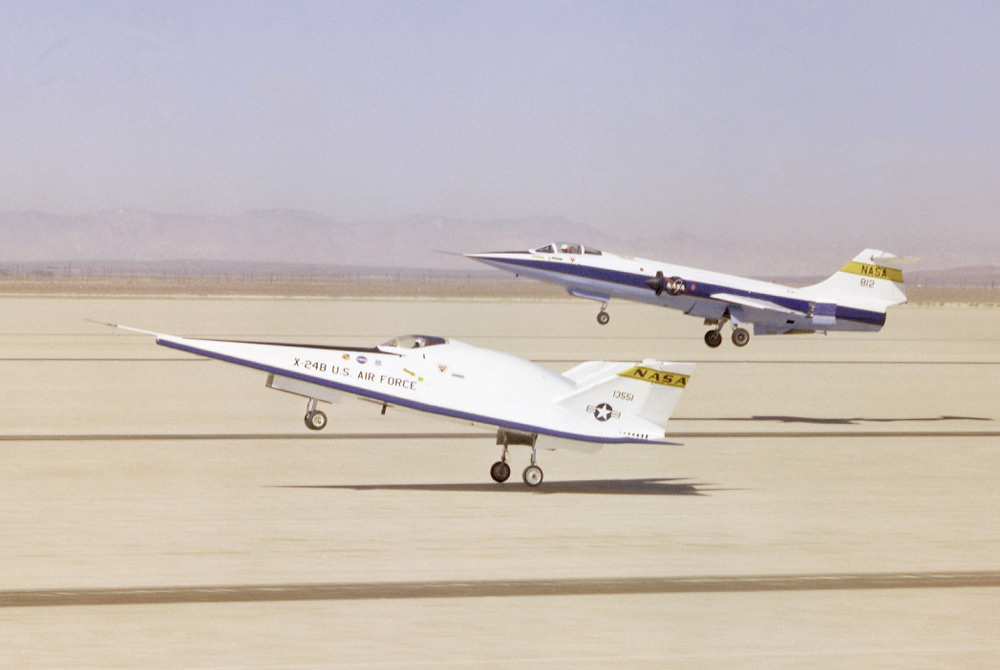
| Subject:
X-24B - AFFTC/NACA #66-13551 - NASA #? |
| Location: NASA
Dryden FRC - Edwards AFB, CA |
| Date: 11/?/1972 |
| Credit: NASA |
|
Notes: The X-24B
was rebuilt from the X-24A. Top
speed achieved by the X-24B was
1,164 mph and the highest altitude
it reached was 74,130 feet.
|
|
|
|
| Subject:
X24B & NASA F-104 #812 -
AFFTC/NACA |
| Location: NASA
Dryden FRC - Edwards AFB, CA |
| Date: 10/?/1975 |
| Credit: NASA |
|
Notes: Pictured
in its late white scheme, the X-24B
is seen simulating a shuttle lake
bed landing, with NASA F-104 #812 as
its chase aircraft.
|
|
|
|
|
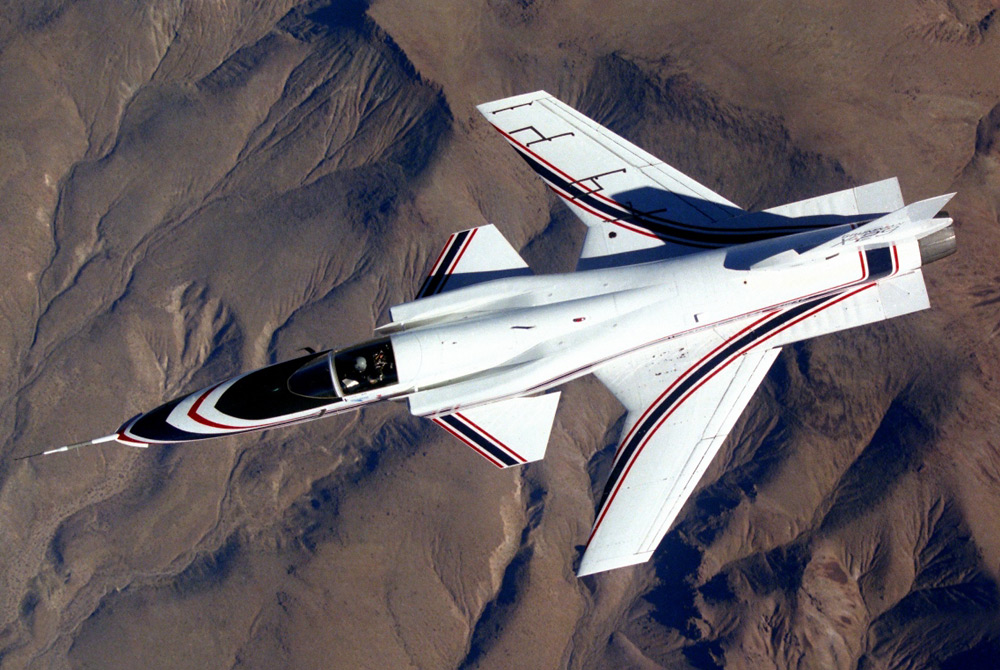
| Subject:
X-29 - DARPA/NASA/USAF #82-0003 (Ship
#1) - NASA #? |
| Location: NASA
Dryden FRC - Edwards AFB, CA |
| Date: 7/24/1987 |
| Credit: NASA |
|
Notes: Two X-29
aircraft were built by Grumman and
flew from Dryden between 1984 and
1992. The X-29 explored advanced
composites, variable-camber wing
surfaces, forward- swept wing
design, computerized fly-by-wire
systems, and many other ideas.
|
|
|
|
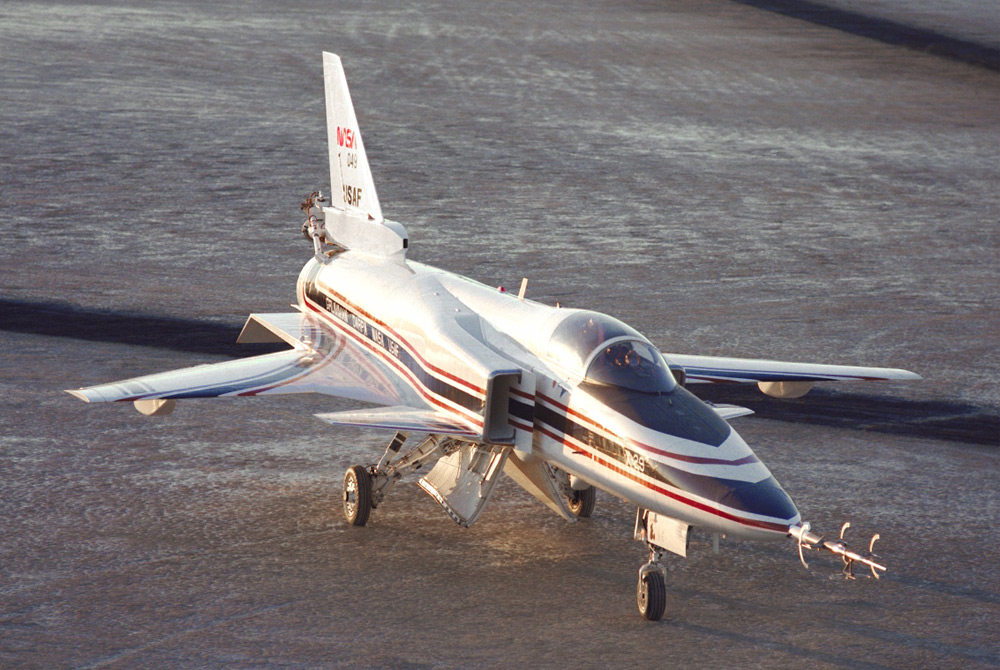
| Subject:
X-29 - DARPA/NASA/USAF #82-0049 (Ship
#2) - NASA #? |
| Location: NASA
Dryden FRC - Edwards AFB, CA |
| Date: 11/?/1990 |
| Credit: NASA |
|
Notes: Ship #1 was
built using F-5A #63-8372. Ship #2
was built using F-5A #65-10573. The
X-29 aircraft flew a total of 436
test missions.
|
|
|
|
|
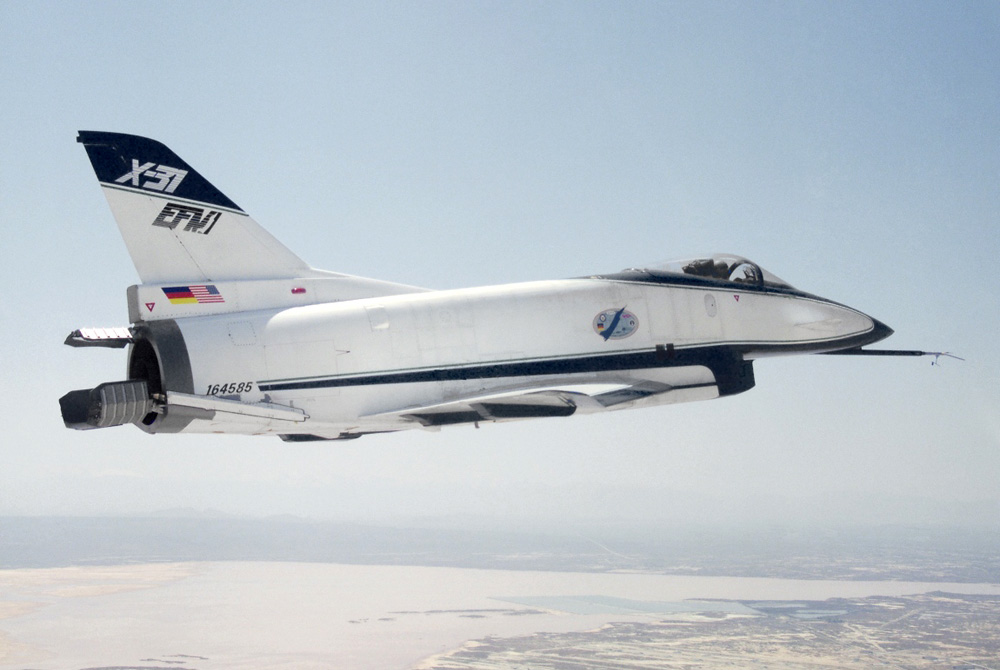
| Subject:
X-31 - DARPA/NASA/Germany/USN/USAF
BuNo 164585 (Ship #2) |
| Location: NASA
Dryden FRC - Edwards AFB, CA |
| Date: ?/?/1993 |
| Credit: NASA |
|
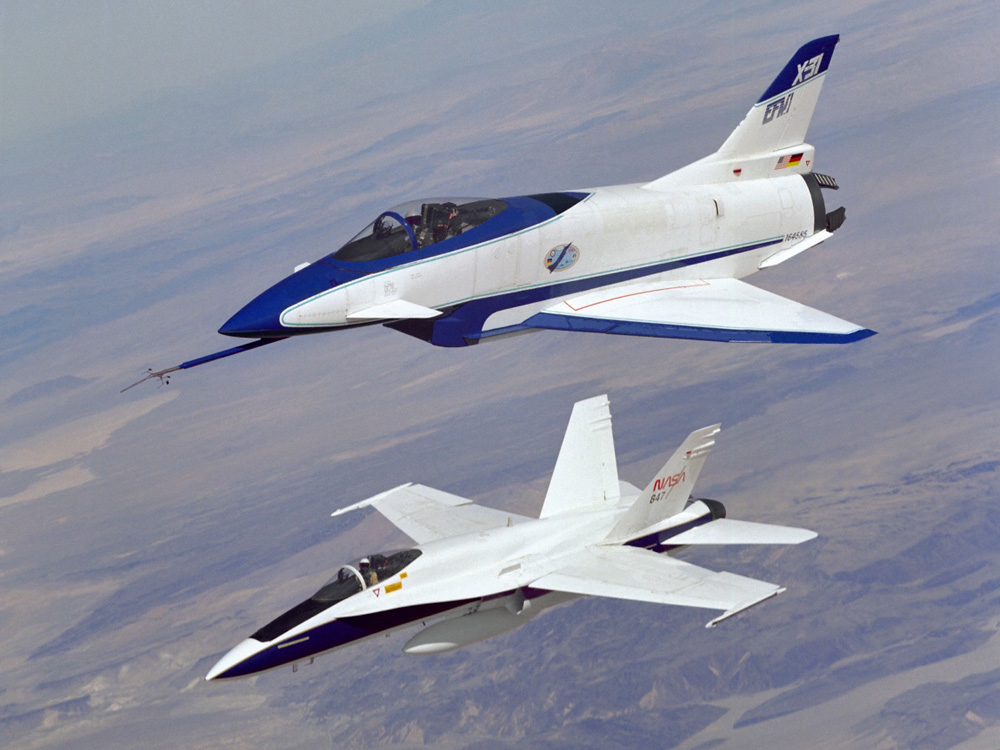
Notes: The X-31
Enhanced Fighter Maneuverability
(EFM) demonstrators flew at Dryden
from 1992 to 1995. The program
focused on using thrust vectoring,
coupled with an advanced flight
control system.
|
|
|
|
| Subject:
X-31 - DARPA/NASA/Germany/USN/USAF
BuNo 164585 (Ship #2) |
| Location: NASA
Dryden FRC - Edwards AFB, CA |
| Date: ?/?/1994 |
| Credit: NASA |
|
Notes: Ship #2 is
seen in formation with NASA F/A-18
#847. Ship #1 held BuNo 164584. Both
aircraft made 108 collective test
flights out of the Rockwell Palmdale
plant, before coming to Dryden.
|
|
|
|
|
| Subject:
X-Wing - DARPA/NASA #72-002 - NASA
#741 |
| Location: NASA
Dryden FRC - Edwards AFB, CA |
| Date: ?/?/1986 |
| Credit: NASA |
|
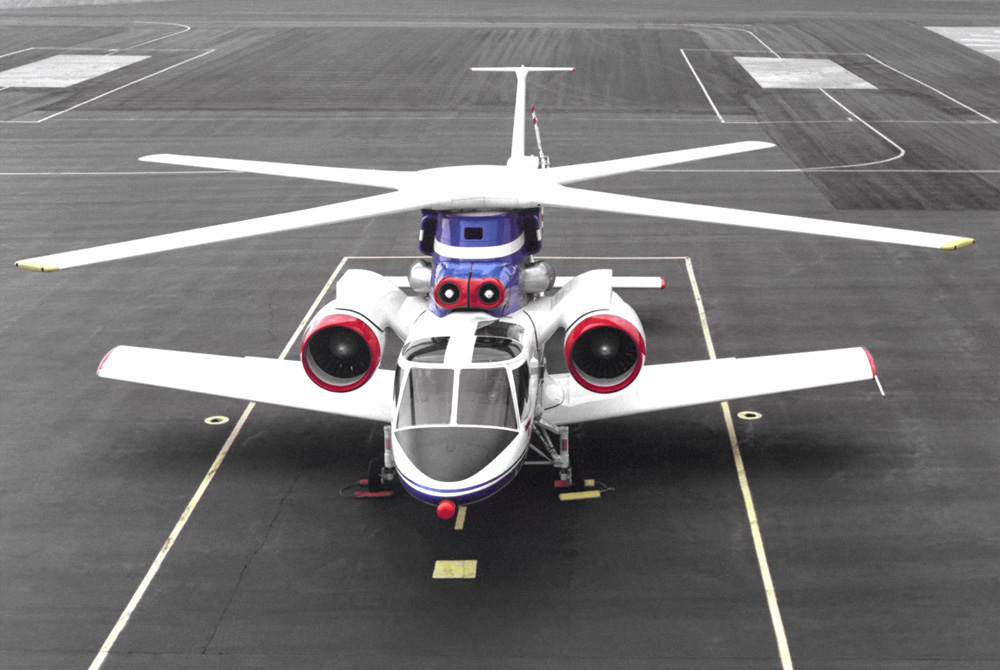
Notes: Built by
Sikorsky, the X-Wing was the Rotor
Systems Research Aircraft (RSRA),
which was a joint NASA Ames/US Army
project. The program began in the
early 1970's, investigating ways of
increasing the speed of rotor
aircraft, and worked at Dryden,
starting in 1986.
|
|
|
|
|
| Subject:
XB-70A-1 - US Air Force #62-0001 (Ship
#1) - NASA #? |
| Location: NASA
Dryden FRC - Edwards AFB, CA |
| Date: 8/17/1965 |
| Credit: NASA |
|
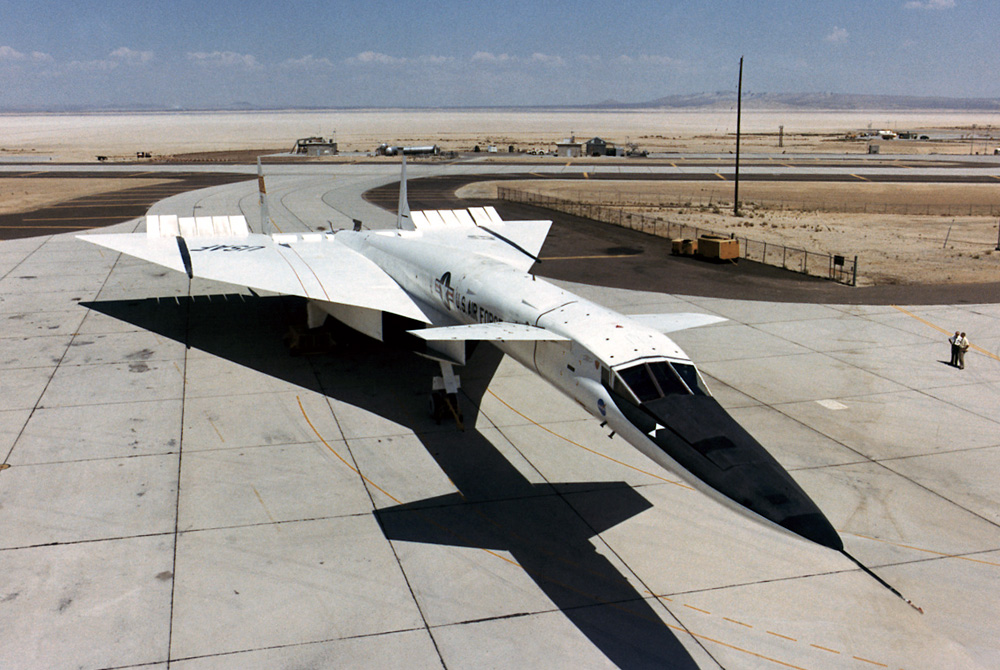
Notes: The XB-70
Valkyrie was North American's answer
for a high-altitude, supersonic
bomber. Two prototypes were
created... XB-70A-1 (62-0001) and
XB-70A-2 (62-0207). Ship #2 was
destroyed in an unfortunate mid-air
collision with NASA F-104N #813 in
1966, killing pilot Dr. Joseph A.
Walker in the F-104, and the XB-70A
copilot, Maj. Carl Cross.
|
|
|
|
| Subject:
XB-70A-1 - US Air Force #62-0001 (Ship
#1) - NASA #? |
| Location: NASA
Dryden FRC - Edwards AFB, CA |
| Date: ?/?/1967 |
| Credit: NASA |
|
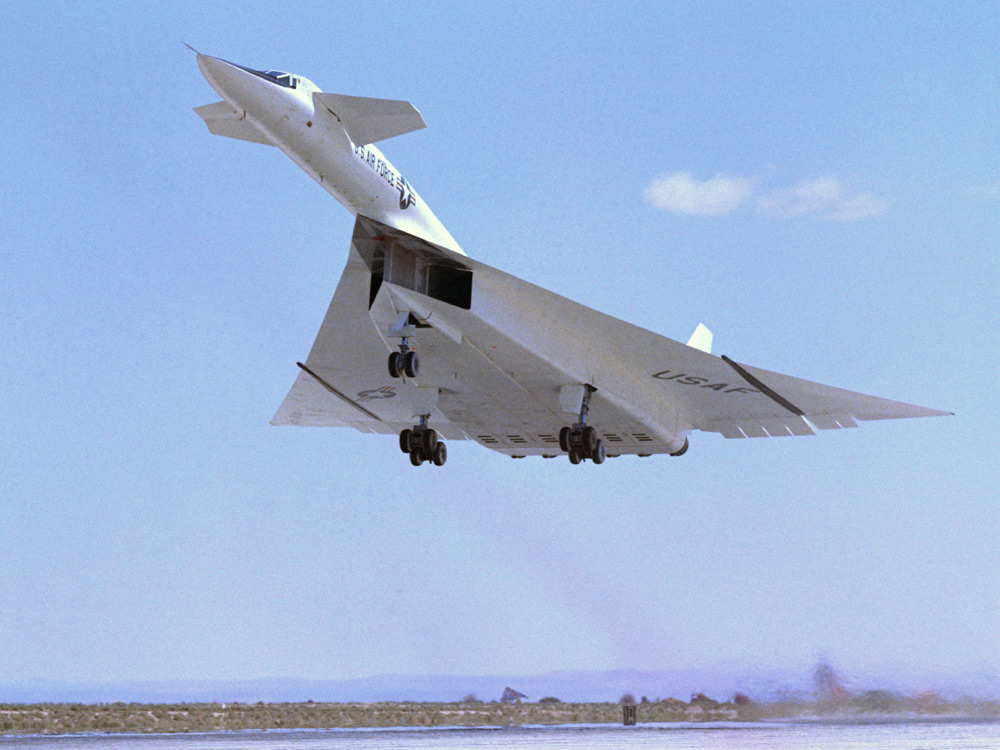
Notes: Originally
designed as a Mach 3 bomber, the
XB-70A never went into production
and was instead used for flight
research.
|
|
|
|
|
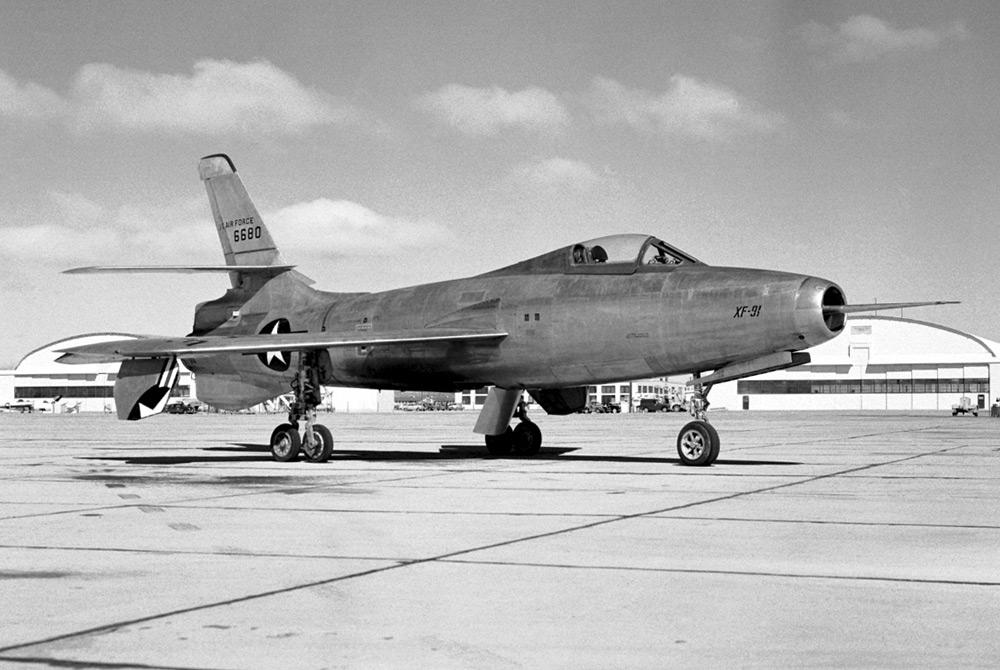
| Subject:
XF-91 - AFFTC/NACA - Serial #46-0680 -
NACA #? |
| Location: NASA
Dryden FRC - Edwards AFB, CA |
| Date: 3/?/1951 |
| Credit: NASA |
|
Notes: NACA
reports show that there was some
brief testing done using an XF-91
Thunderceptor that was available on
the base.
|
|
|
|
|
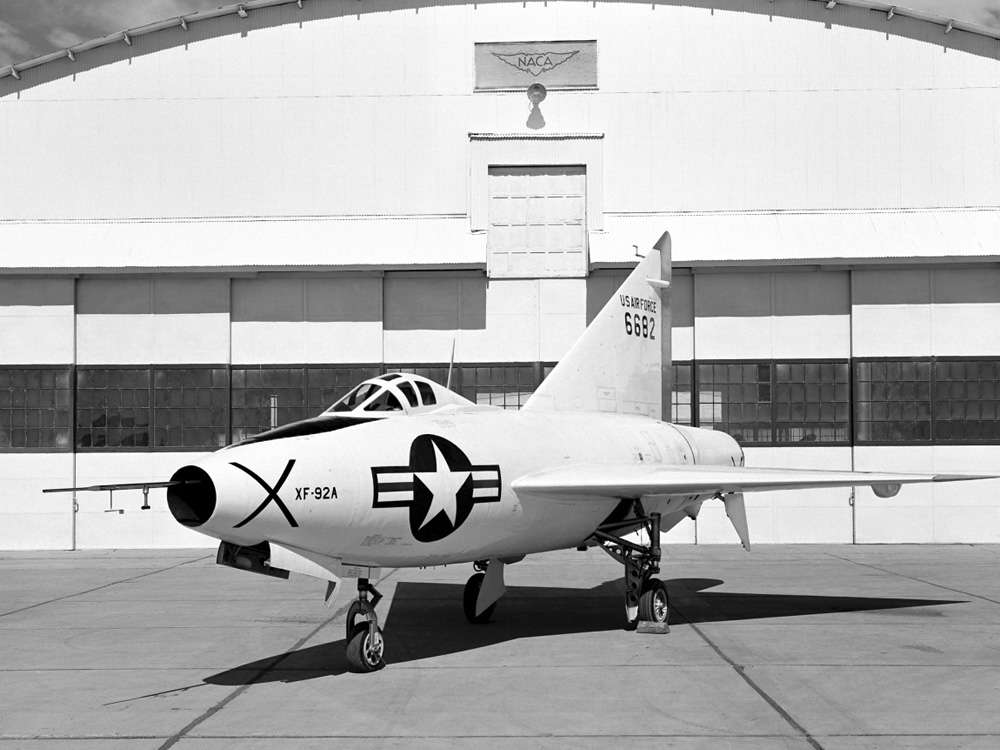
| Subject:
XF-92A - AFFTC/NACA - Serial #46-0682
- NACA #? |
| Location: NASA
Dryden FRC - Edwards AFB, CA |
| Date: 1/?/1953 |
| Credit: NASA |
|
Notes: After the
USAF had finished testing with the
XF-92A, NACA took over the flight
test program in 1953... Scott
Crossfield flew all 25 NACA flights
in XF-92A program, over a six-month
period.
|
|
|
|
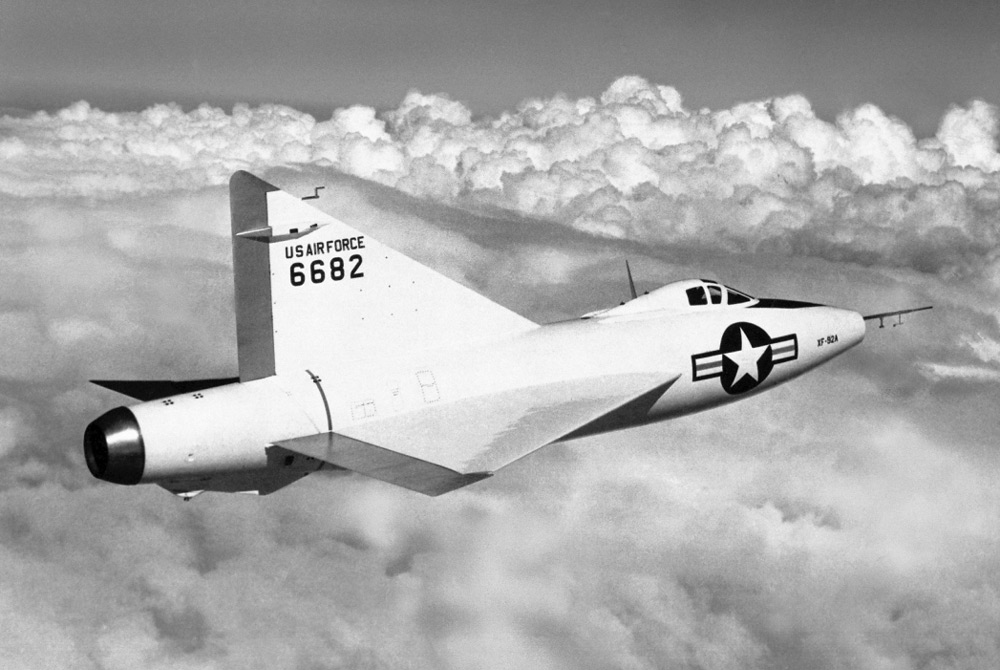
| Subject:
XF-92A - AFFTC/NACA - Serial #46-0682
- NACA #? |
| Location: NASA
Dryden FRC - Edwards AFB, CA |
| Date: ?/?/1953 |
| Credit: NASA |
|
Notes: The
Convair XF-92A aircraft was powered
by an Allison J33-A turbojet engine
with an afterburner, and was
America’s first delta wing design.
|
|
|
|
|
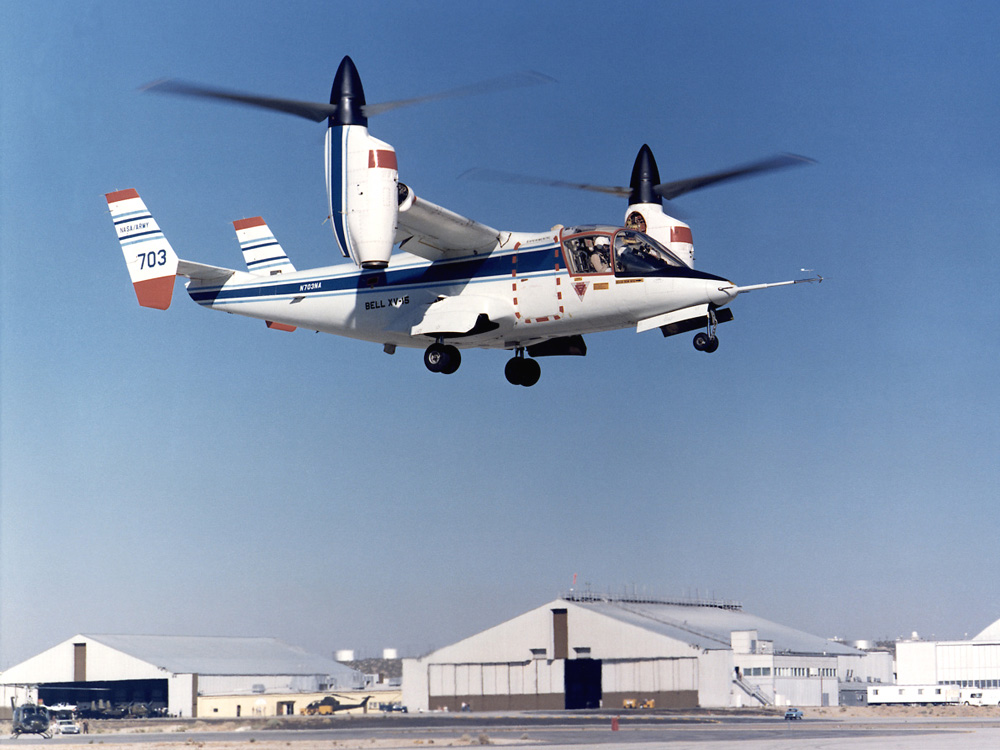
| Subject:
XV-15 - NASA/US Army - NASA #703 (Ship
#2?) |
| Location: NASA
Dryden FRC - Edwards AFB, CA |
| Date: ?/?/1980 |
| Credit: NASA |
|
Notes: This photo
shows the Bell XV-15 Tiltrotor
aircraft, which were tested for a
limited time at Dryden between 1980
and 1981. There was a another ship
that wore #702. The XV-15's carried
7xx numbers, due to their work at
Ames FRC.
|
|
|
|
|
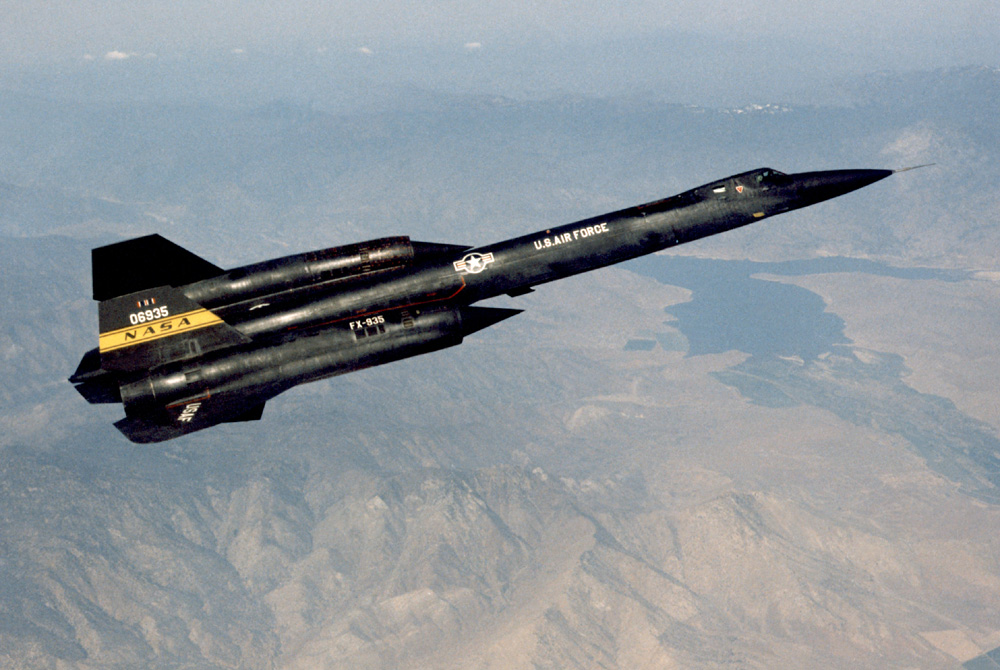
| Subject:
YF-12A - US Air Force #60-6935 - NASA
#? |
| Location: NASA
Dryden FRC - Edwards AFB, CA |
| Date: ?/?/1972 |
| Credit: NASA |
|
Notes: A joint
NASA/USAF program was started in
June 1969 to use YF-12A aircraft
#60-6935 and #60-6936 for flight
research. On 12/11/1969 the flight
program got underway with the
successful maiden flight of #935,
piloted by Col. Joe Rogers and Maj.
Gary Heidelbaugh.
|
|
|
|
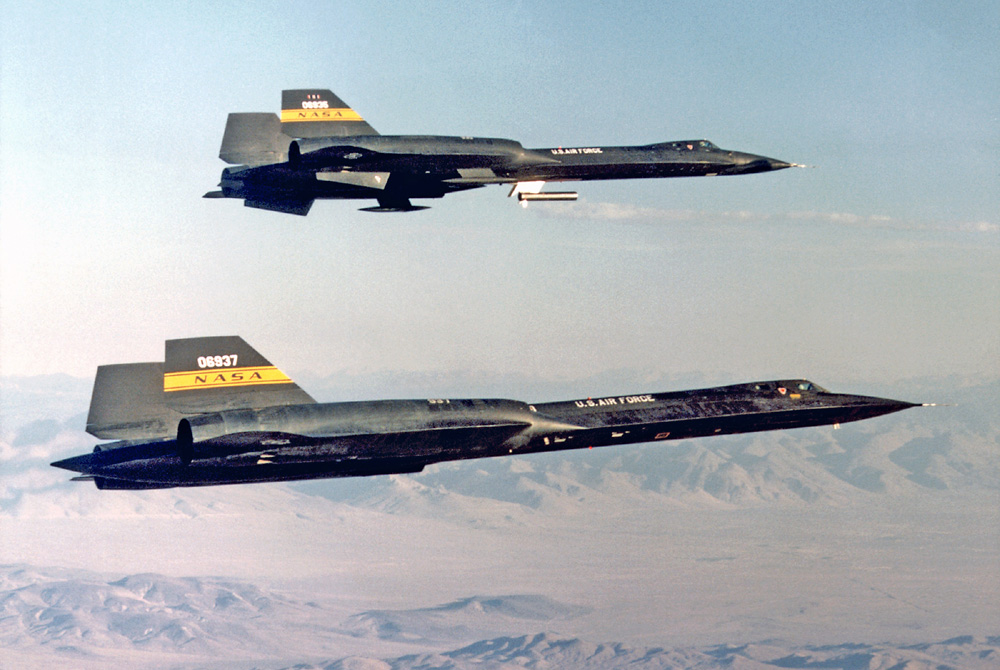
| Subject:
YF-12A - US Air Force #60-6937 &
#60-6935 - NASA #? |
| Location: NASA
Dryden FRC - Edwards AFB, CA |
| Date: ?/?/1975 |
| Credit: NASA |
|
Notes: #936 made
62 flights and was then lost in a
non-fatal crash on 6/24/1971. It was
replaced by what was called YF-12C
#60-6937, but was actually SR-71A
#61-7951 that was modified with
YF-12A inlets and engines. #935
& #937 are seen in formation in
this photo.
|
|
|
|
|
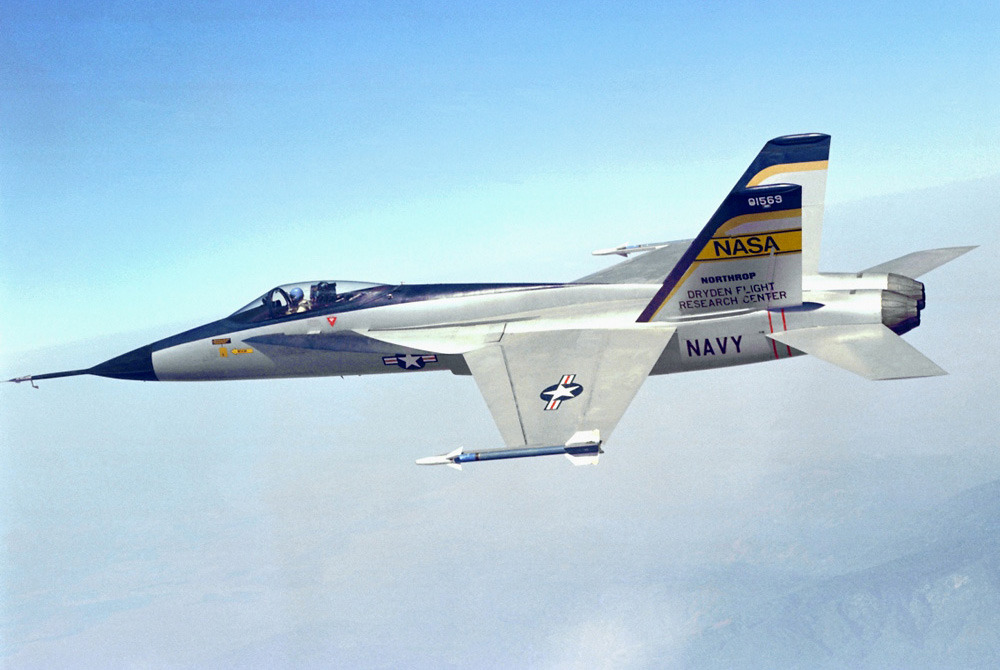
| Subject:
YF-17 - US Air Force #72-1569 - NASA
#? |
| Location: NASA
Dryden FRC - Edwards AFB, CA |
| Date: ?/?/1976 |
| Credit: NASA |
|
Notes: NASA
utilized the Northrop YF-17 Cobra
demonstrator at Dryden from
5/27/1976 to 7/14/1976, which
included 25 test flights. Originally
built for the USAF lightweight
fighter competition, the YF-17 went
on to be involved in the Navy F-18
program. The F/A-18 Hornet would
then evolve from the YF-17.
|
|
|
|
|
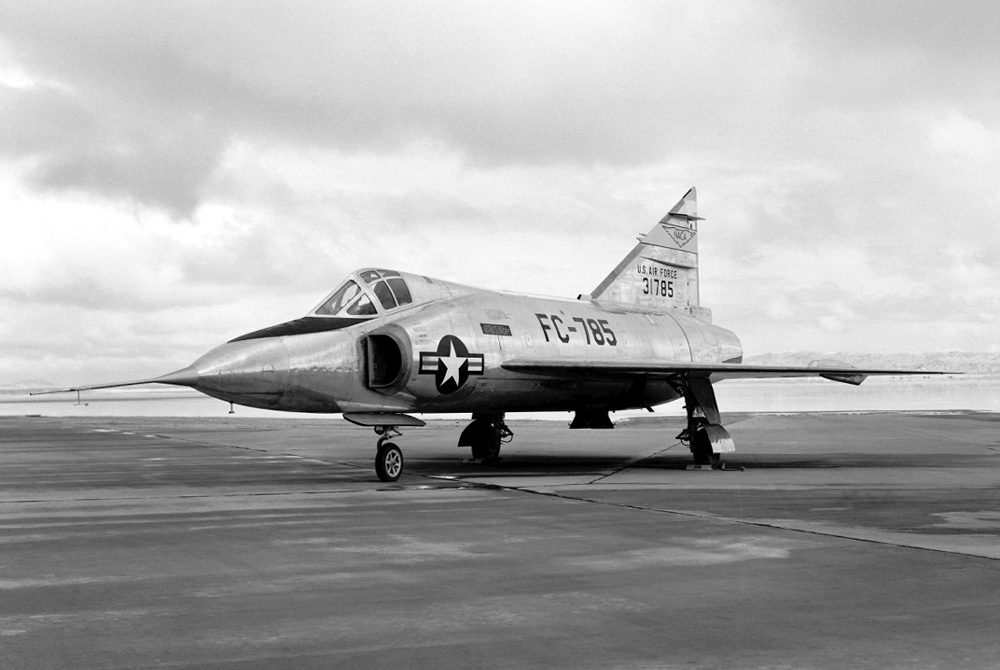
| Subject:
YF-102 - US Air Force #53-1785 - NACA
#? |
| Location: NASA
Dryden FRC - Edwards AFB, CA |
| Date: ?/?/1955 |
| Credit: NASA |
|
Notes: Convair
YF-102 #785 was utilized by Dryden
in 1955 to study pitch-up
characteristics during maneuvering.
The aircraft was equipped with
wing-fences which can be seen on the
left wing, to alleviate the
pitch-up.
|
|
|
|
|
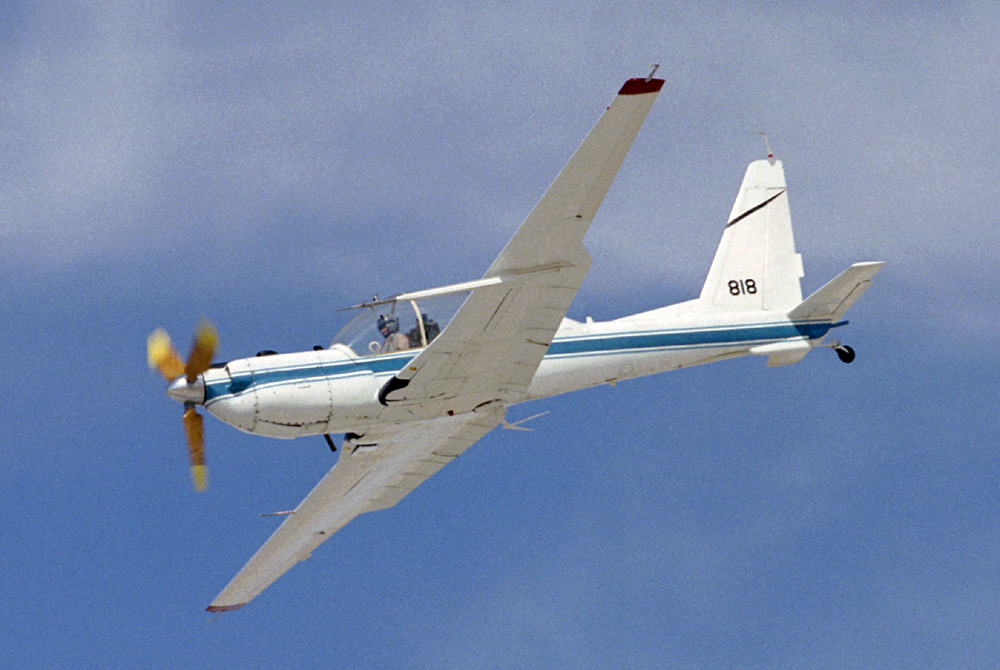
| Subject:
YO-3A - Schweizer SGS-2-32 - NASA #818 |
| Location: NASA
Dryden FRC - Edwards AFB, CA |
| Date: 10/29/2004 |
| Credit: NASA |
|
Notes: The YO-3A
was originally a Schweizer SGS-2-32
sailplane. In the late 1960's,
Lockheed modified over a dozen of
these sailplanes to create
ultra-quiet recon aircraft for use
over South Vietnam. The aircraft is
used at Dryden for acoustic
measurements of other aircraft,
including sonic booms and rotor
noise.
|
|
|
|
|
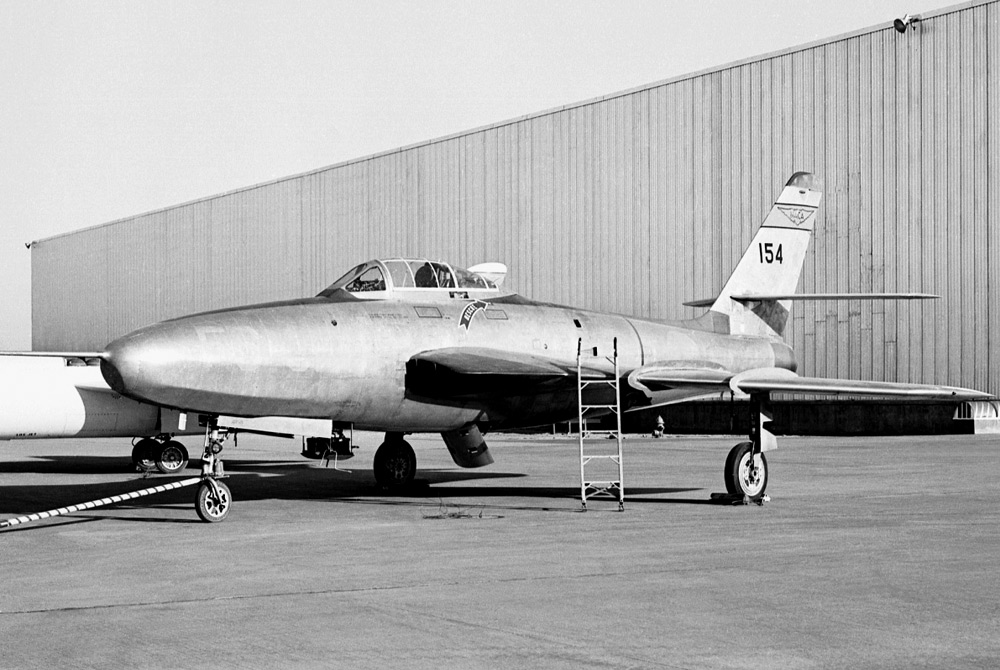
| Subject:
YRF-84F - US Air Force #51-1828 - NACA
#154 |
| Location: NASA
Dryden FRC - Edwards AFB, CA |
| Date: ?/?/1954 |
| Credit: NASA |
|
Notes: YRF-84F
#51-1828 came to Dryden in 1954 and
departed in 1956. Republic developed
the aircraft as a reconnaissance
version of the YF-84F and only built
one prototype. Dryden also had
YF-84A #45-59490 (NACA #134) which
came from Langley, and YF-84A
#45-59488, which came from Ames.
|
|
|
|