DPD
Productions
Makers of the...
"MilTenna"
Air Band Antennas
|
|
|
Official - NASA Dryden - Page
2
|
|
This page contains photos of aircraft
flown at NASA Dryden Flight Research Facility, past and
present. All North Spin photographs are Copyright © by
the photographers that took them, and are not to be
re-posted or redistributed.
|
|
|
| Subject:
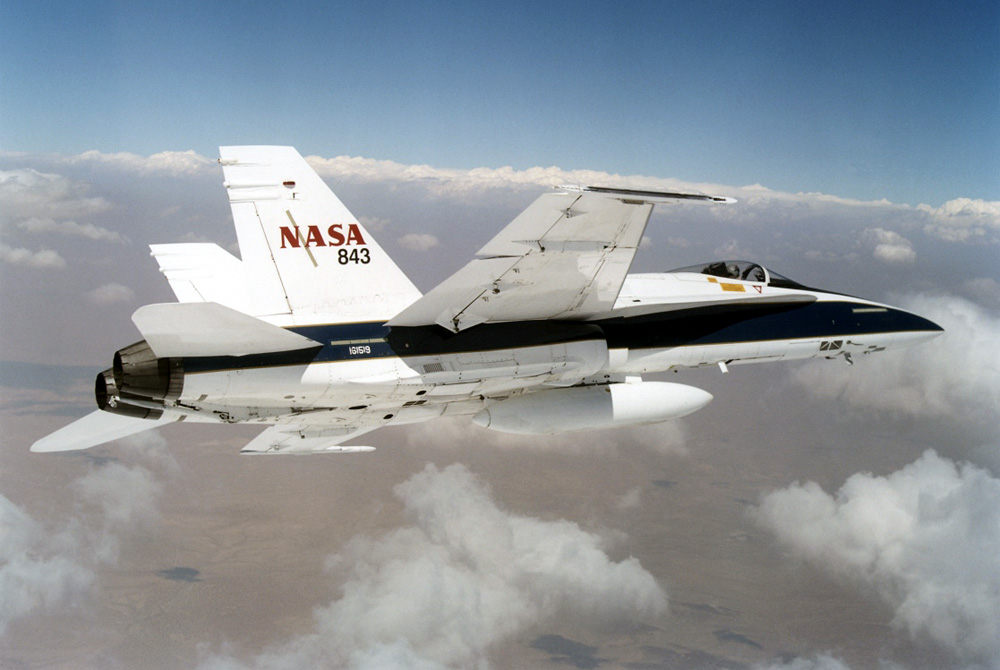
F/A-18A - US Navy BuNo 161519 - NASA
#843 |
| Location: NASA
Dryden FRC - Edwards AFB, CA |
| Date: 10/1/2002 |
| Credit: Jim Ross /
NASA |
|
Notes: #843 is one
of the numerous F/A-18s that are
used in various support roles at
Dryden. This aircraft was originally
a Blue Angeles Hornet.
|
|
|
|
|
| Subject:
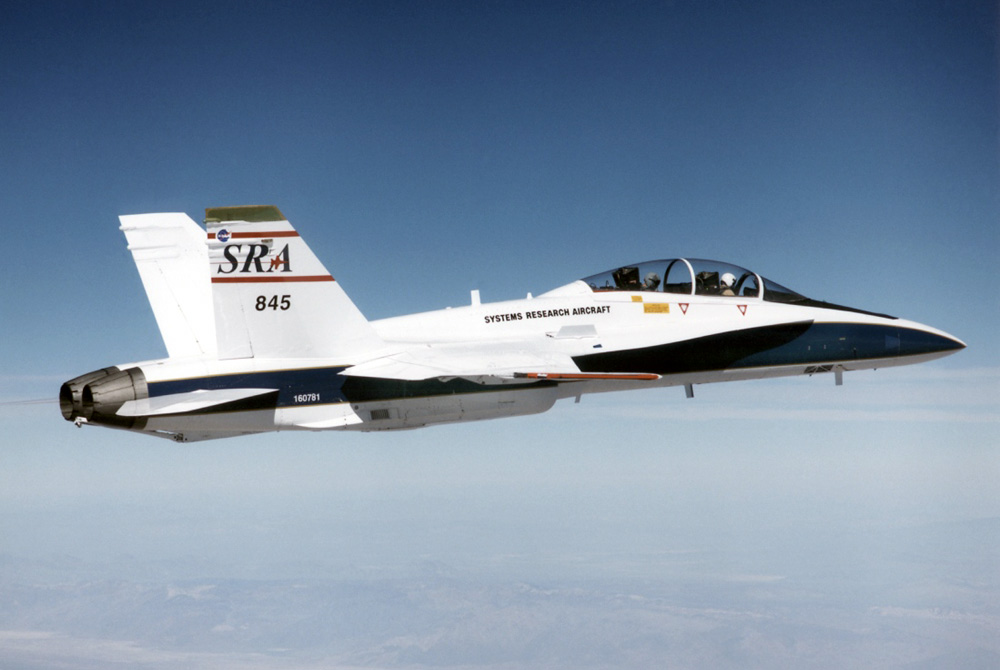
F/A-18B (SRA) - US Navy BuNo 160781 -
NASA #845 |
| Location: NASA
Dryden FRC - Edwards AFB, CA |
| Date: 10/3/1997 |
| Credit: Carla
Thomas / NASA |
|
Notes: #845 was
loaned to NASA Dryden from the Navy,
and became the main aircraft used in
the Systems Research Aircraft (SRA)
program. This flying test bed has
helped study many new cutting edge
technologies.
|
|
|
|
| Subject:
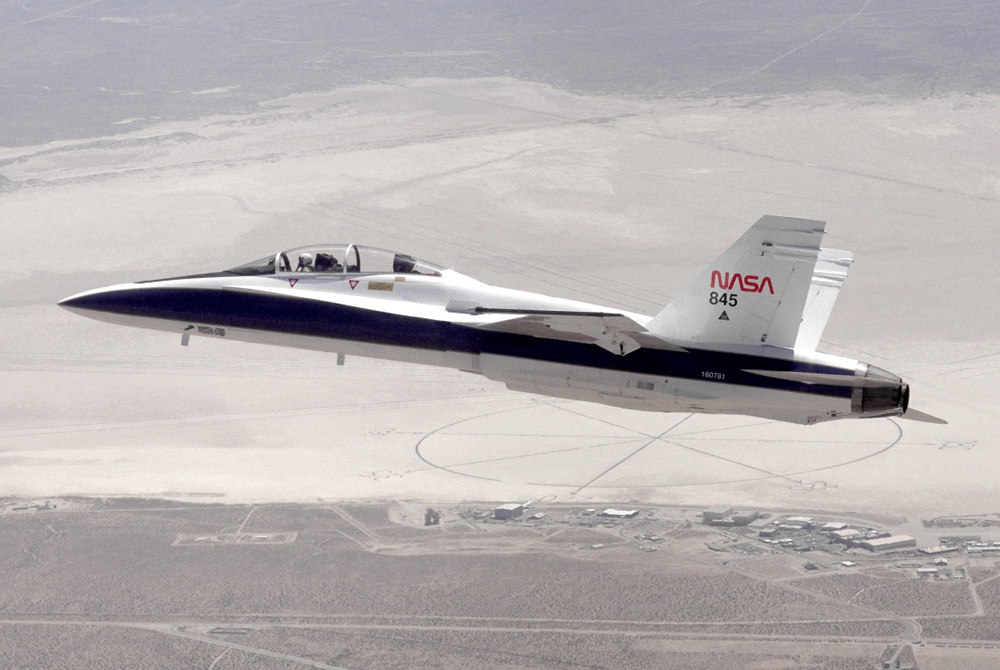
F/A-18B (SRA) - US Navy BuNo 160781 -
NASA #845 |
| Location: NASA
Dryden FRC - Edwards AFB, CA |
| Date: ?/?/1995 |
| Credit: NASA |
|
Notes: #845 in
flight over Dryden.
|
|
|
|
|
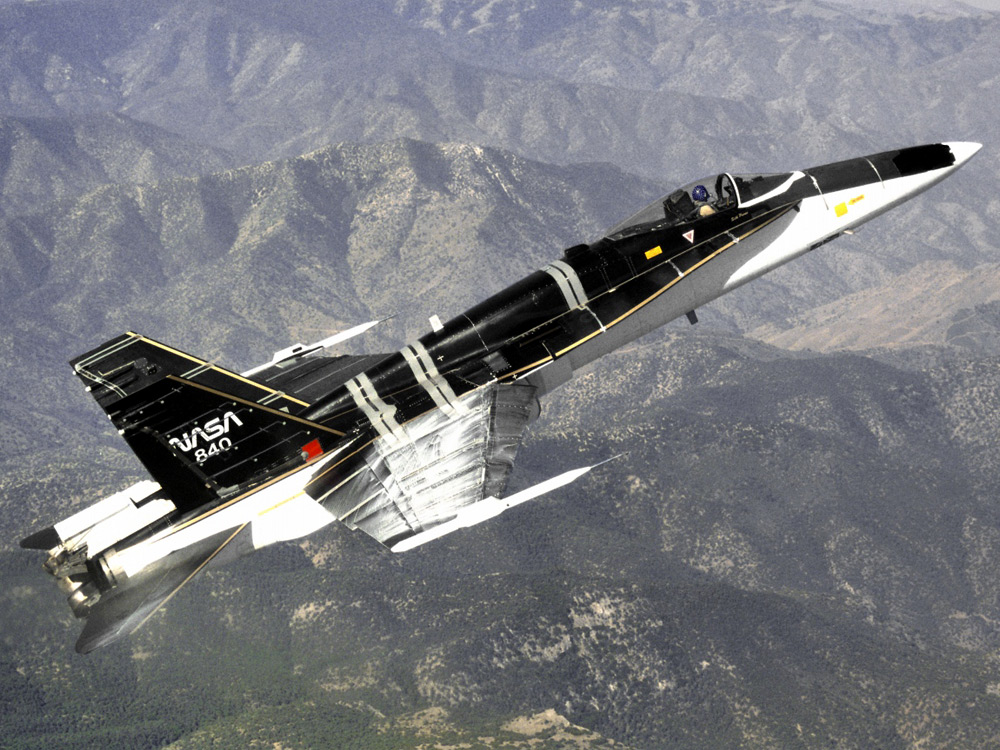
| Subject:
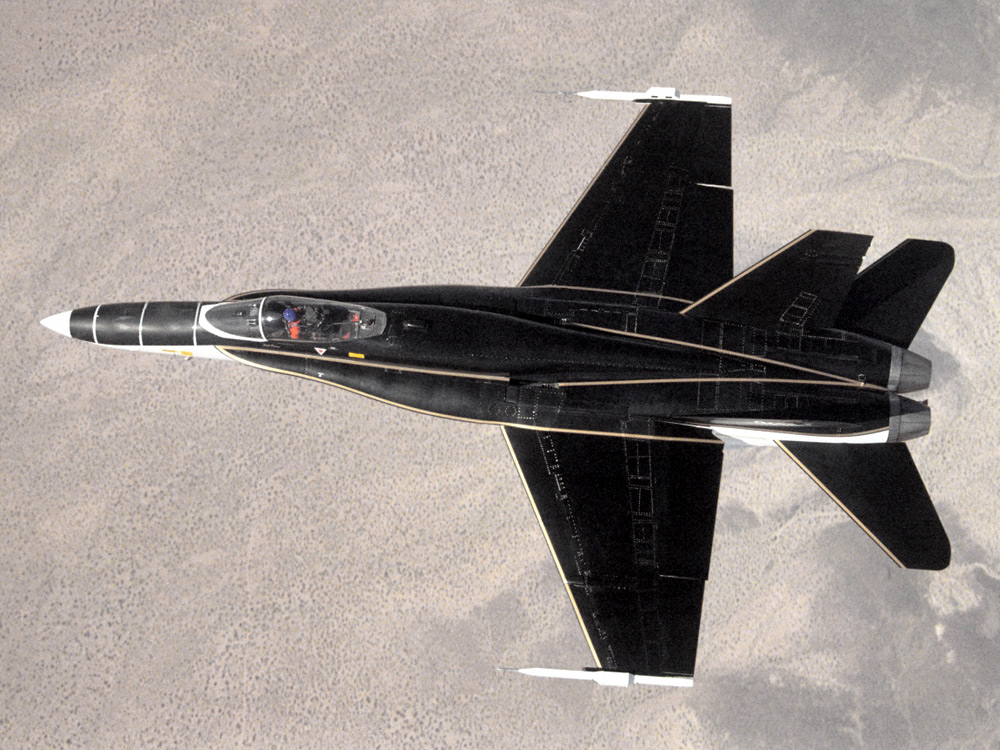
YF-18A (HARV) - US Navy BuNo 160780 -
NASA #840 |
| Location: NASA
Dryden FRC - Edwards AFB, CA |
| Date: ?/?/1994 |
| Credit: NASA |
|
Notes: #840
arrived at Dryden in 1985 to become
the aircraft used in the High Angle
of Attack Research Vehicle (HARV)
program. This was a joint project
between NASA's Dryden, Ames,
Langley, and Lewis centers.
|
|
|
|
| Subject:
YF-18A (HARV) - US Navy BuNo 160780 -
NASA #840 |
| Location: NASA
Dryden FRC - Edwards AFB, CA |
| Date: ?/?/1989 |
| Credit: NASA |
|
Notes: #840 was
brought from the Patuxent River Test
Center, and heavily modified over an
18 month period. It was eventually
fitted with thrust vectoring paddles
in 1991. The aircraft's upper
surfaces were painted black, so that
smoke and red liquid excreted from
small holes could be seen more
easily. These streams would show
airflow over the surface of the
aircraft.
|
|
|
|
|
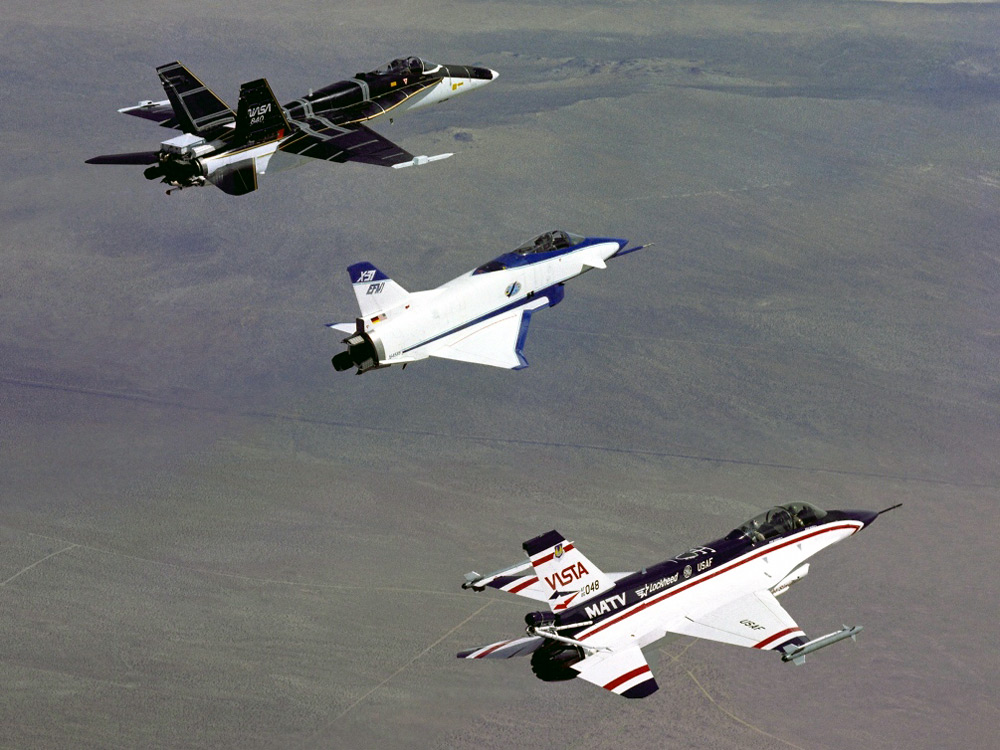
| Subject:
YF-18A (HARV), X-31, & NF-16D
(VISTA) Formation |
| Location: NASA
Dryden FRC - Edwards AFB, CA |
| Date: ?/?/1994 |
| Credit: NASA |
|
Notes: Three
unique NASA/USAF aircraft in a rare
flight together.
|
|
|
|
|
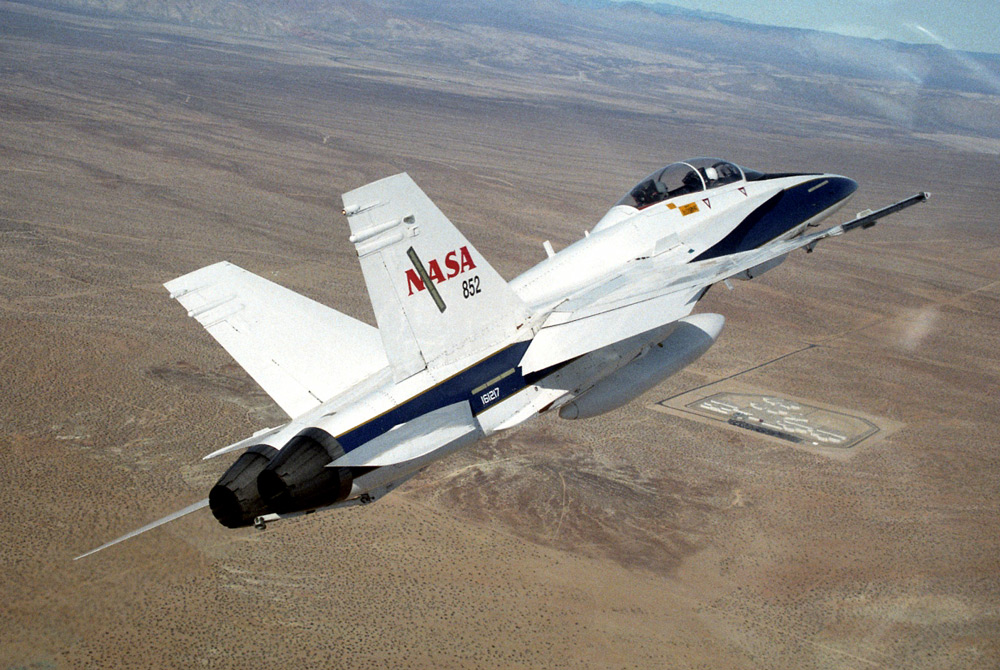
| Subject:
F/A-18B - US Navy BuNo 161217 - NASA
#852 |
| Location: NASA
Dryden FRC - Edwards AFB, CA |
| Date: 12/29/2000 |
| Credit: Lori Losey
/ NASA |
|
Notes: Was
registered as N852NA in 2001.
|
|
|
|
|
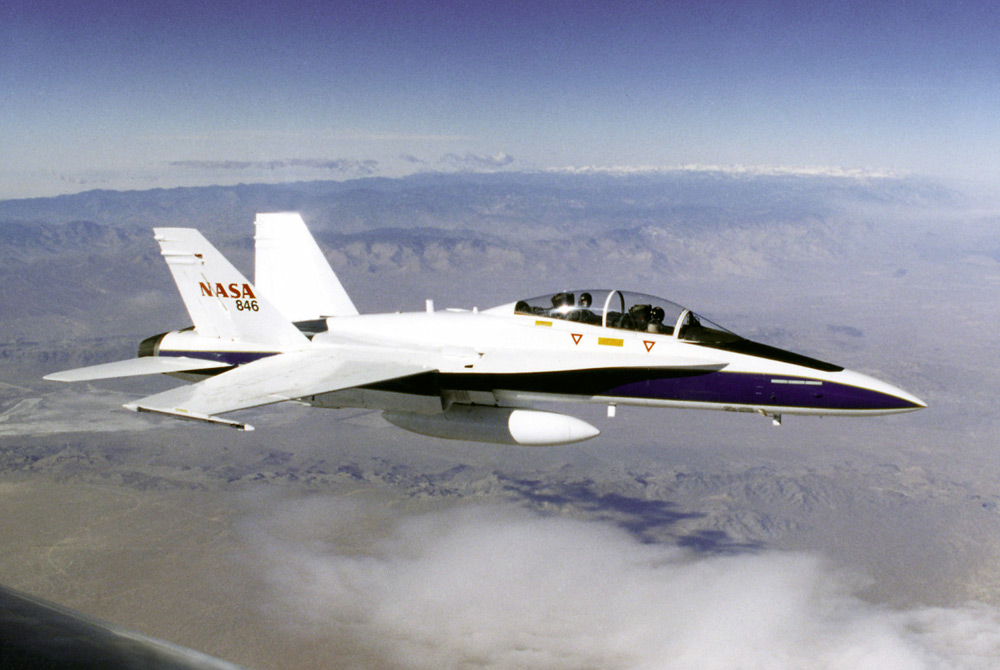
| Subject:
F/A-18B - US Navy BuNo 161355 - NASA
#846 |
| Location: NASA
Dryden FRC - Edwards AFB, CA |
| Date: ?/?/1996 |
| Credit: NASA |
|
Notes: #846 was
originally a Blue Angels Hornet.
|
|
|
|
|
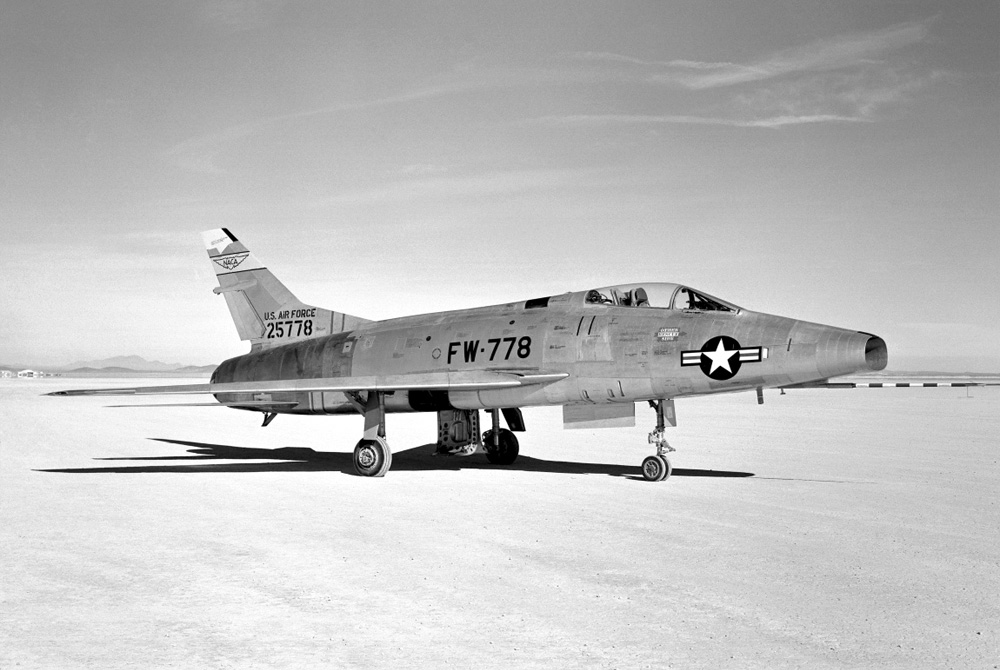
| Subject:
F-100A - US Air Force #52-5778 - NACA
#??? |
| Location: NASA
Dryden FRC - Edwards AFB, CA |
| Date: ?/?/1955 |
| Credit: NASA |
|
Notes: This
aircraft was flown by Scott
Crossfield in late 1954, during some
inertial roll coupling boundary
testing.
|
|
|
|
|
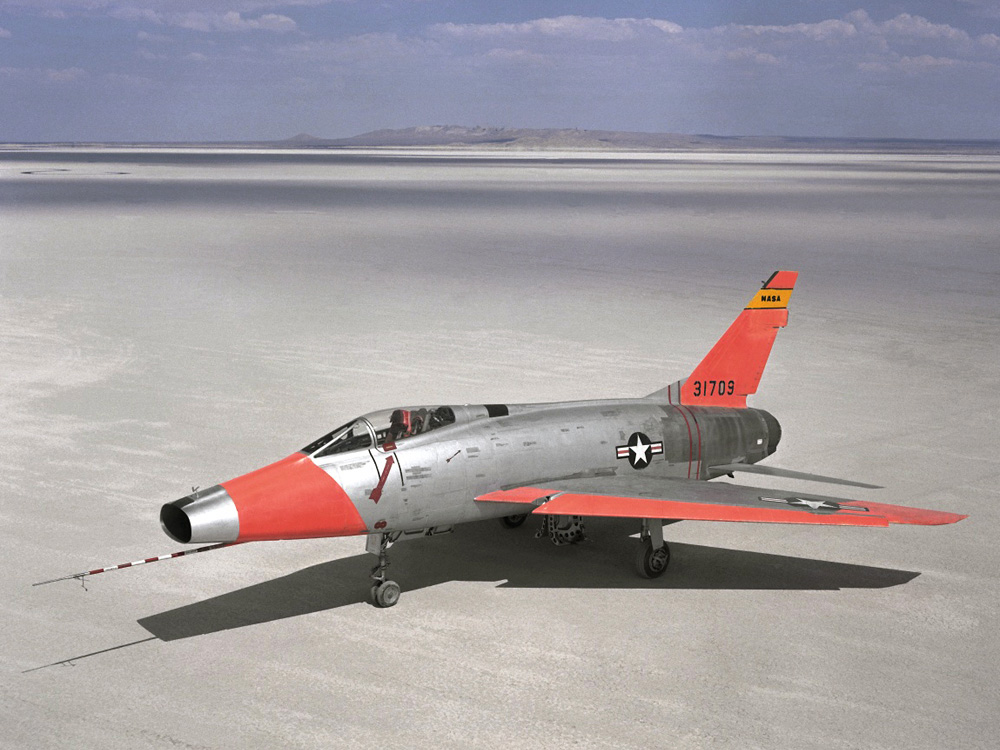
| Subject:
JF-100C - US Air Force #53-1709 - NASA
#709 (Ames) |
| Location: NASA
Dryden FRC - Edwards AFB, CA |
| Date: ?/?/1962 |
| Credit: NASA |
|
Notes: #709
arrived from Ames to Dryden on
11/2/1960. It was used in various
simulation studies, including some
in support of the X-15 and SST
programs.
|
|
|
|
|
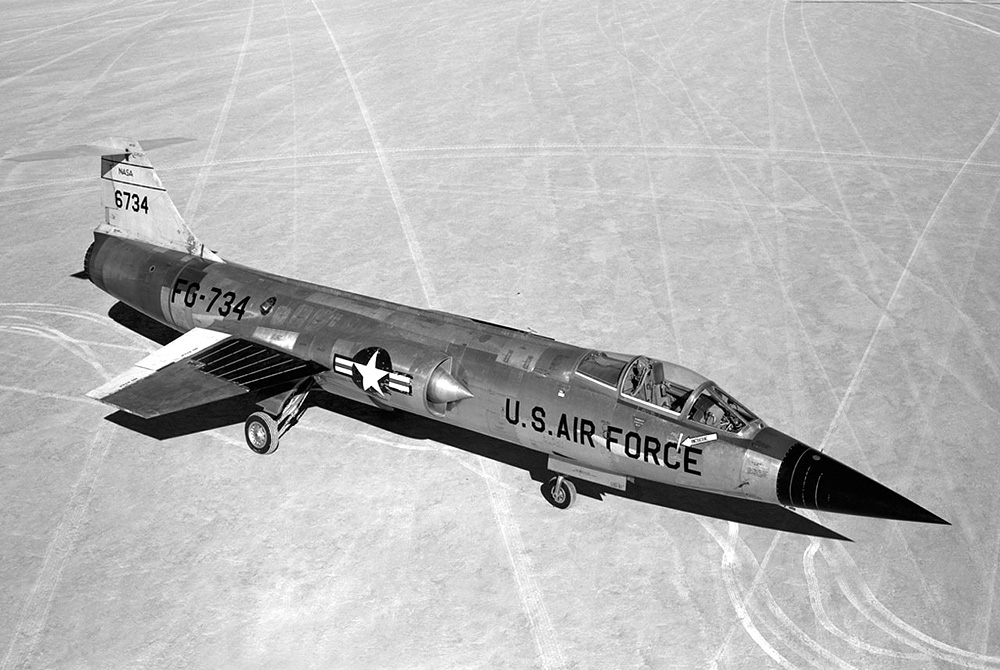
| Subject:
F-104A - US Air Force #56-734 - NASA
#734 |
| Location: NASA
Dryden FRC - Edwards AFB, CA |
| Date: ?/?/1960 |
| Credit: NASA |
|
Notes: Eleven
F-104s were flown out of Dryden over
a 38 year period between 1956 and
1994, which totaled a whopping
18,000 flights.
|
|
|
|
|
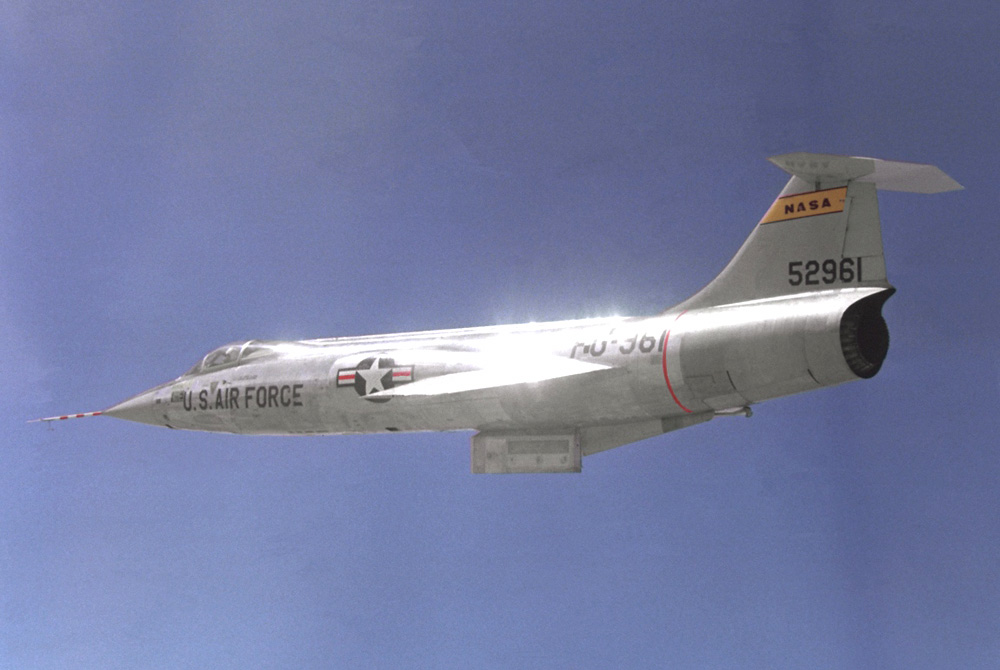
| Subject:
YF-104A - US Air Force #55-2961 - NASA
#818 |
| Location: NASA
Dryden FRC - Edwards AFB, CA |
| Date: ?/?/1965 |
| Credit: NASA |
|
Notes: Arrived to
Dryden in 1956.
|
|
|
|
|
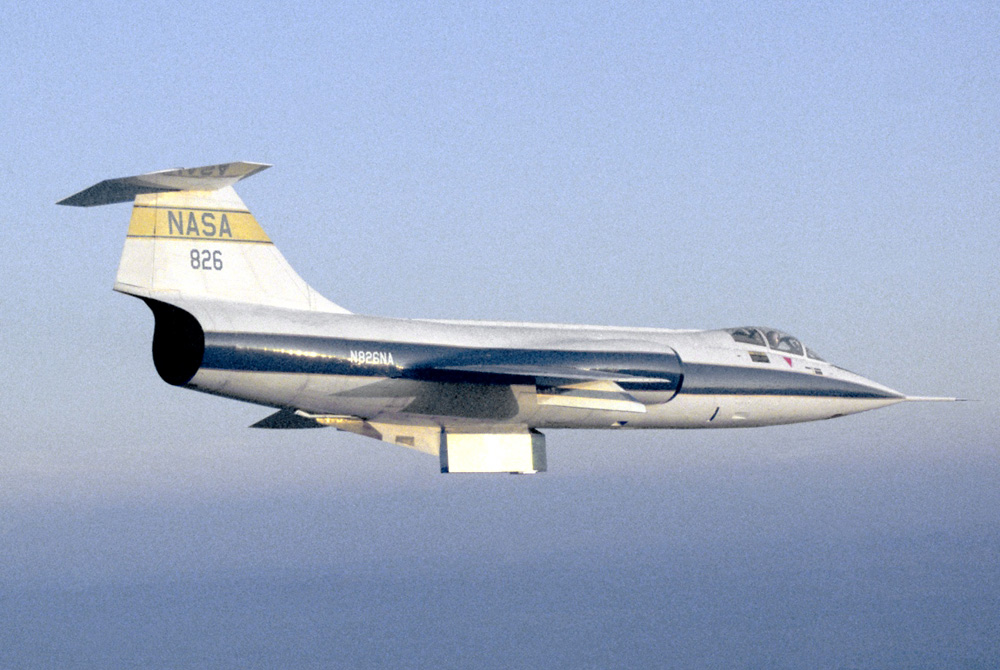
| Subject:
F-104G - German Air Force #24+64 -
NASA #826 |
| Location: NASA
Dryden FRC - Edwards AFB, CA |
| Date: 12/8/1993 |
| Credit: NASA |
|
Notes: #826 is
shown here with its Flight Test
Fixture (FTF) mounted on the center
line. The FTF could store various
test equipment during flights. This
aircraft was originally German AF
24+54, and arrived at Dryden on
7/2/1975.
|
|
|
|
|
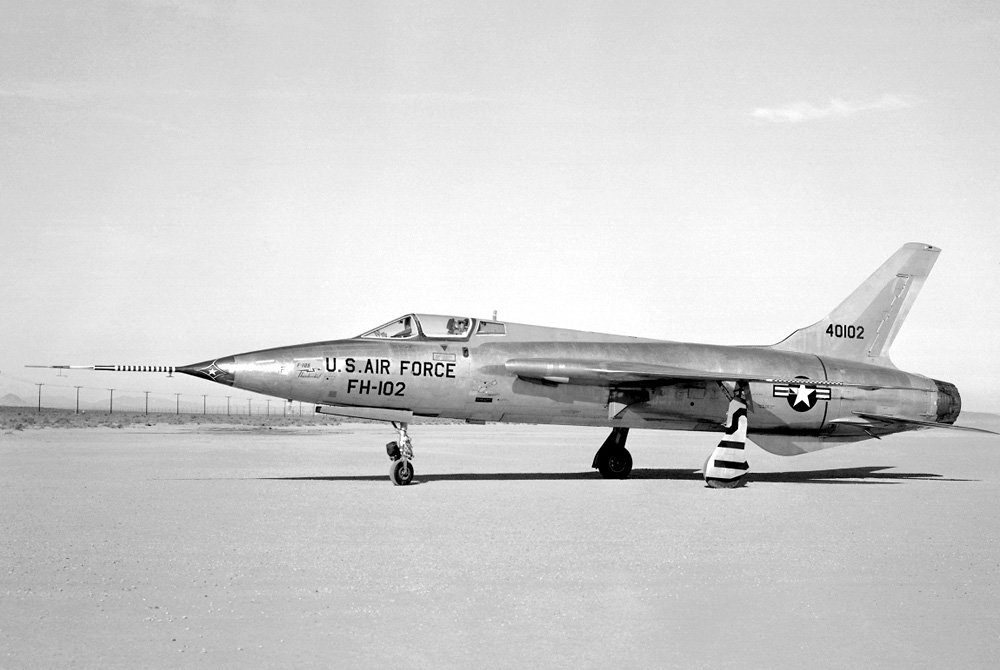
| Subject:
F-105B - US Air Force #54-102 - NASA
#? |
| Location: NASA
Dryden FRC - Edwards AFB, CA |
| Date: 12/16/1959 |
| Credit: NASA |
|
Notes: Pictured
on Rogers Dry Lake.
|
|
|
|
|
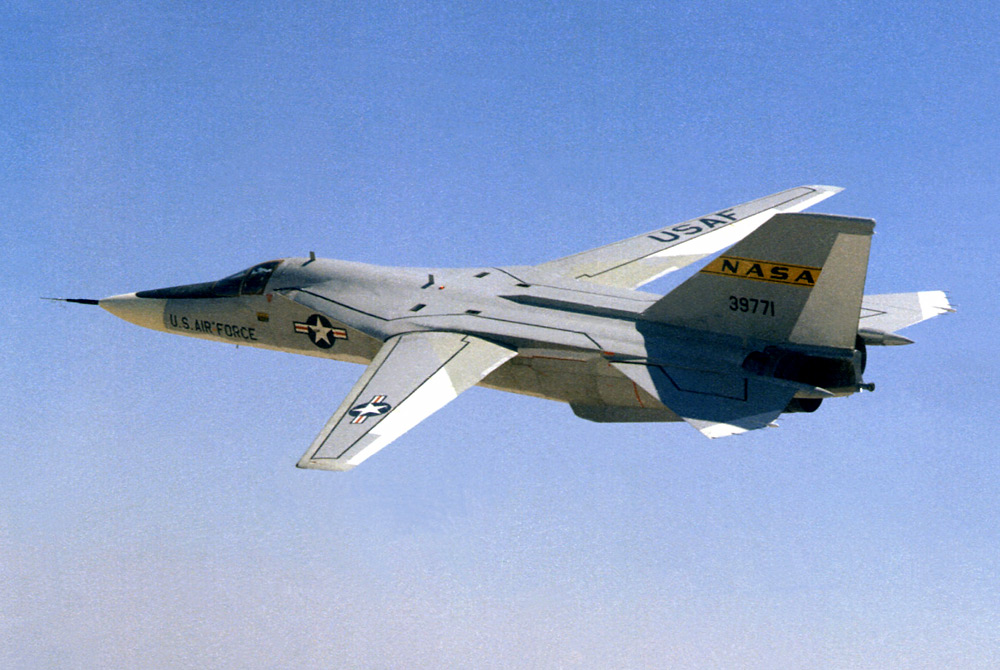
| Subject:
F-111A - US Air Force #63-9771 - NASA
#? |
| Location: NASA
Dryden FRC - Edwards AFB, CA |
| Date: 7/10/1968 |
| Credit: NASA |
|
Notes: #771
arrived to Dryden in 1967 and was
the 6th prototype F-111A.
|
|
|
|
|
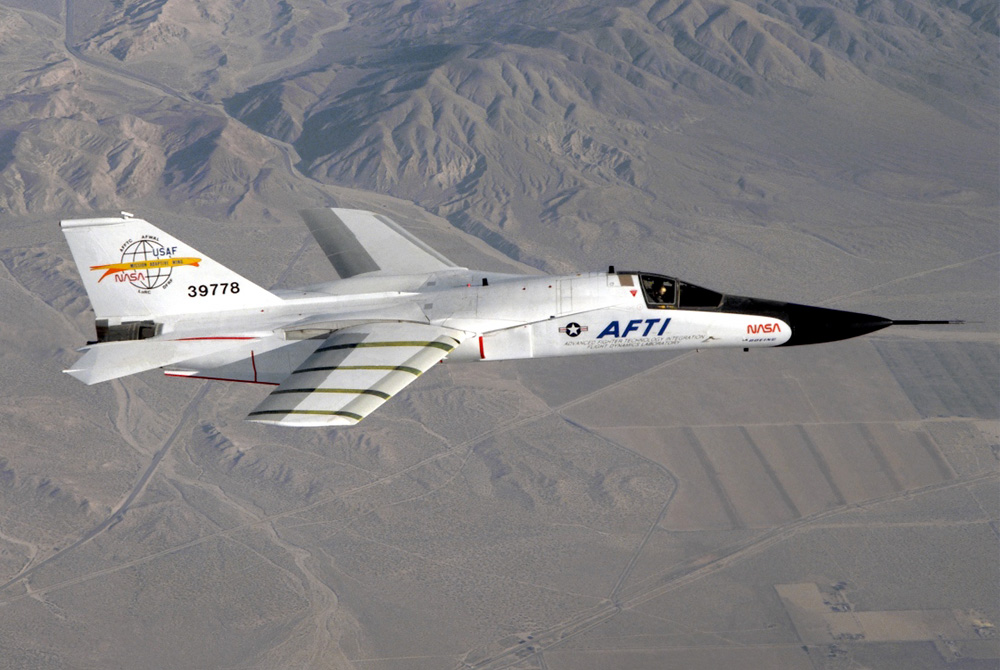
| Subject:
NF-111A (AFTI) - US Air Force #63-9778
- NASA #? |
| Location: NASA
Dryden FRC - Edwards AFB, CA |
| Date: 9/18/1985 |
| Credit: NASA |
|
Notes: #778 was
used in the Advanced Fighter
Technology Integration (AFTI)
program, and was specifically used
to test the Mission Adaptive Wing
(MAW). The black bands seen on the
wing were areas where surface
pressures were measured.
|
|
|
|
|
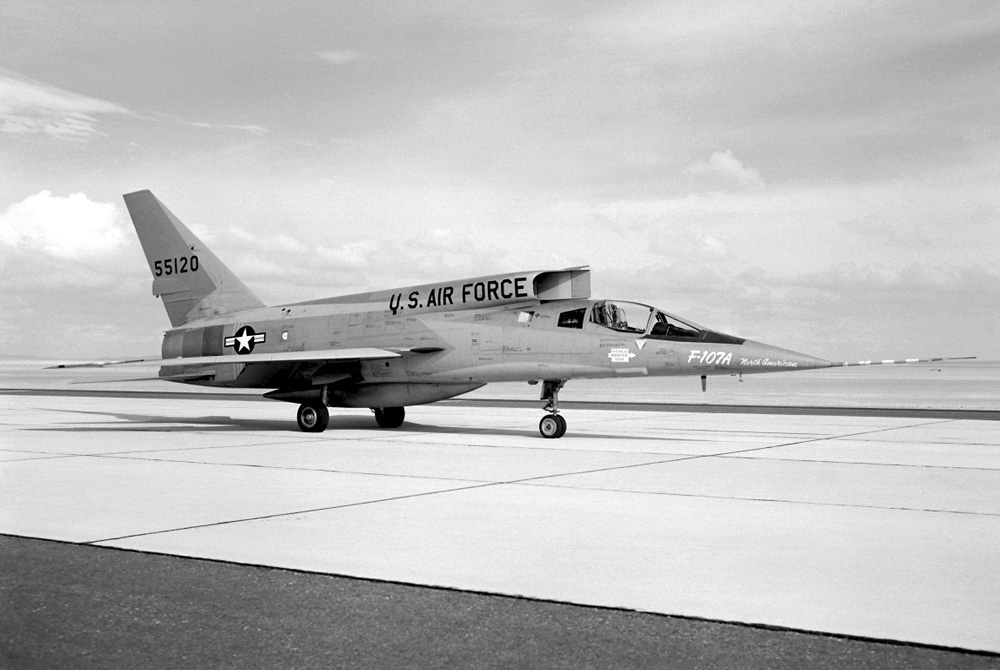
| Subject:
YF-107A - US Air Force # 55-5120 -
NACA #120 |
| Location: NASA
Dryden FRC - Edwards AFB, CA |
| Date: 1/7/1959 |
| Credit: NASA |
|
Notes: #120 was
the second of two F-107 aircraft
flown at Dryden between 1957 and
1959. The first F-107A was USAF
#55-5118 - NACA #207. Due to
problems, #207 only made 4 flights,
and was then grounded.
|
|
|
|
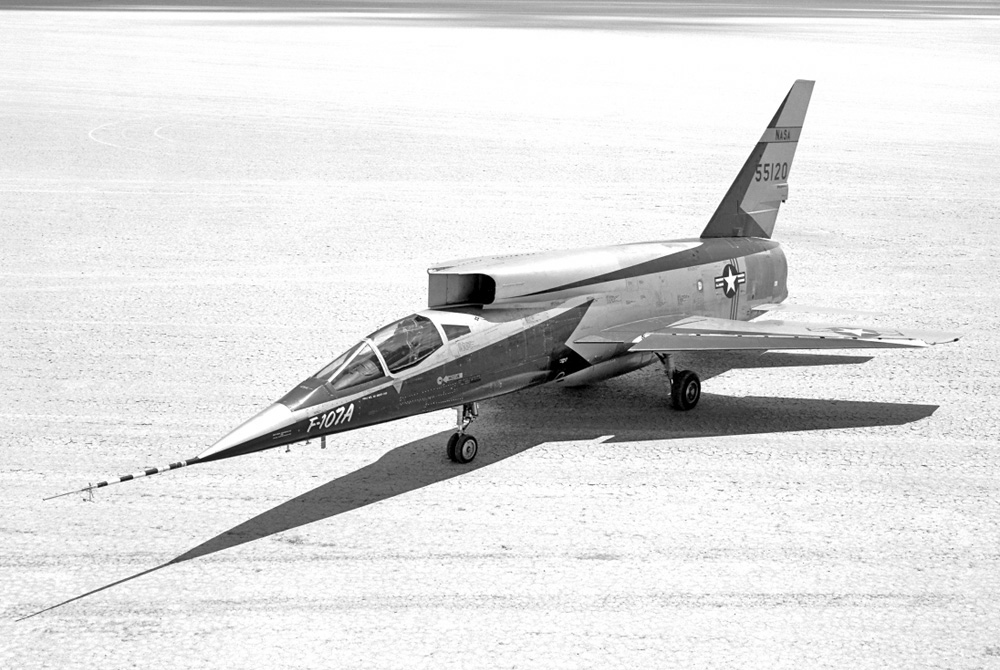
| Subject:
YF-107A - US Air Force # 55-5120 -
NACA #120 |
| Location: NASA
Dryden FRC - Edwards AFB, CA |
| Date: 5/26/1959 |
| Credit: NASA |
|
Notes: #120 was
the third F-107 built, and only made
40 flights before being destroyed in
an accident on 9/1/1959.
|
|
|
|
|
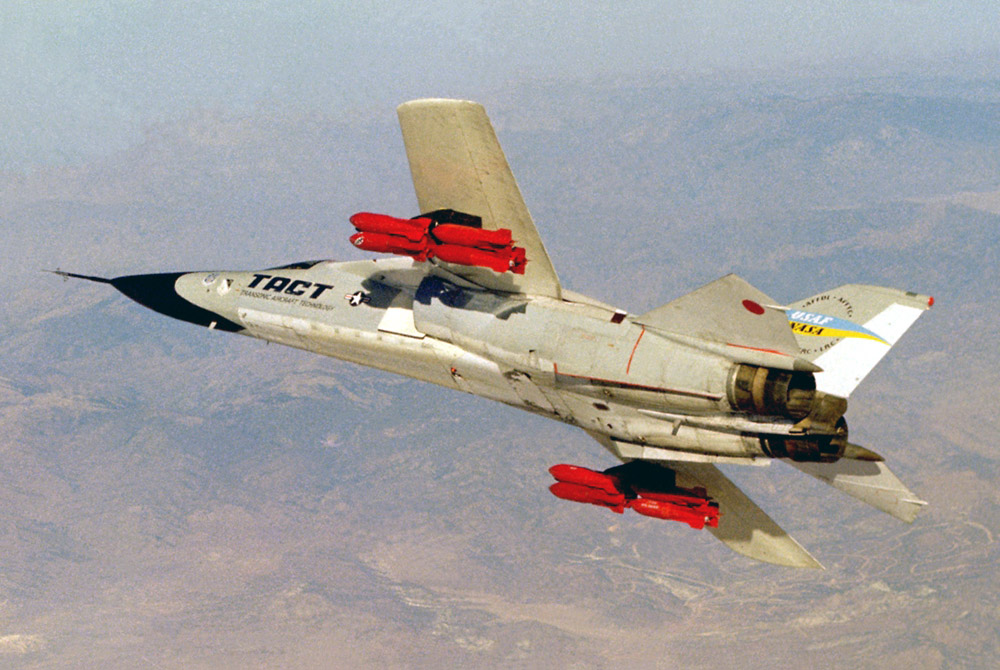
| Subject:
F-111A (TACT) - US Air Force #63-9778
- NASA #? |
| Location: NASA
Dryden FRC - Edwards AFB, CA |
| Date: 1/29/1976 |
| Credit: NASA |
|
Notes: #778 was
part of the Transonic Aircraft
Technology (TACT) program, and the
13th F-111A built. The practice
bombs shown here were for weapons
load evaluation on the supercritical
wing (SCW).
|
|
|
|
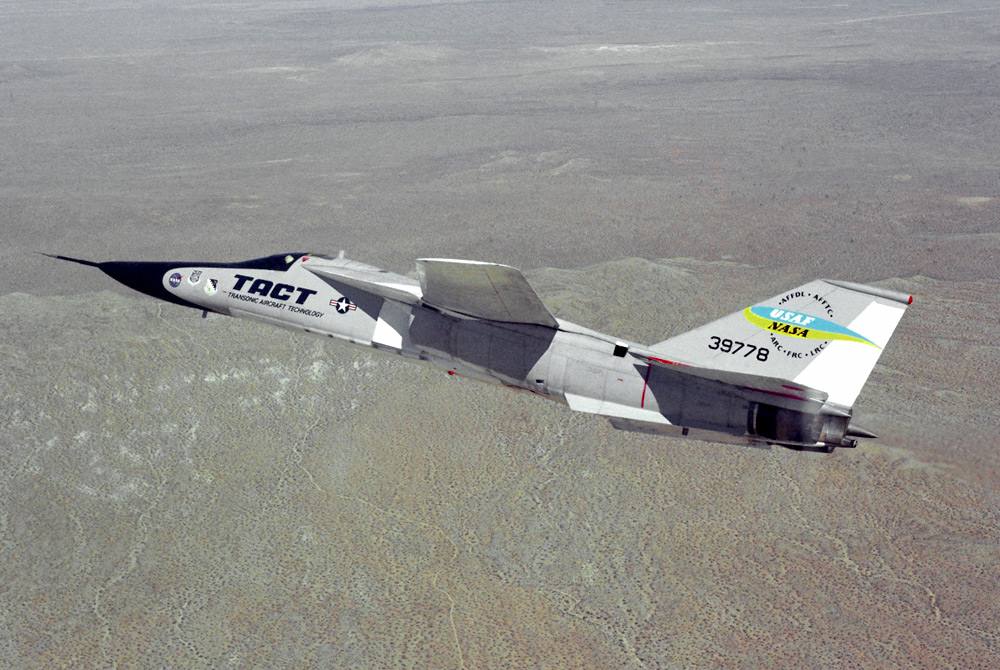
| Subject:
F-111A (TACT) - US Air Force #63-9778
- NASA #? |
| Location: NASA
Dryden FRC - Edwards AFB, CA |
| Date: 2/21/1974 |
| Credit: NASA |
|
Notes: Note the
joint USAF/NASA logo on the tail.
The TACT program lasted almost 20
years total.
|
|
|
|
|
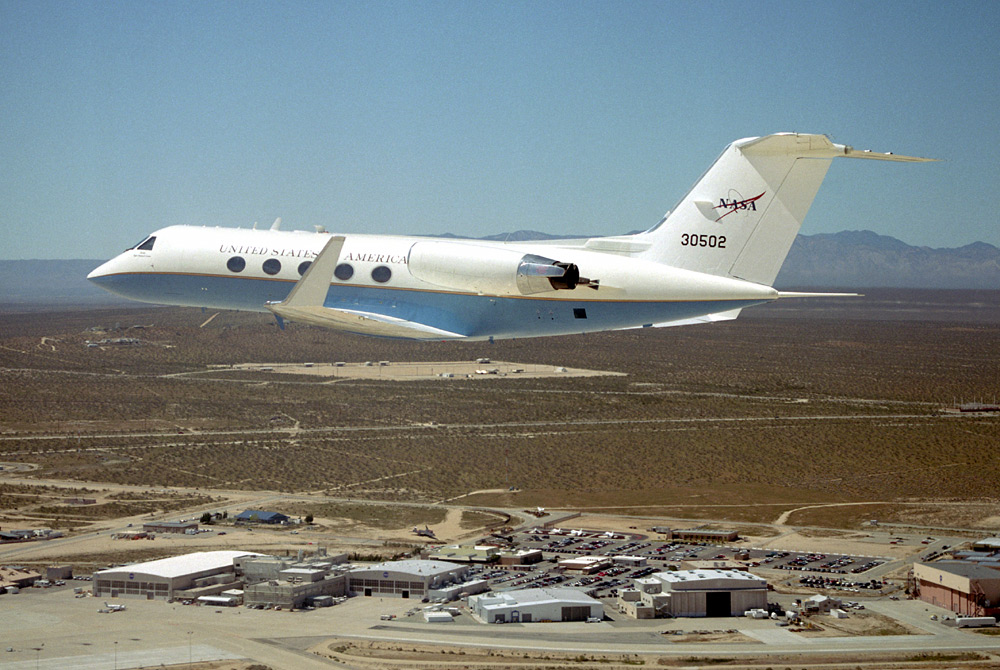
| Subject:
C-20A (Gulfstream III) - US Air Force
#83-0502 - NASA #? |
| Location: NASA
Dryden FRC - Edwards AFB, CA |
| Date: 4/8/2003 |
| Credit: Jim Ross /
NASA |
|
Notes: #502
arrived at Dryden during 9/2002, and
is used for general support. The
aircraft is shown still wearing its
USAF VIP scheme in this photo.
|
|
|
|
|
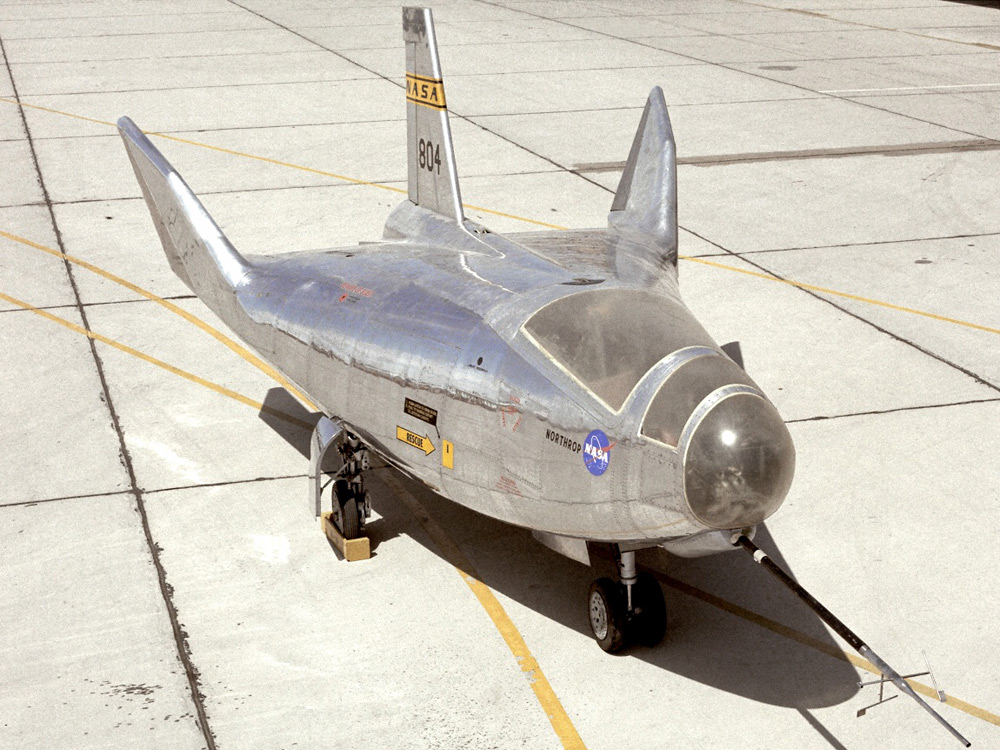
| Subject:
HL-10 - Northrop - NASA #804 |
| Location: NASA
Dryden FRC - Edwards AFB, CA |
| Date: 5/27/1966 |
| Credit: NASA |
|
Notes: The HL-10
was one of five 'lifting-body'
aircraft that were built to test the
concept of low lift-over-drag
vehicles, designed for reentry from
space.
|
|
|
|
|
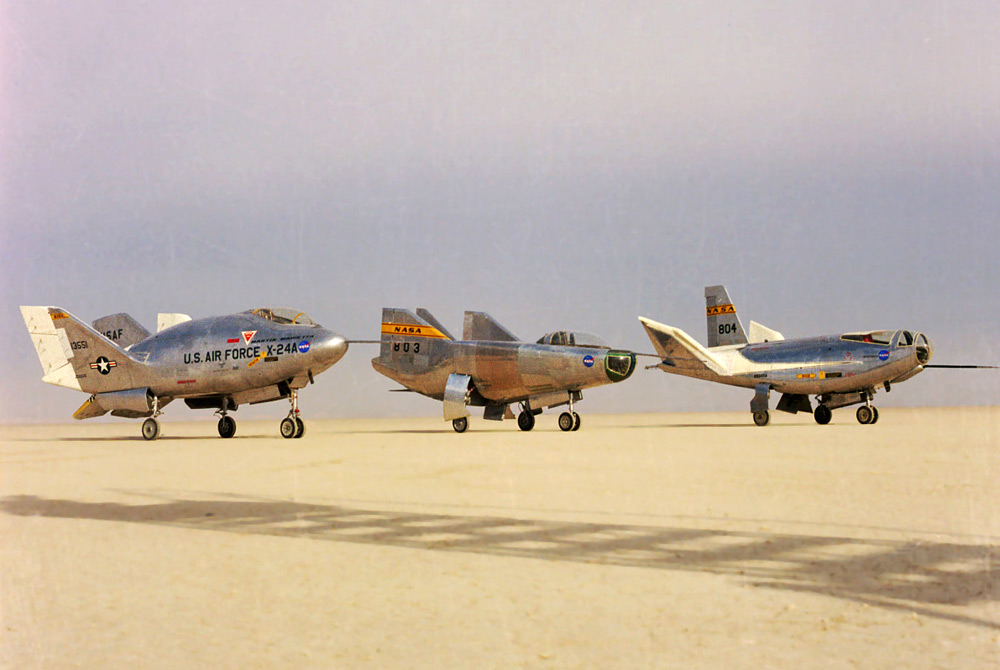
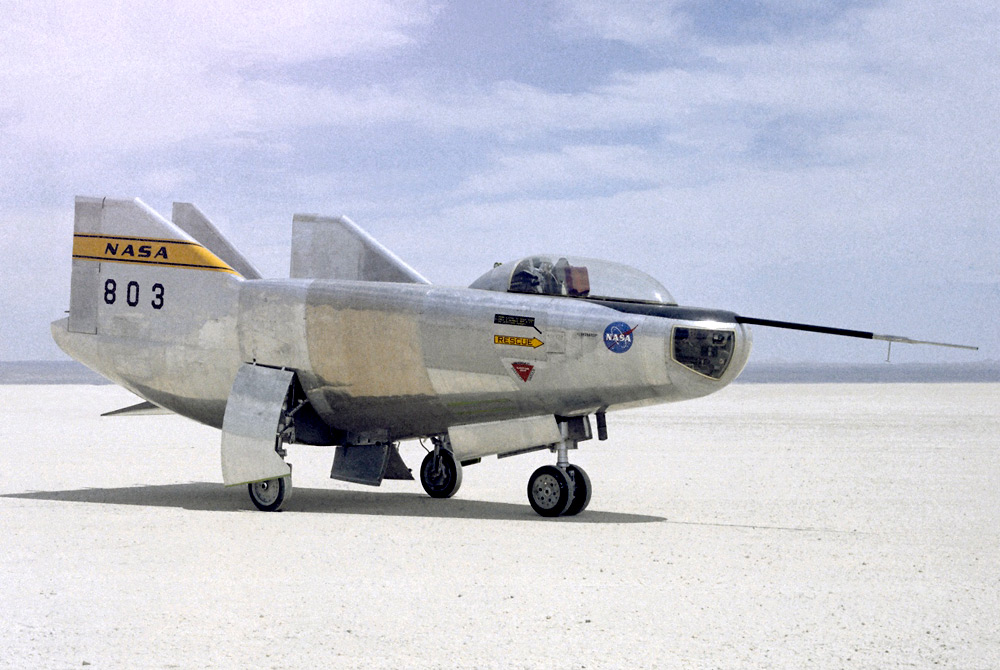
| Subject:
X-24A USAF #13551, M2-F3 NASA #803,
& HL-10 NASA #804 |
| Location: NASA
Dryden FRC - Edwards AFB, CA |
| Date: 12/18/1969 |
| Credit: NASA |
|
Notes: These three
'lifting-body' aircraft helped to
study the concept of making
un-powered landings while returning
from space, in the space shuttle
program. The X-24A flew from 4/17/69
to 6/4/71. The M2-F3 flew from
6/2/70 to 12/20/72. The HL-10 flew
from 12/22/66 to 7/17/70.
|
|
|
|
|
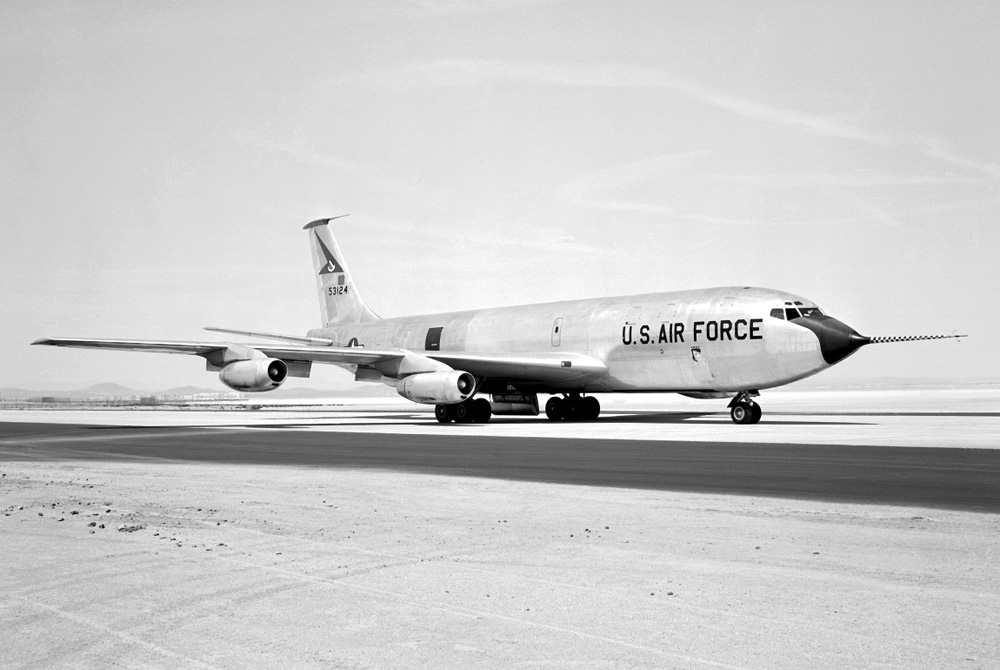
| Subject:
JKC-135A - US Air Force #55-3124 -
NASA #? |
| Location: NASA
Dryden FRC - Edwards AFB, CA |
| Date: 6/5/1958 |
| Credit: NASA |
|
Notes: In 1958,
the Civil Aeronautics Administration
requested NASA's help in studying
new approach procedure guidelines in
minimum visibility, for Boeing's new
B-707. This aircraft was utilized in
those tests.
|
|
|
|
|
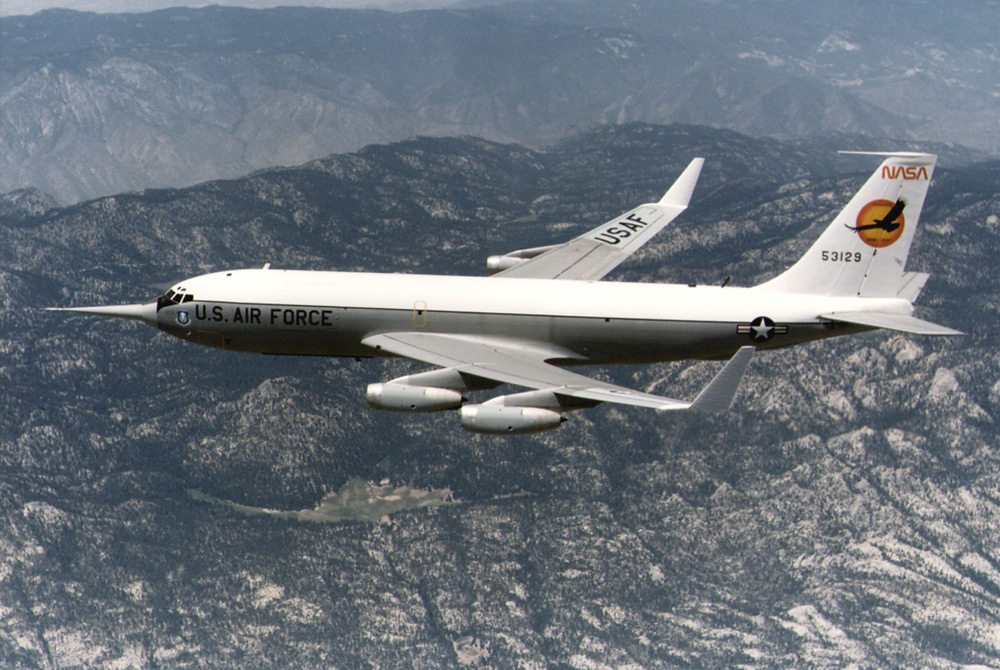
| Subject:
NKC-135A - US Air Force #55-3129 -
NASA #? |
| Location: NASA
Dryden FRC - Edwards AFB, CA |
| Date: 8/20/1979 |
| Credit: NASA |
|
Notes: During
1979 and 1980, #129 was primarily
used to study the benefits of using
winglets. Tests showed drag could be
reduced up to 7 percent. This
aircraft was eventually modified
into a NKC-135E, and then an
EC-135P. It was also used in zero G
training by Mercury astronauts.
|
|
|
|
|
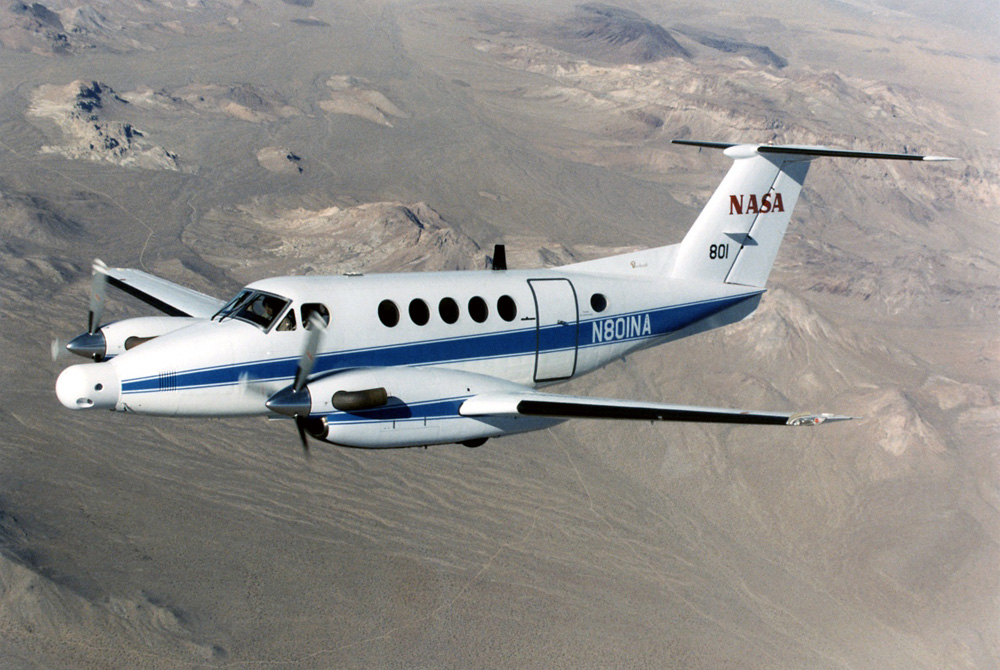
| Subject:
B200 Super King Air - Beech #BB-1164 -
NASA #801 |
| Location: NASA
Dryden FRC - Edwards AFB, CA |
| Date: 9/27/1998 |
| Credit: Lori Losey
/ NASA |
|
Notes: Shown here
with a modified nose for
experiments, #801 primarily works as
a shuttle aircraft, moving people
between Ames, Dryden, and other
locations.
|
|
|
|
|
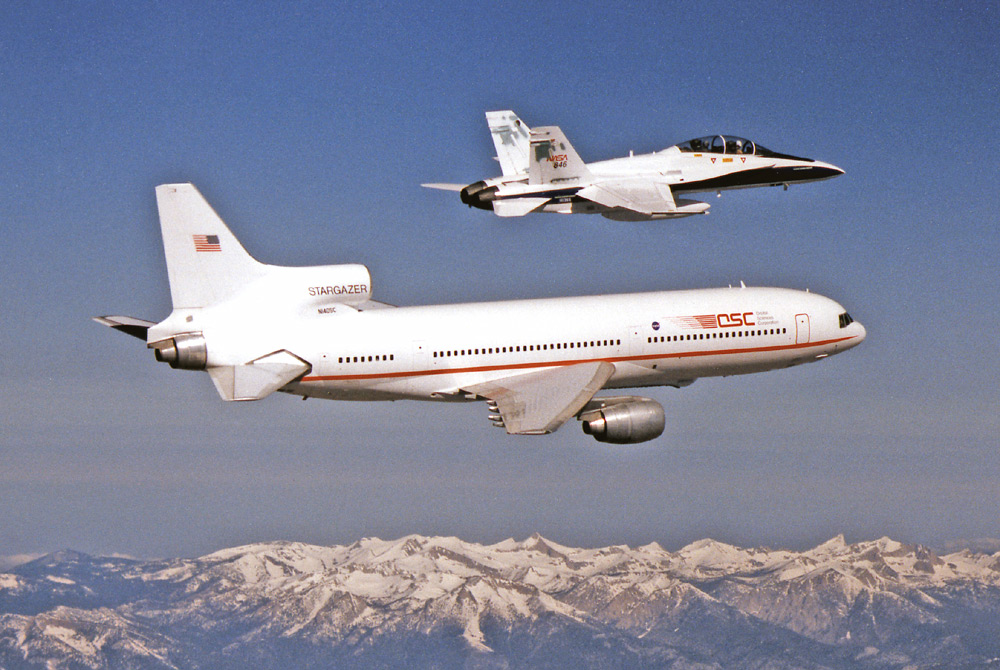
| Subject:
L-1011 Tristar - Serial #193E1067 -
N140SC |
| Location: NASA
Dryden FRC - Edwards AFB, CA |
| Date: 6/?/1995 |
| Credit: NASA |
|
Notes: Nicknamed
"Stargazer", this L-1011 is operated
by the Orbital Sciences Corporation,
and has worked with NASA on various
programs, including the Adaptive
Performance Optimization project.
|
|
|
|
|
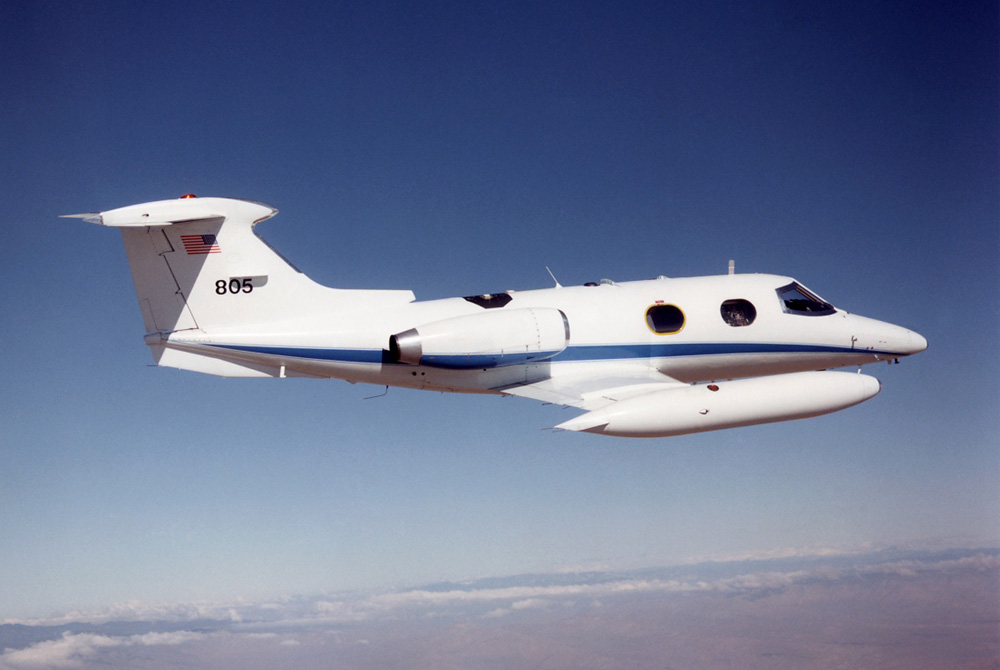
| Subject:
Lear 24 - NASA #805 |
| Location: NASA
Dryden FRC - Edwards AFB, CA |
| Date: 10/30/1998 |
| Credit: Jim Ross /
NASA |
|
Notes: Dryden's
Lear 24 was removed from the roster
in 2001.
|
|
|
|
|
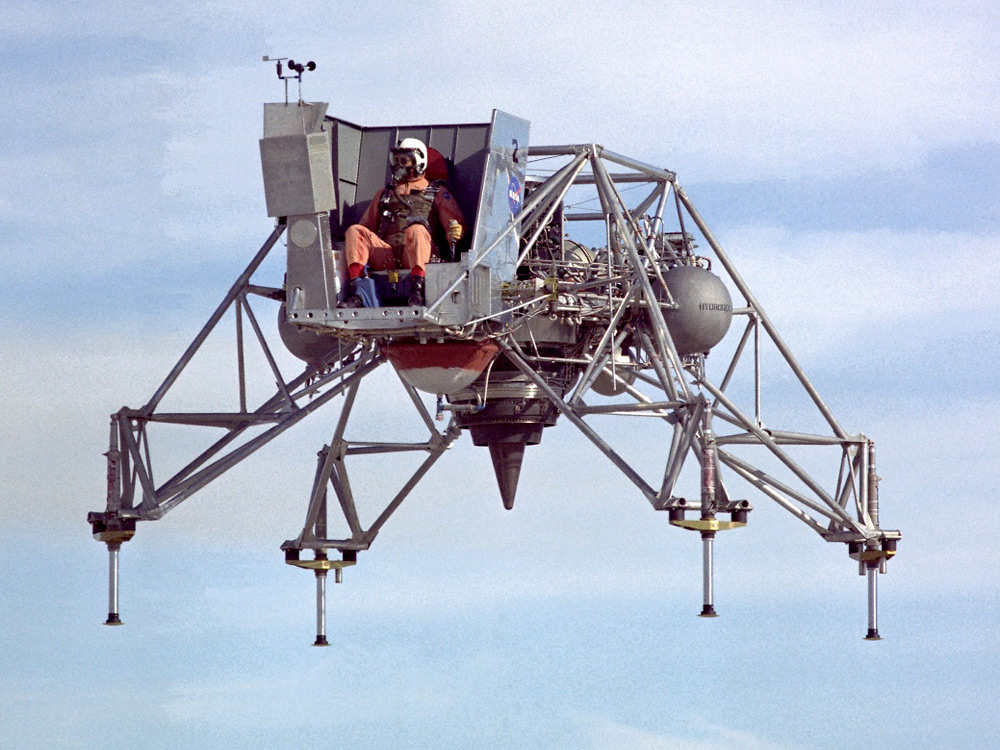
| Subject:
Lunar Landing Research Vehicle (LLRV)
- NASA #? |
| Location: NASA
Dryden FRC - Edwards AFB, CA |
| Date: 1/11/1967 |
| Credit: NASA |
|
Notes: Two LLRV
vehicles were built by Bell and
shipped to Dryden in April, 1964.
These two vehicles would help test
the concept of landing on the moon
for the Apollo space program. This
would eventually lead NASA to give
Bell a contract to deliver three
Lunar Landing Training Vehicles
(LLTVs) in 1966.
|
|
|
|
|
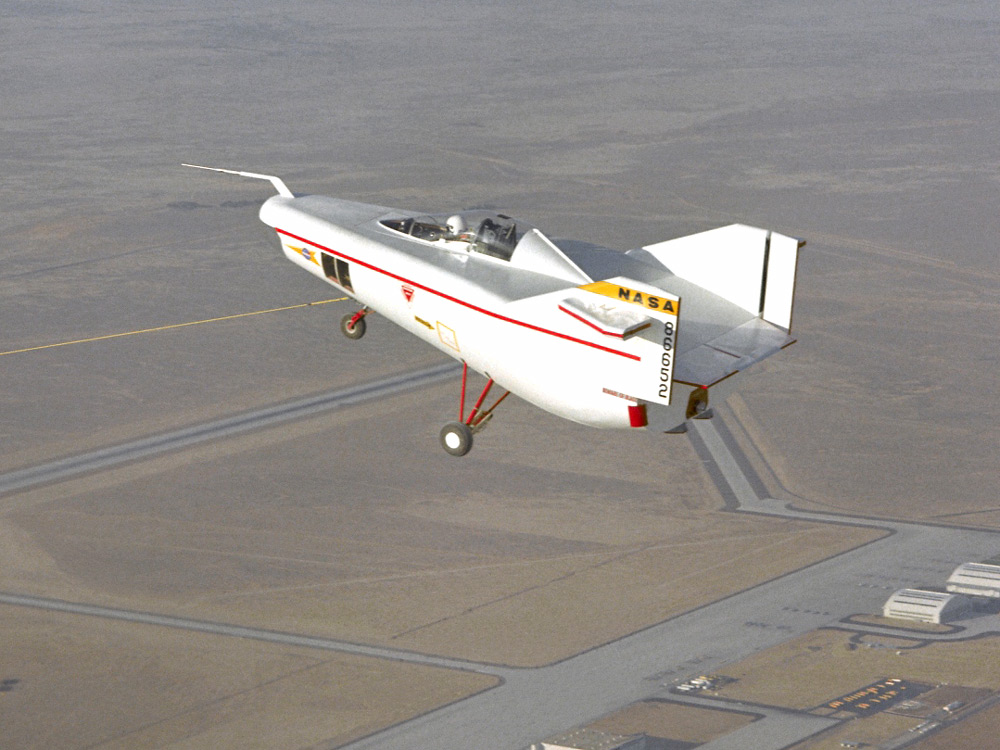
| Subject:
M2-F1 - Serial #86652 - NASA #? |
| Location: NASA
Dryden FRC - Edwards AFB, CA |
| Date: 8/28/1964 |
| Credit: NASA |
|
Notes: Seen in
this photo while being towed by a
C-47, the M2-F1 was the first
piloted 'lifting body' aircraft to
be test flown. The lifting body
aircraft were built for the purpose
of testing the concept of landing an
un-powered space vehicle
horizontally after reentry. Some
photos show this aircraft with
'N86652' on the tail. Thanks to Rick
Baldridge for the info.
|
|
|
|
|
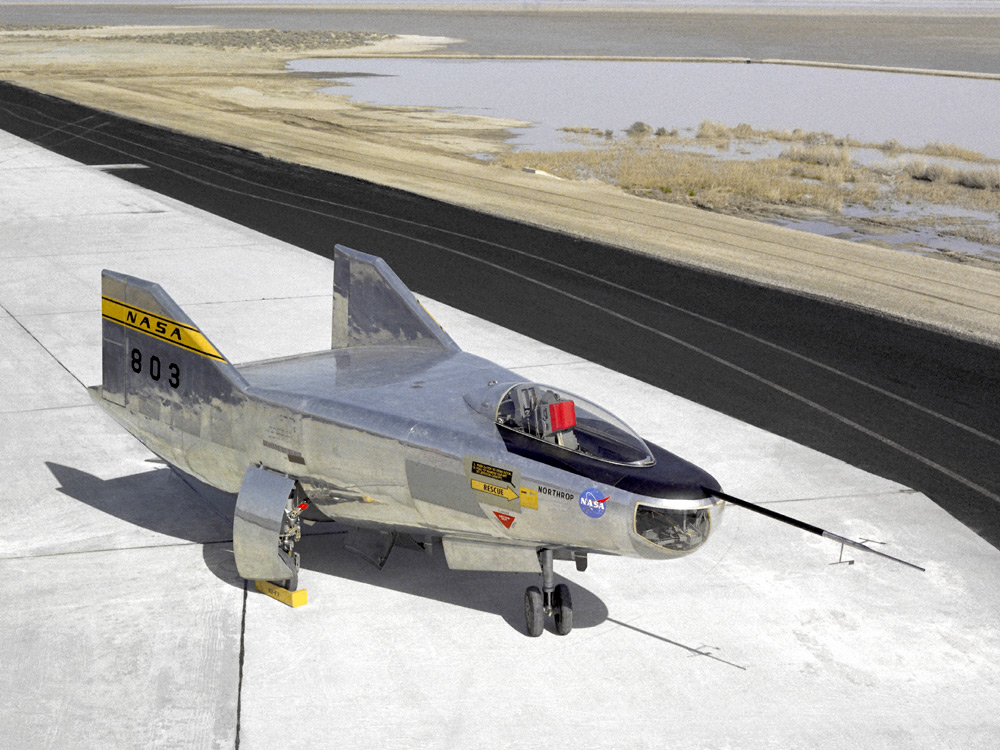
| Subject:
M2-F2 - Northrop - NASA #803 |
| Location: NASA
Dryden FRC - Edwards AFB, CA |
| Date: 2/24/1966 |
| Credit: NASA |
|
Notes: The success
of the M2-F1 led to the construction
of two heavyweight lifting bodies...
The Northrop built M2-F2 and HL-10.
The "M" refers to 'manned' and "F"
refers to 'flight'.
|
|
|
|
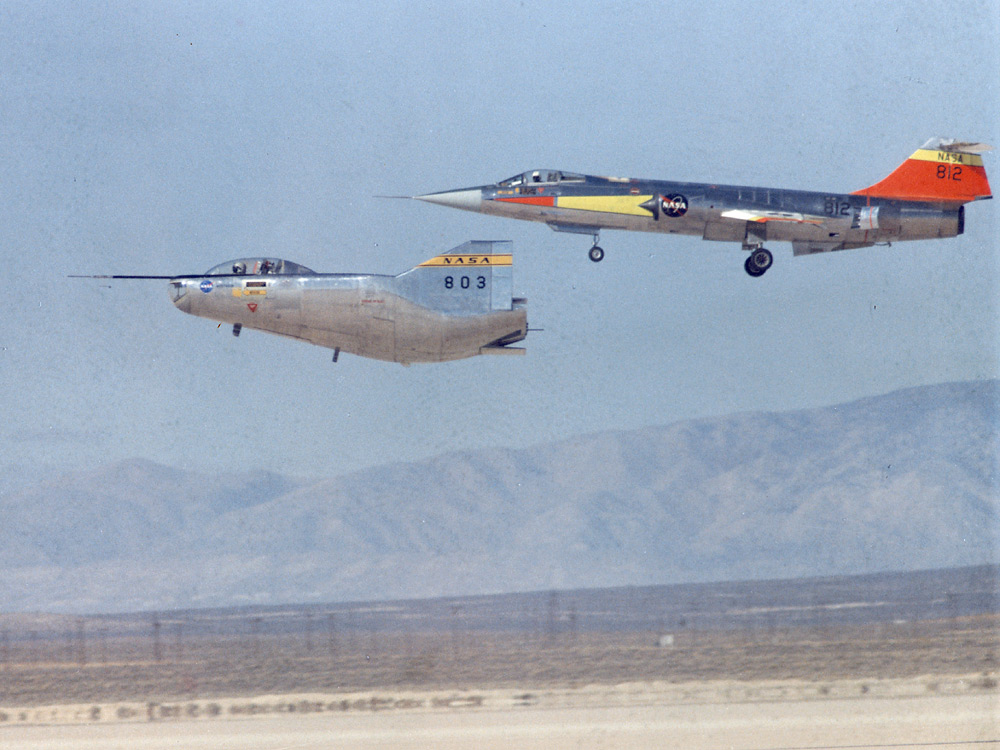
| Subject:
M2-F2 - Northrop - NASA #803 |
| Location: NASA
Dryden FRC - Edwards AFB, CA |
| Date: 11/21/1966 |
| Credit: NASA |
|
Notes: Lifting
body #803 is seen returning from a
flight, with F-104 chase #812.
|
|
|
|
|
| Subject:
M2-F3 - Northrop - NASA #803 |
| Location: NASA
Dryden FRC - Edwards AFB, CA |
| Date: 6/20/1970 |
| Credit: NASA |
|
Notes: After
M2-F2 sustained damage in a crash in
May of 1967, the aircraft was given
back to Northrop, where it was
rebuilt into M2-F3. A center fin was
added at this time, and the whole
rebuild process took approximately
three years.
|
|
|
|
|
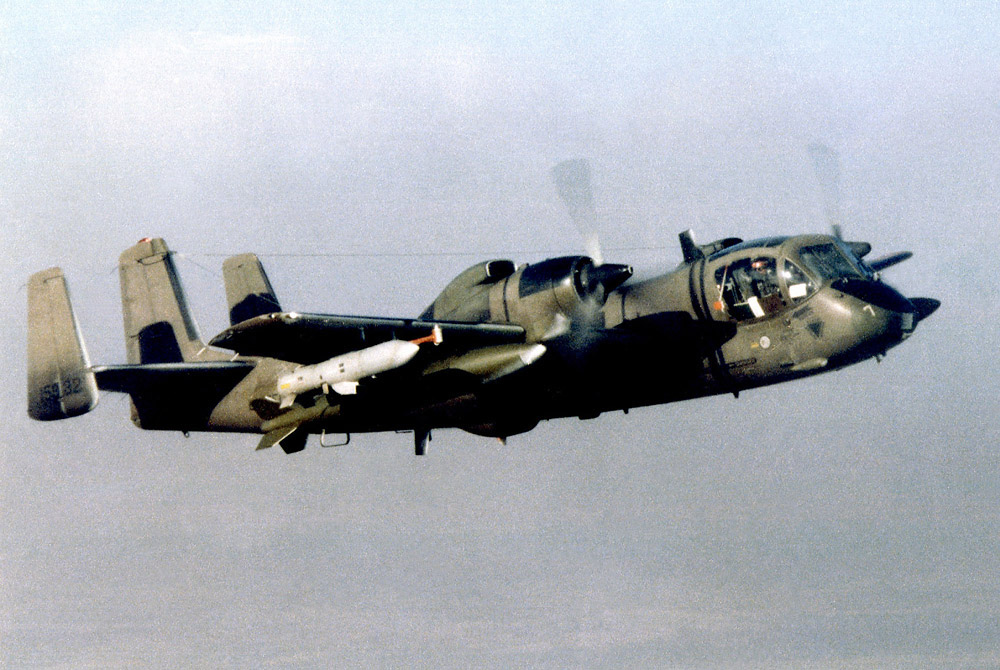
| Subject:
OV-1C - US Army ##67-15932 - NASA #? |
| Location: NASA
Dryden FRC - Edwards AFB, CA |
| Date: 2/25/1983 |
| Credit: NASA |
|
Notes: This
aircraft was used in a joint NASA/US
Army Aviation Engineering Flight
Activity program, to study a stall
speed warning system in the early
1980s.
|
|
|
|
|
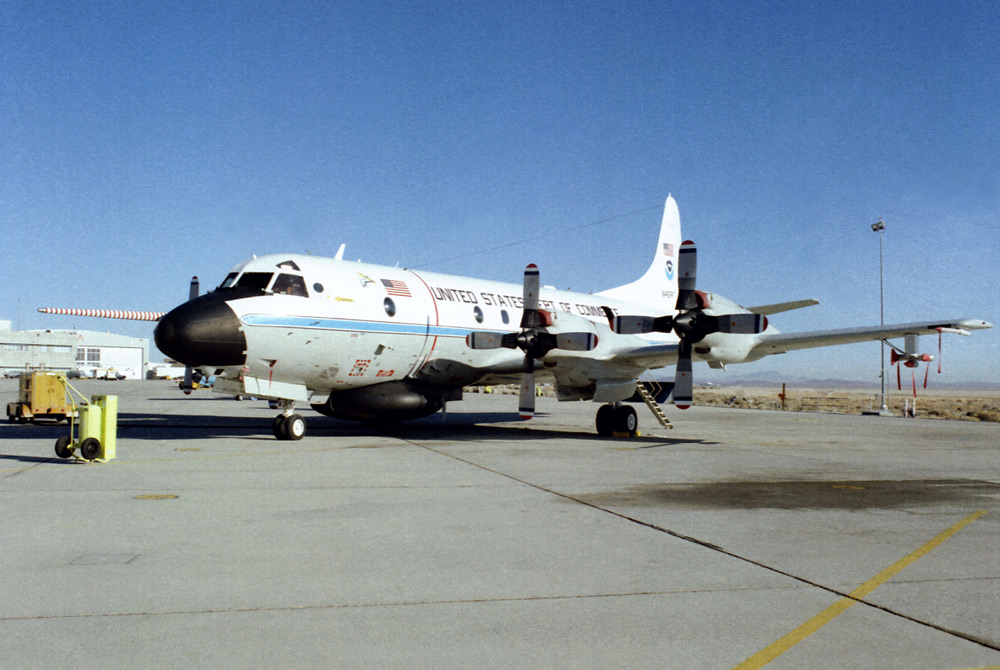
| Subject:
WP-3D - US Navy BuNo 159773 / NOAA
N42RF - NASA #? |
| Location: NASA
Dryden FRC - Edwards AFB, CA |
| Date: 2/4/1987 |
| Credit: NASA |
|
Notes: This WP-3D
was borrowed from NOAA and made a
series of flights in Florida and at
Dryden in 1987, to test in-flight
rain damage to the Space Shuttle
thermal protection system. Space
Shuttle tiles were mounted on a
pylon on the right wing. Three
flights were made at Dryden for
these tests.
|
|
|
|
|
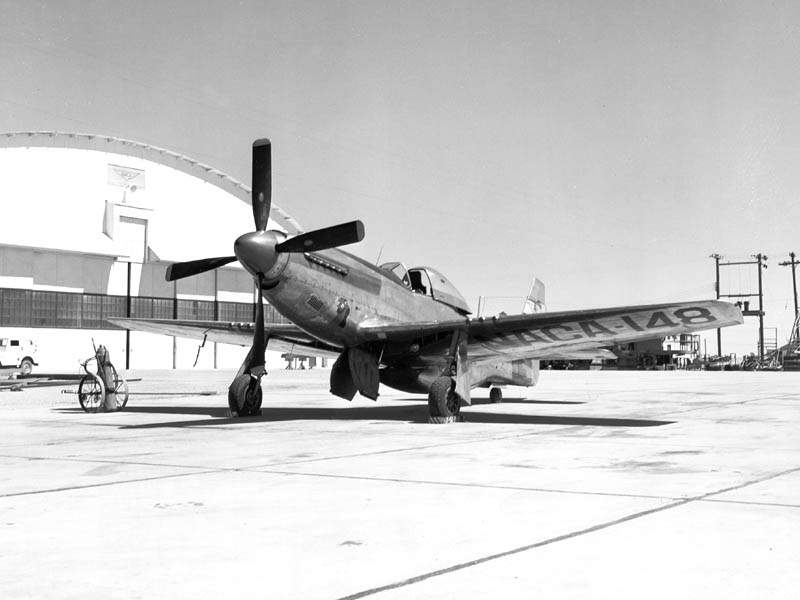
| Subject:
P-51 - US Air Force #? - NACA #148 |
| Location: NASA
Dryden FRC - Edwards AFB, CA |
| Date: N/A |
| Credit: USAF |
|
Notes: An NACA
P-51 sits on the NACA flight line,
which at that time was located on
what is now referred to as North
Base.
|
|
|
|
|
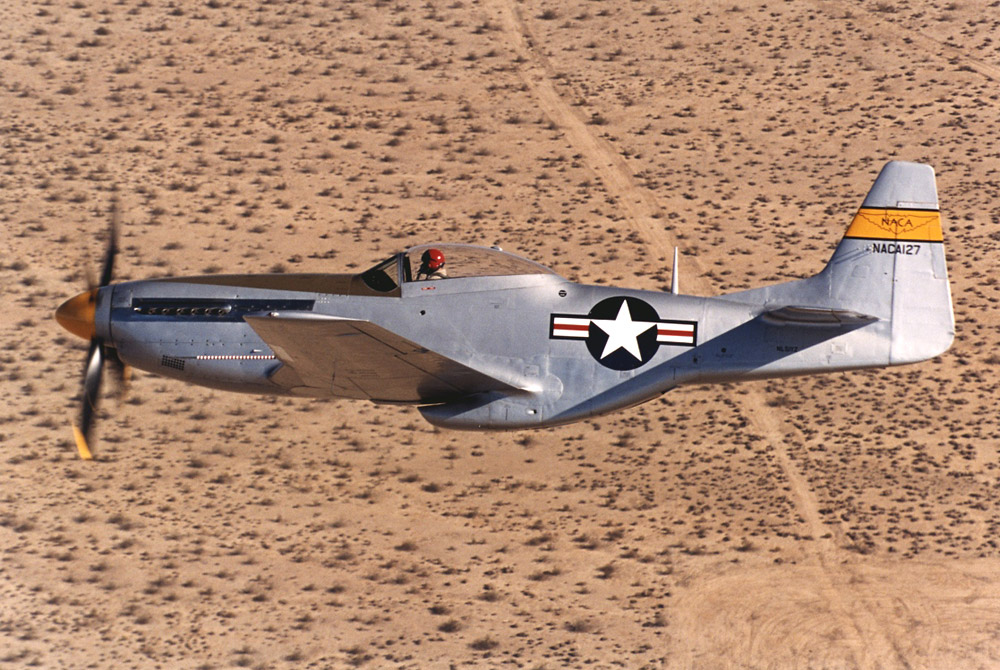
| Subject:
P-51D - US Air Force #44-84900 /
Privately Owned - NACA #127 |
| Location: NASA
Dryden FRC - Edwards AFB, CA |
| Date: 9/15/2000 |
| Credit: Jim Ross /
NASA |
|
Notes: This
Mustang is privately owned by Bill
Allmon. It was originally NACA #127,
and eventually put on static
display. The aircraft was then
restored to its NACA scheme by Bill
in 1995 and made airworthy again. It
is seen here being flown at a
reunion for former NACA employees,
at the NASA Dryden Center. Earlier
in its life, it was also modified to
study the possibility of a Naval
version.
|
|
|
|
|
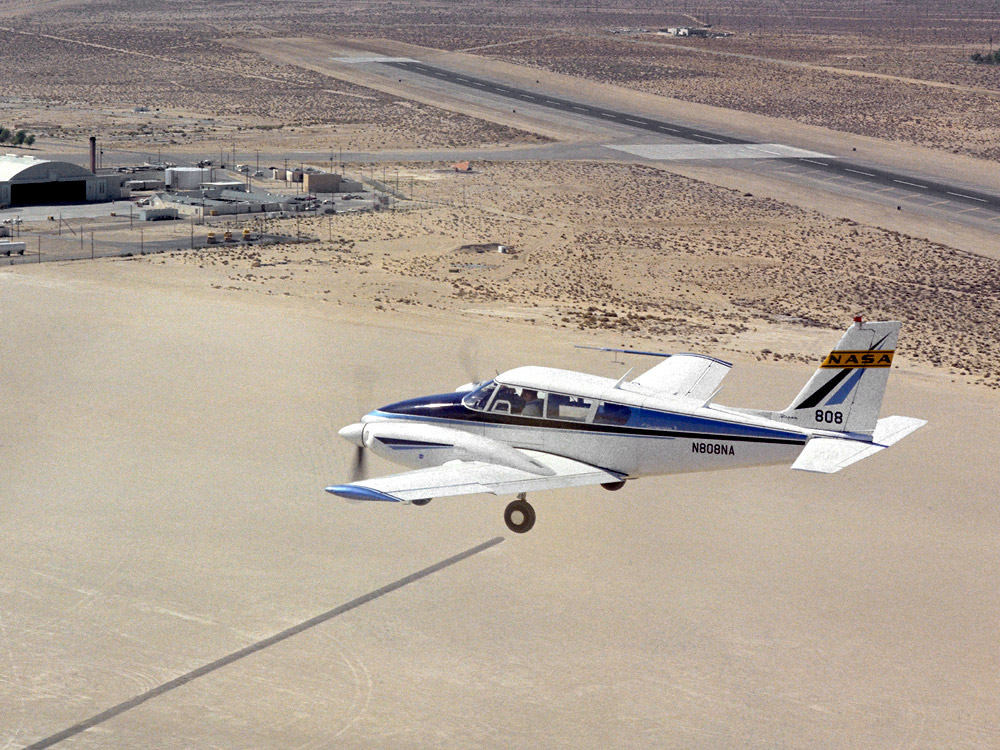
| Subject:
PA-30 - Serial #301498 - NASA #808 |
| Location: NASA
Dryden FRC - Edwards AFB, CA |
| Date: 10/8/1971 |
| Credit: NASA |
|
Notes: This Piper
Twin Comanche was used in the early
70's to test the concept of Remotely
Piloted Research Vehicles. The
aircraft is seen here making a
remote controlled landing.
|
|
|
|
|
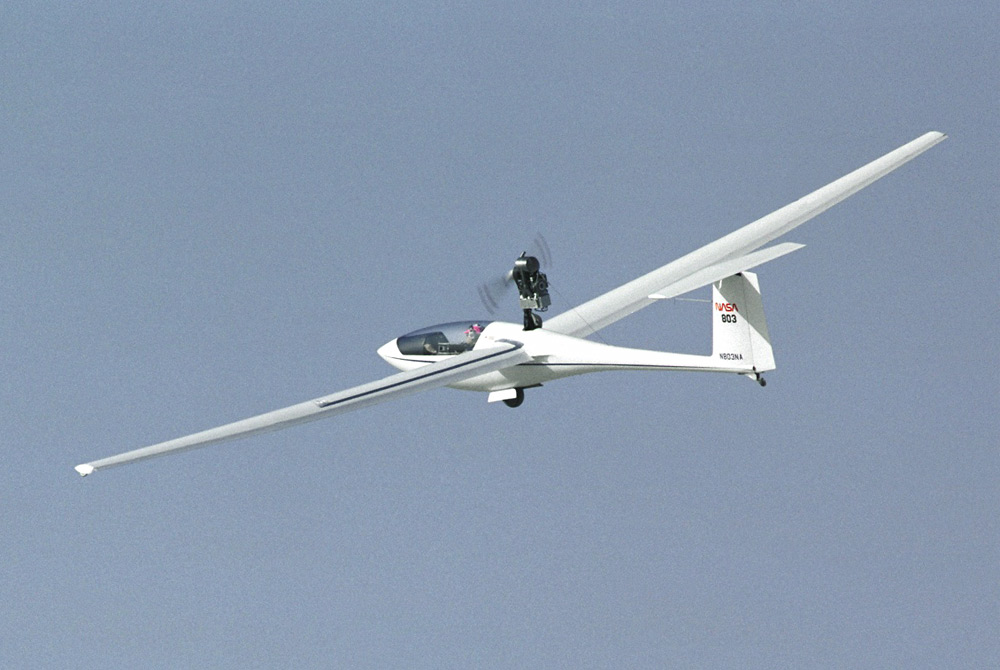
| Subject:
PIK-20E - N803NA - NASA #803 |
| Location: NASA
Dryden FRC - Edwards AFB, CA |
| Date: 9/12/1991 |
| Credit: NASA |
|
Notes: This
sailplane was used at Dryden from
1981 to 1991, as a research vehicle
on projects calling for high
lift-over-drag and slow-speed
performance.
|
|
|
|
|
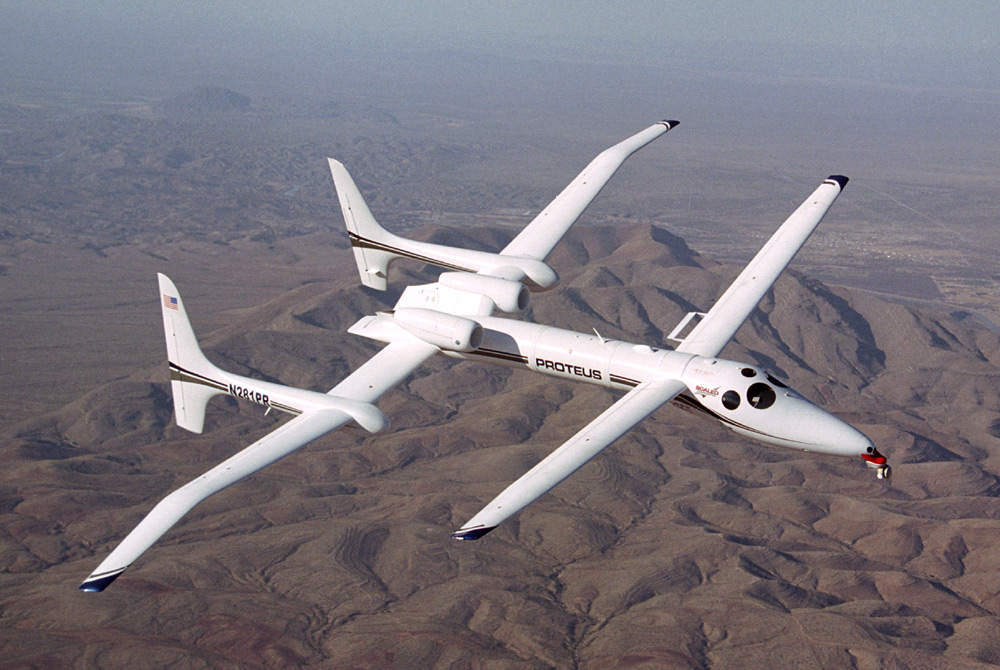
| Subject:
Proteus - Scaled Composites - N281PR |
| Location: NASA
Dryden FRC - Edwards AFB, CA |
| Date: 7/26/1999 |
| Credit: NASA |
|
Notes: NASA
Dryden assisted Scaled Composites in
developing a station-keeping
autopilot system, and satellite
communications uplink-downlink
system, for aircraft and payload
data, under NASA’s Environmental
Research Aircraft and Sensor
Technology (ERAST) project.
|
|
|
|
|
| Subject:
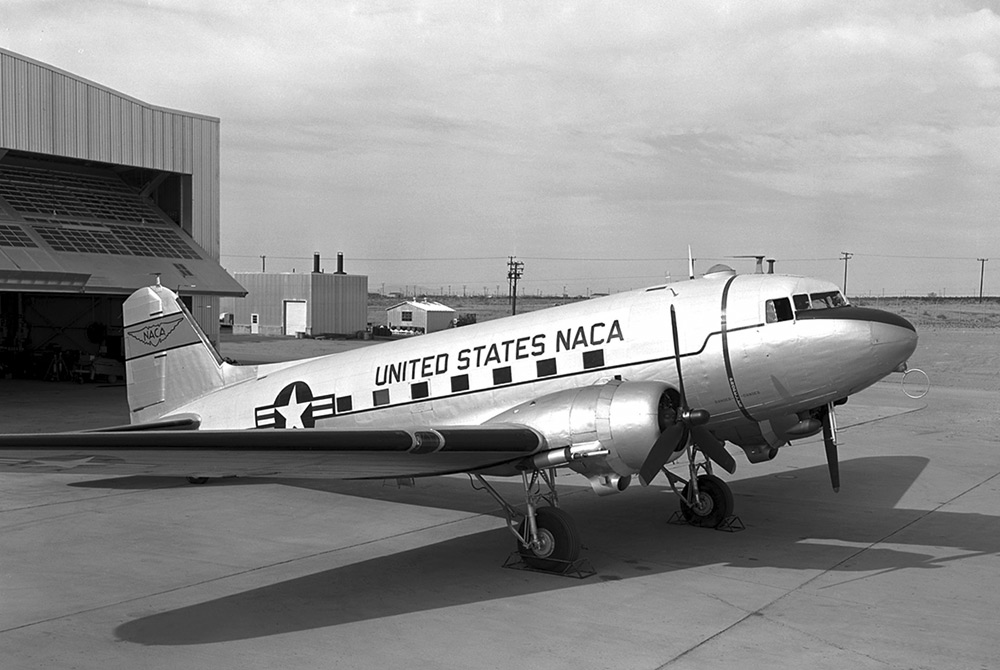
R4D - US Navy BuNo ? - NASA #? |
| Location: NASA
Dryden FRC - Edwards AFB, CA |
| Date: 5/2/1956 |
| Credit: NASA |
|
Notes: The Navy
version of the Douglas DC-3, was the
R4D Skytrain. Over 32 years, three
R4Ds were used at Dryden to shuttle
personnel and equipment between
NACA/NASA Centers and test
locations, throughout the country.
|
|
|
|
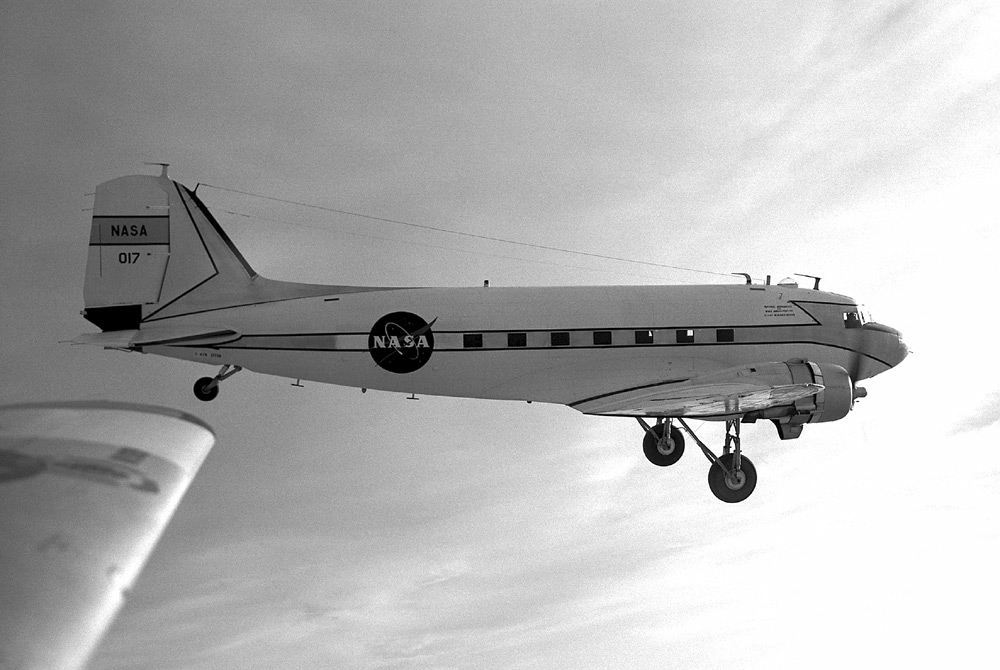
| Subject:
R4D - US Navy BuNo ? - NASA #017? |
| Location: NASA
Dryden FRC - Edwards AFB, CA |
| Date: 8/30/1963 |
| Credit: NASA |
|
Notes: This F4D
is seen in flight wearing the later
NASA scheme.
|
|
|
|
|
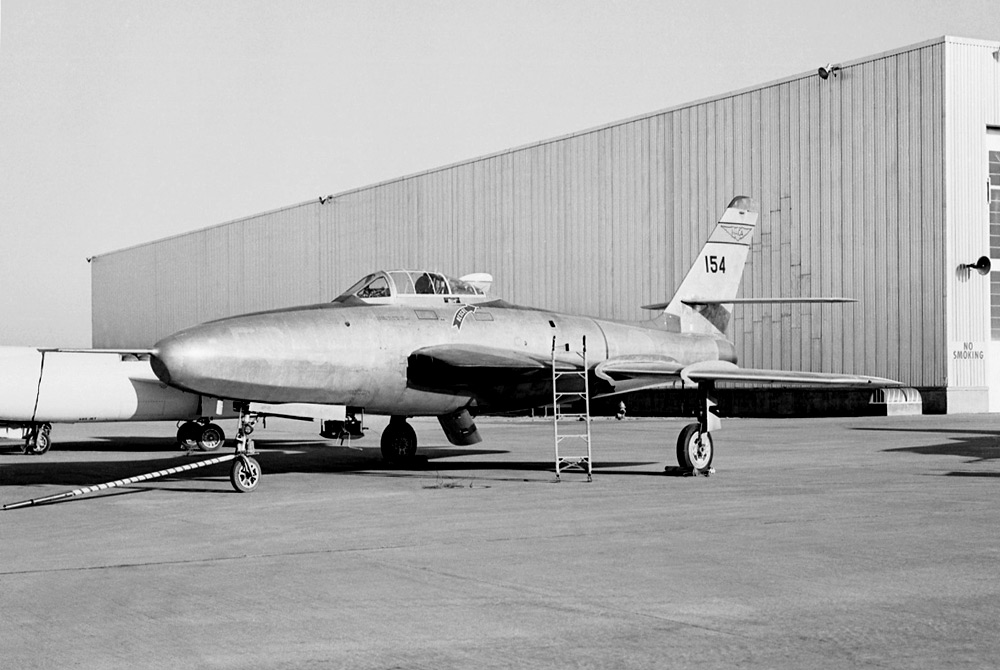
| Subject:
YRF-84F - US Air Force #51-1828 - NACA
#154 |
| Location: NASA
Dryden FRC - Edwards AFB, CA |
| Date: 1955 |
| Credit: NASA |
|
Notes: This
prototype photo reconnaissance
aircraft was delivered to Dryden on
4/27/1954. The aircraft performed
pitch-up research for the next two
years, gathering data on a common
problem with early swept-wing
aircraft.
|
|
|
|
|
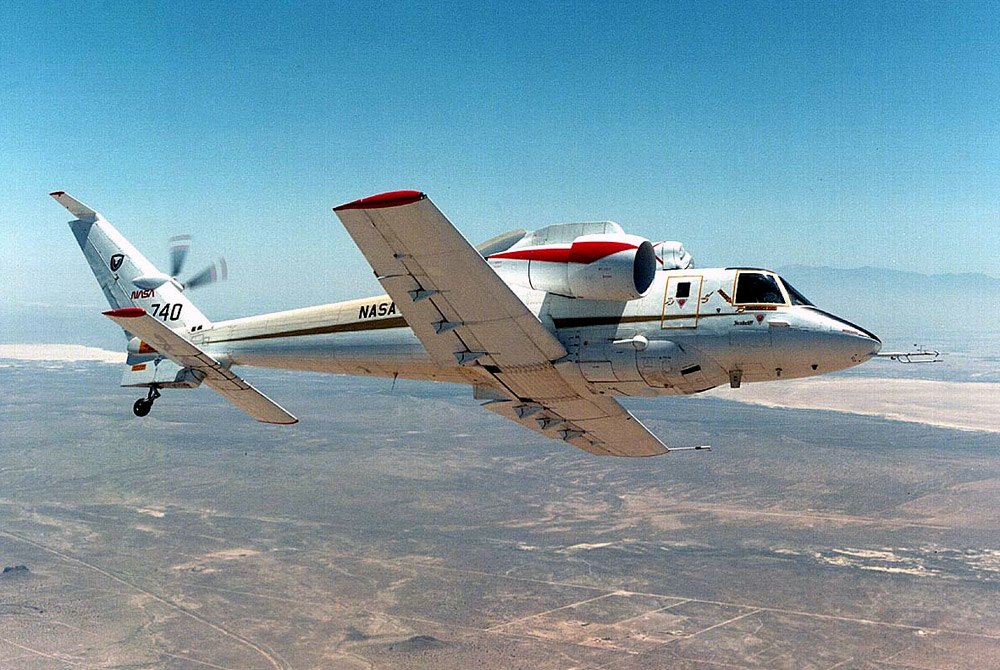
| Subject:
RSRA - Sikorsky - NASA #740 |
| Location: NASA
Dryden FRC - Edwards AFB, CA |
| Date: 6/19/1984 |
| Credit: NASA |
|
Notes: The Rotor
Systems Research Aircraft was a
joint NASA/Army project that began
in December of 1970, with the first
of two aircraft arriving from
Sikorsky on 2/11/1979. The aircraft
was designed to study the concept of
stopping a main rotor in flight, and
allowing conventional wings to
provide lift . The rotor is not
attached in this photo.
|
|
|
|
|
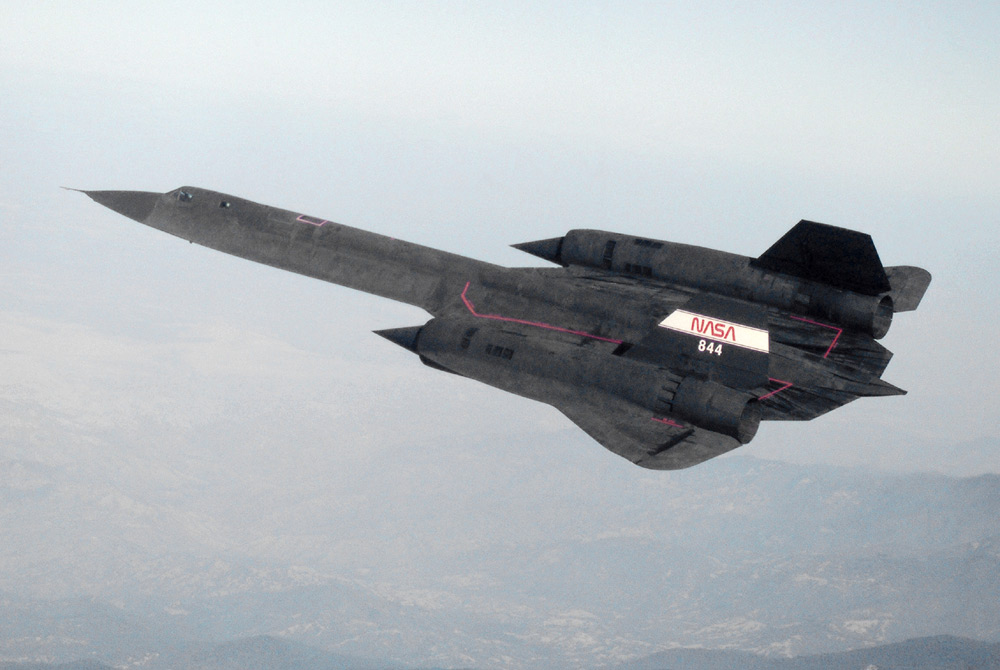
| Subject:
SR-71A - US Air Force #61-7980 - NASA
#844 |
| Location: NASA
Dryden FRC - Edwards AFB, CA |
| Date: 9/?/1992 |
| Credit: NASA |
|
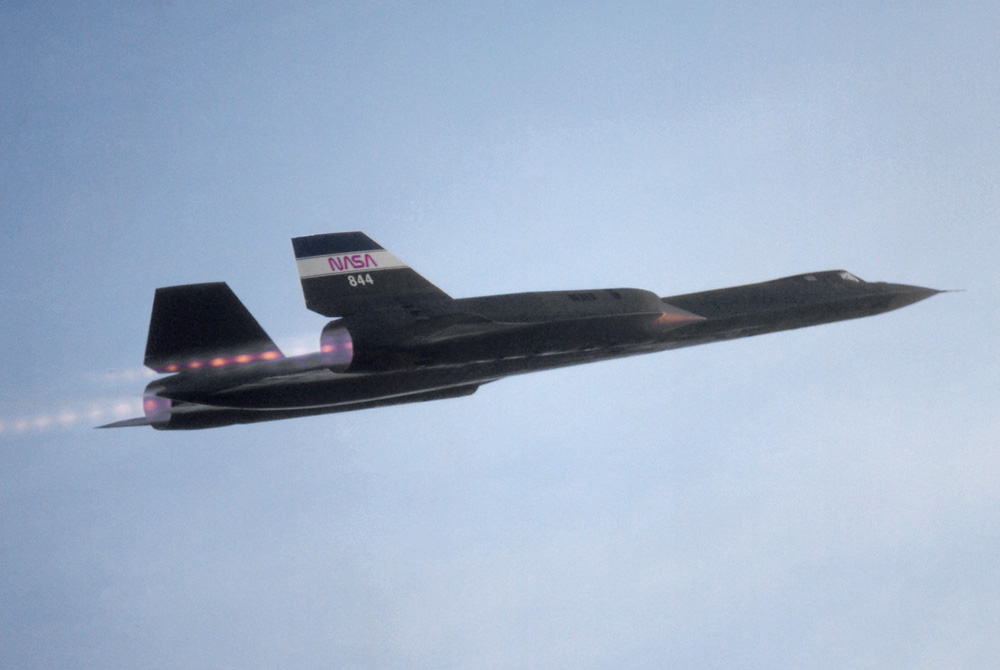
Notes: #844 made
the last known SR-71 flight from
Dryden on Saturday October 9, 1999,
at the Edwards AFB air show.
|
|
|
|
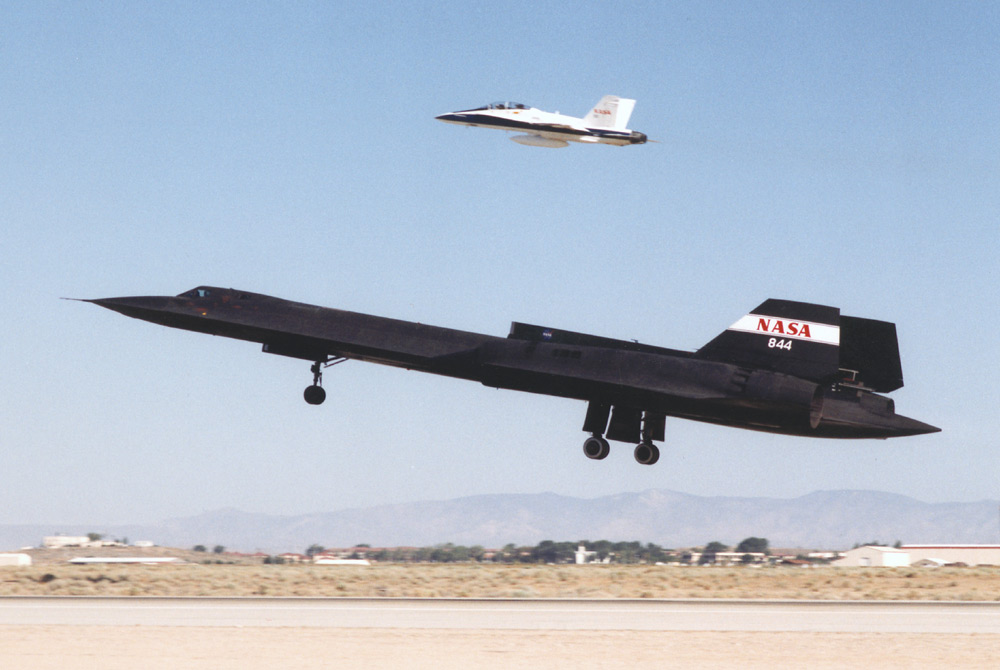
| Subject:
SR-71A - US Air Force #61-7980 - NASA
#844 |
| Location: NASA
Dryden FRC - Edwards AFB, CA |
| Date: 1999 |
| Credit: Tom Tschida
/ NASA |
|
Notes: #844 takes
off from Edwards with a NASA F/A-18B
as chase.
|
|
|
|
|
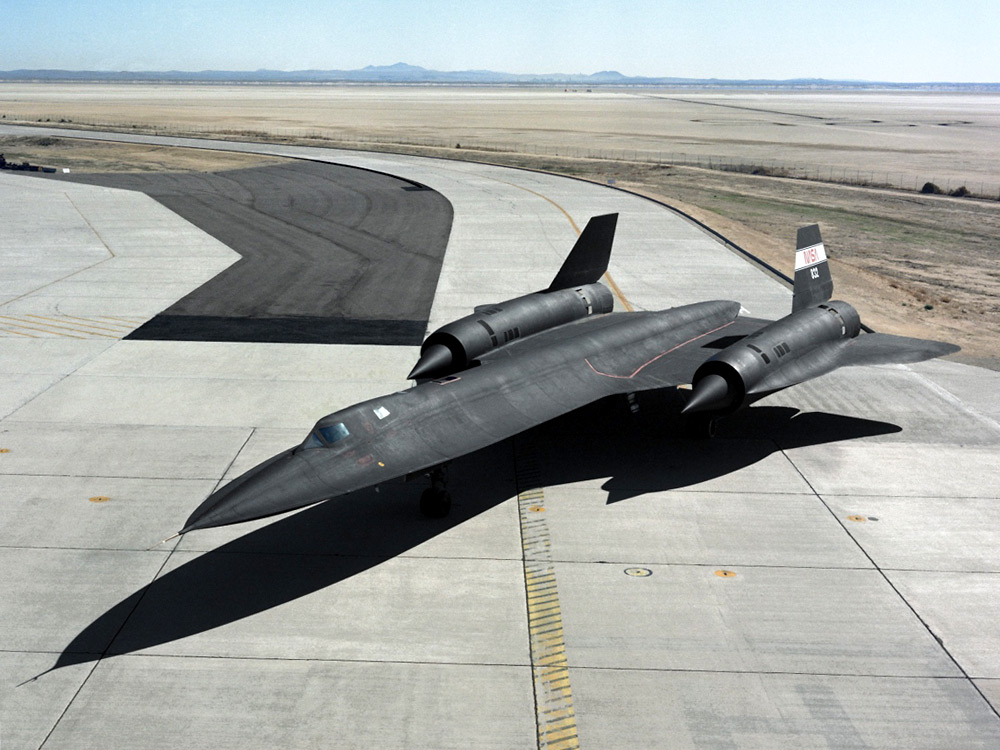
| Subject:
SR-71A - US Air Force #61-7971 - NASA
#832 |
| Location: NASA
Dryden FRC - Edwards AFB, CA |
| Date: 4/?/1994 |
| Credit: Tom Tschida
/ NASA |
|
Notes: #832 flew
at Dryden from 1990 through 1994.
This aircraft was returned to the
USAF and was the first aircraft
reactivated for USAF reconnaissance
in 1995. It was eventually returned
to Dryden along with SR-71A
#61-7967.
|
|
|
|
|
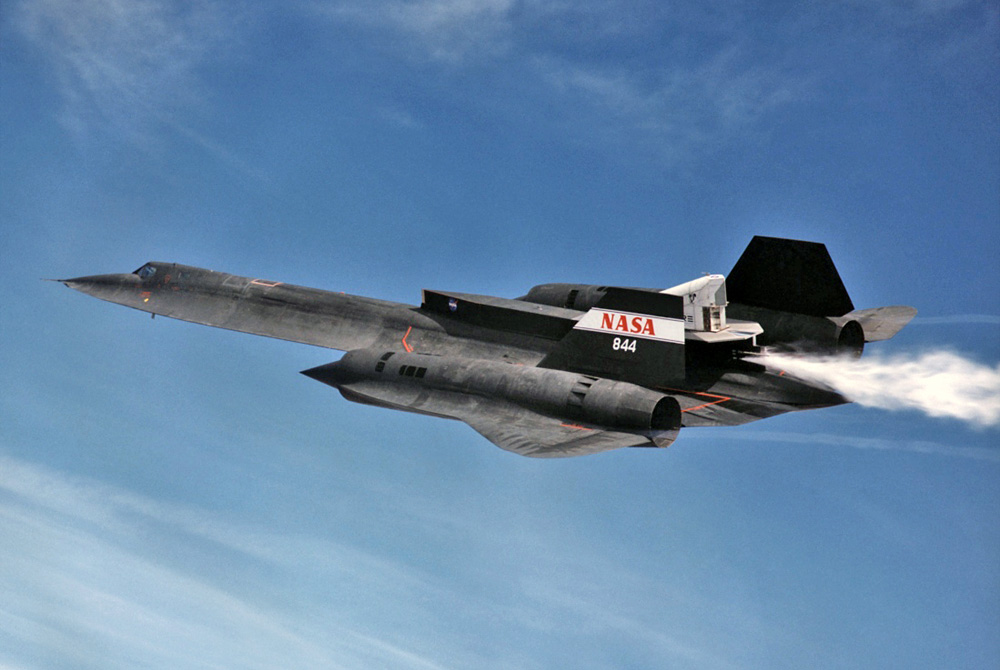
| Subject:
SR-71A - US Air Force #61-7980 - NASA
#844 |
| Location: NASA
Dryden FRC - Edwards AFB, CA |
| Date: 3/4/1998 |
| Credit: Carla
Thomas / NASA |
|
Notes: #844 is
seen making its first 'cold flow'
flight, as part of the combined
NASA/Rocketdyne/Lockheed, Linear
Aerospike SR-71 Experiment (LASRE).
|
|
|
|
| Subject:
SR-71A - US Air Force #61-7980 - NASA
#844 |
| Location: NASA
Dryden FRC - Edwards AFB, CA |
| Date: 8/?/1997 |
| Credit: Tony Landis
/ NASA |
|
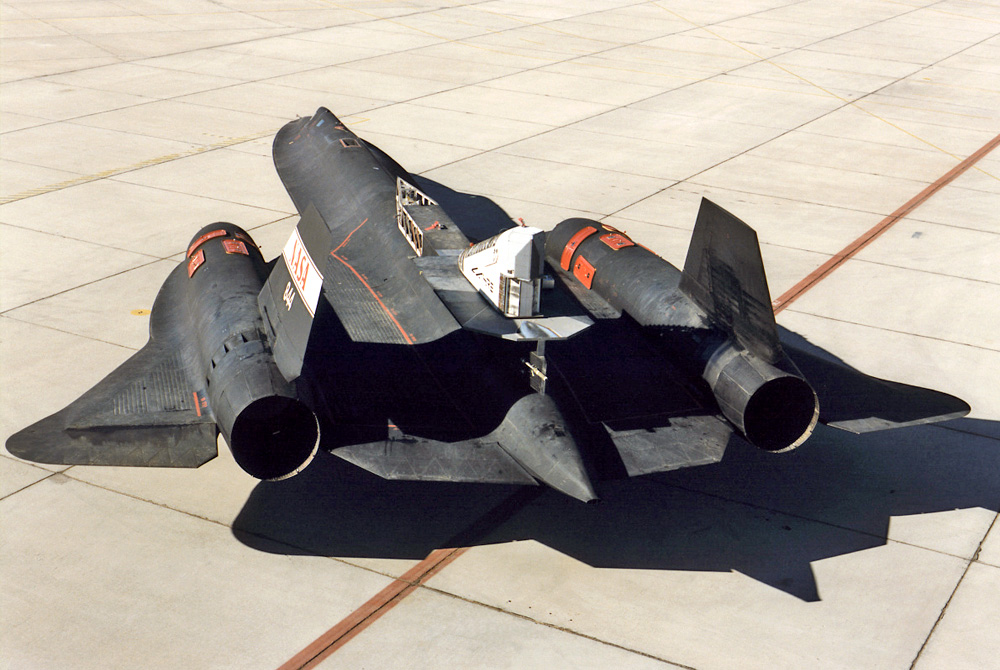
Notes: In this
photo, the LASRE pod can be seen
mounted on the rear of the aircraft.
|
|
|
|
|
| Subject:
SR-71A - US Air Force #61-7980 - NASA
#844 |
| Location: NASA
Dryden FRC - Edwards AFB, CA |
| Date: ?/?/1994 |
| Credit: NASA |
|
Notes: #844 takes
off from Edwards with an ultraviolet
video camera mounted in the nose.
The camera was aimed skyward to
capture images of stars, asteroids
and comets. The science portion of
this ultraviolet experiment flight,
was a project for the Jet Propulsion
Laboratory.
|
|
|
|
|
| Subject:
F-5E (SSBD) - US Air Force #74-1519 -
NASA # None |
| Location: Edwards
AFB Range, CA |
| Date: 8/2/2003 |
| Credit: Carla
Thomas / NASA |
|
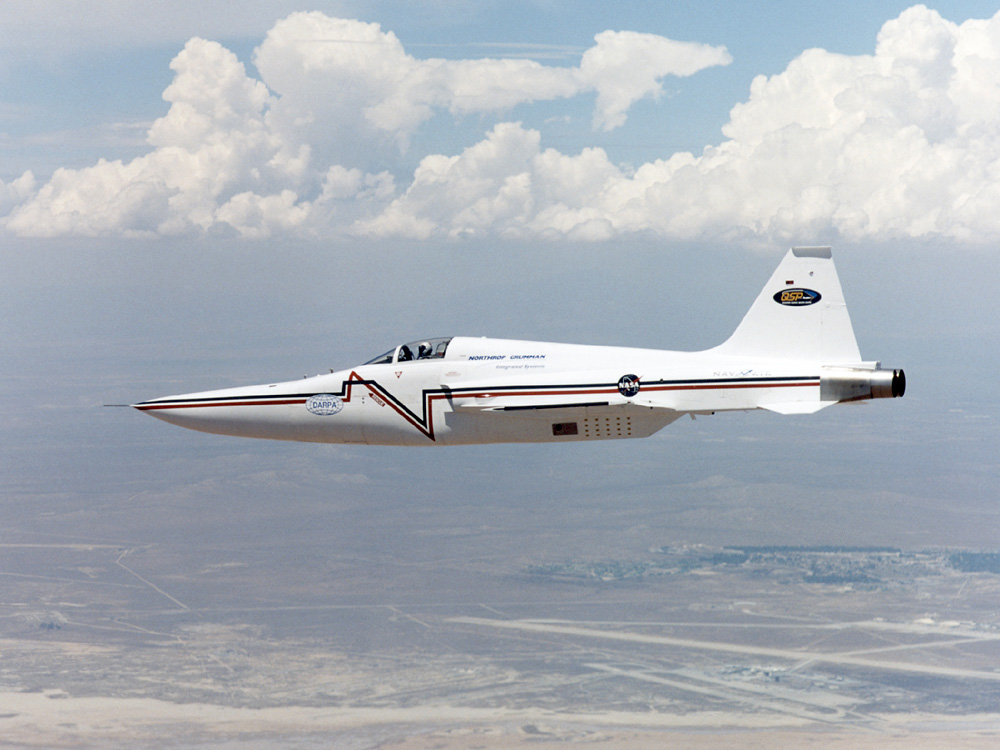
Notes: This
modified F-5E was used in the Shaped
Sonic Boom Demonstration (SSBD)
project, which was part of the
DARPA's QSP program, and a combined
effort between DARPA, NASA, Northrop
Grumman and NavAir.
|
|
|
|
| Subject:
F-5E (SSBD) - US Air Force #74-1519 -
NASA # None |
| Location: Palmdale
AP/AF Plant #42, CA |
| Date: 8/2/2003 |
| Credit: Carla
Thomas / NASA |
|
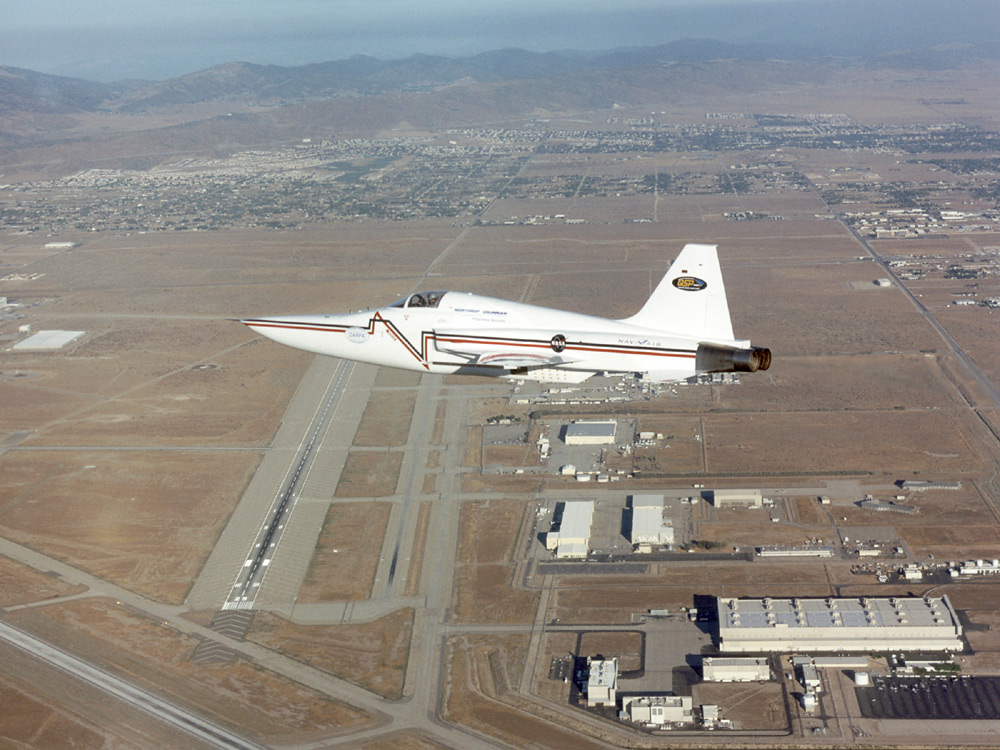
Notes: Extensive
modifications were done to the
aircraft's skin at Northrop
Grumman's Palmdale plant, to try and
decrease the sonic boom at
supersonic speeds.
|
|
|
|
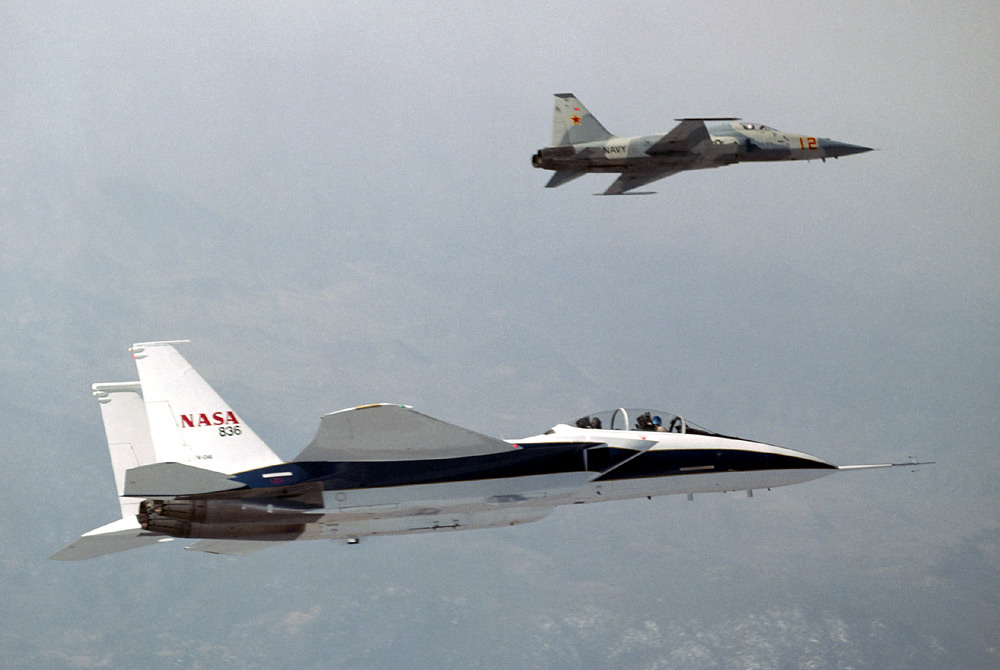
| Subject:
F-15B - NASA #836 & F-5E - VFC-13
Side #12 BuNo 741556 |
| Location: NASA
Dryden FRC - Edwards AFB, CA |
| Date: 2/13/2002 |
| Credit: Jim Ross /
NASA |
|
Notes: During
test flights, the SSBD and a
standard F-5E were flown along the
same route. Each sonic boom was then
measured both on the ground and in
the air, and the data was then
compared. NASA aircraft like F-15B
#836 also flew support during the
tests.
|
|
|
|
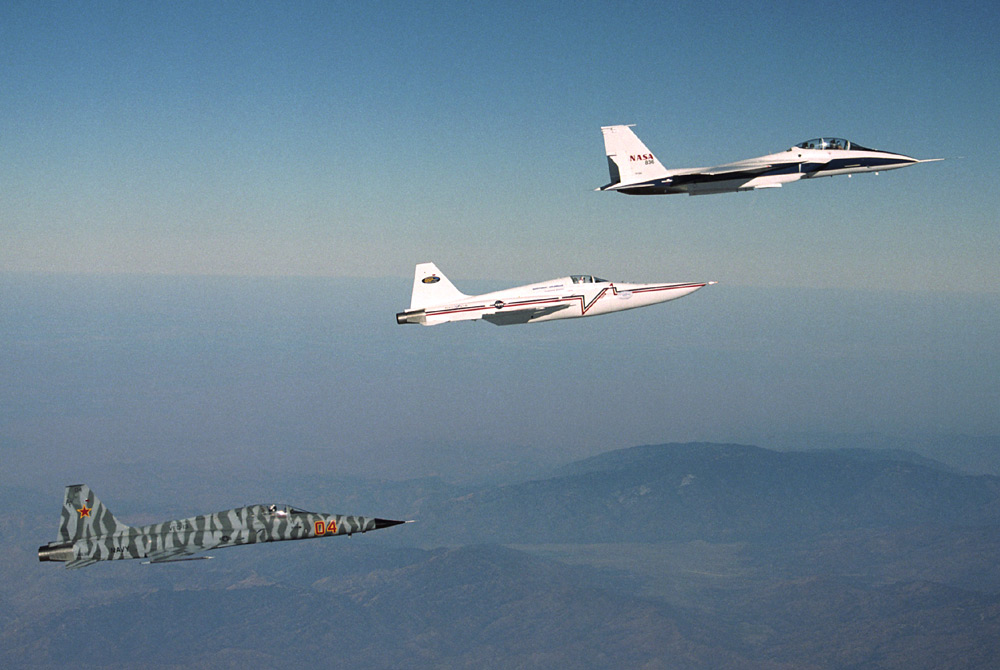
| Subject:
F-15B - NASA #836, SSBD, & F-5E -
VFC-13 Side #4 BuNo 741536 |
| Location: NASA
Dryden FRC - Edwards AFB, CA |
| Date: 8/25/2003 |
| Credit: Carla
Thomas / NASA |
|
Notes: NASA #836,
the SSBD, and the baseline F-5E are
seen in formation on one of the test
flights. VFC-13 at Fallon provided
the baseline F-5Es.
|
|
|
|
|
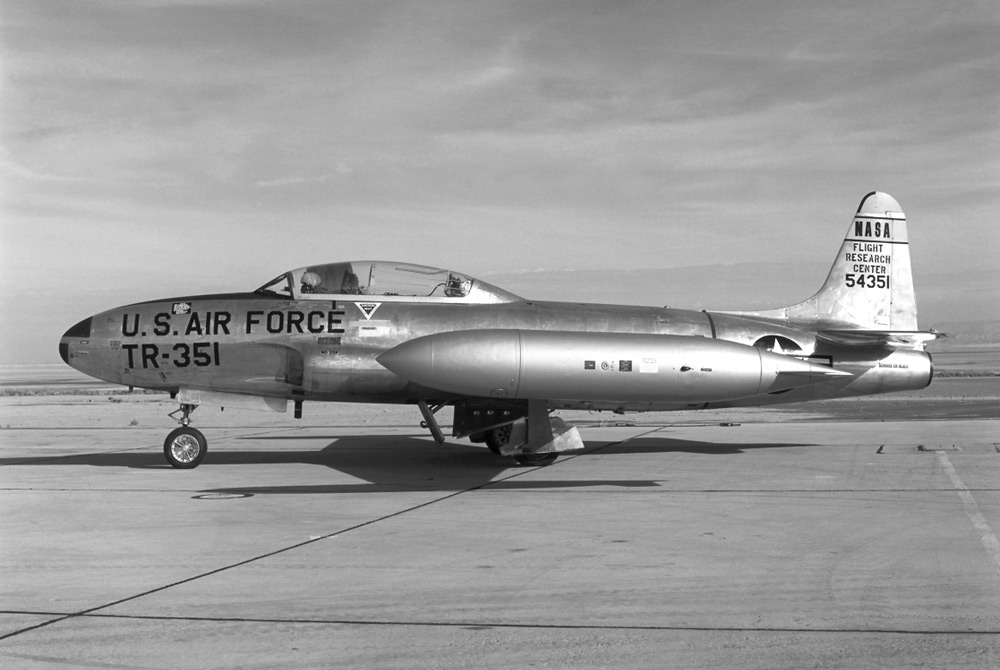
| Subject:
T-33A - US Air Force #55-4351 - NASA
#815 |
| Location: NASA
Dryden FRC - Edwards AFB, CA |
| Date: 12/8/1965 |
| Credit: NASA |
|
Notes: This
aircraft was one of four T-33A jet
trainers which NASA Dryden used from
1958 to 1973. This particular ship
arrived 1/9/1963 and departed
9/10/1973. Note the "Flight Research
Center" on the tail.
|
|
|
|
|
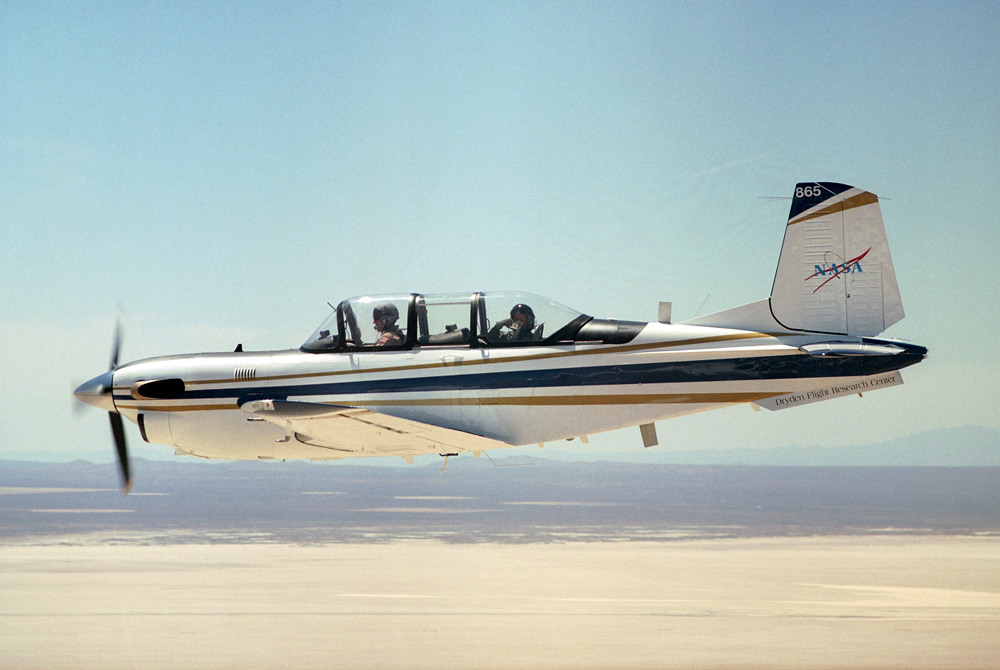
| Subject:
T-34C - US Navy BuNo 160266 - NASA
#865 |
| Location: NASA
Dryden FRC - Edwards AFB, CA |
| Date: 6/20/2005 |
| Credit: Jim Ross /
NASA |
|
Notes: This T-34C
is used at Dryden for basic mission
support and pilot proficiency. Note
the "Dryden Flight Research Center"
on the lower vertical. This aircraft
was originally with VX-20 in 2004,
and then listed as an NT-34C.
|
|
|
|
|
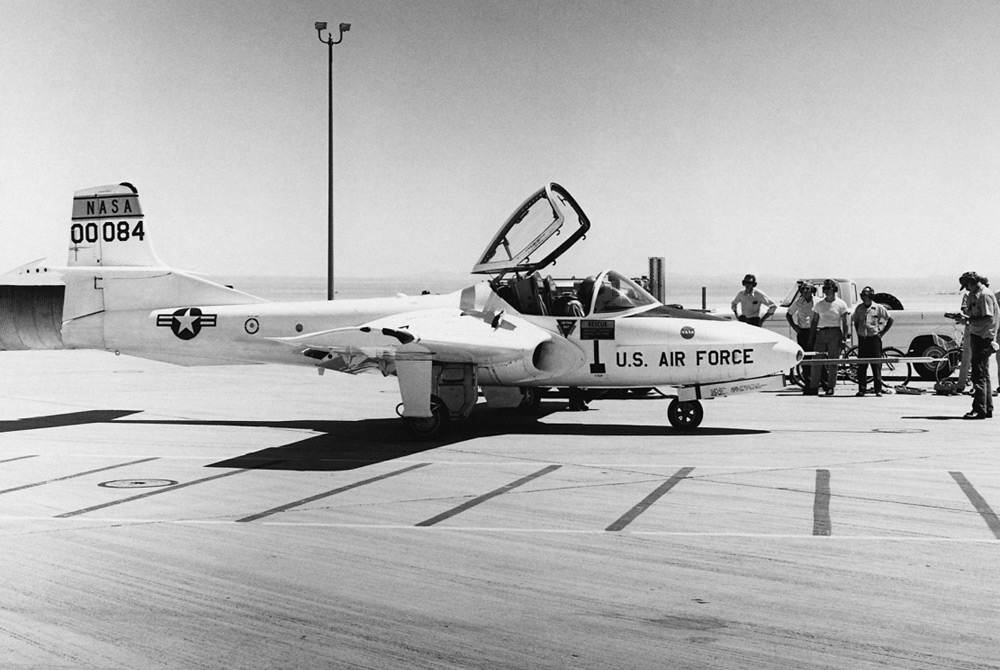
| Subject:
T-37B - US Air Force #60-0084 - NASA
#? |
| Location: NASA
Dryden FRC - Edwards AFB, CA |
| Date: ?/?/1974 |
| Credit: NASA |
|
Notes: This T-37
was used as a support aircraft, and
also acted as a probe aircraft in
wake vortices studies.
Unfortunately, NASA test pilot
Richard E. Gray was fatally injured
in this aircraft when it crashed, on
11/8/1982.
|
|
|
|
|
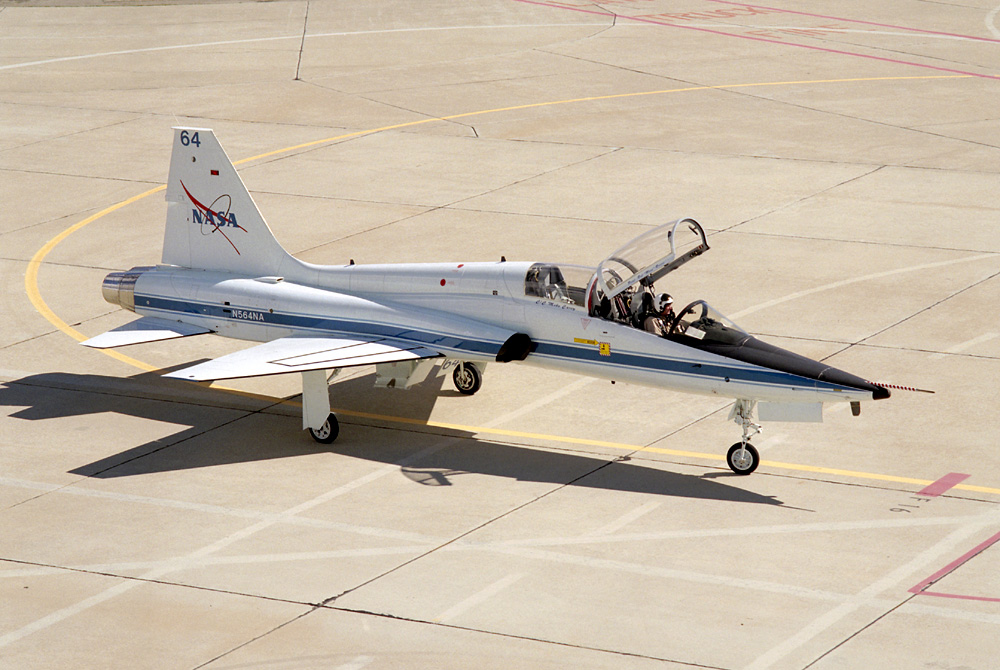
| Subject:
T-38B - US Air Force #68-8113 - NASA
#864 |
| Location: NASA
Dryden FRC - Edwards AFB, CA |
| Date: 2/24/2005 |
| Credit: Tony Landis
/ NASA |
|
Notes: NASA test
pilot Gordon Fullerton taxies the
new addition to the Dryden fleet
onto the ramp. T-38s had been absent
from Dryden for a number of years.
The N number indicates this aircraft
may have come from NASA Langley.
|
|
|
|
|
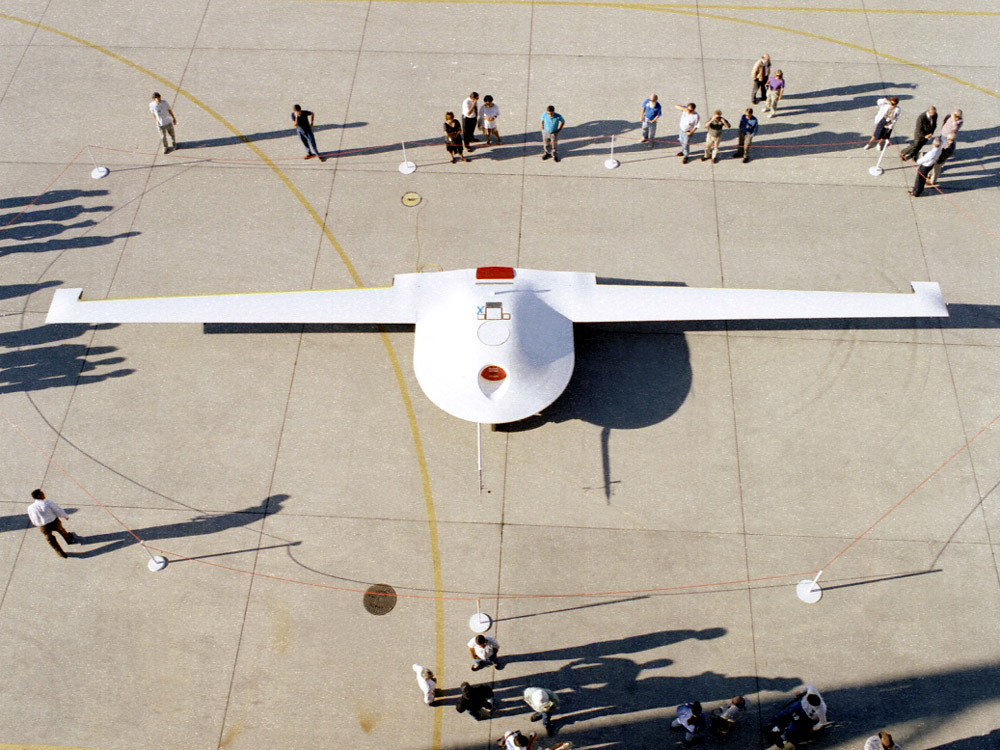
| Subject:
Tier III- (Minus) DarkStar - Lockheed
Martin/Boeing - Article #695 |
| Location: NASA
Dryden FRC - Edwards AFB, CA |
| Date: 9/14/1995 |
| Credit: Tony Landis
/ NASA |
|
Notes: The
DarkStar UAV was a demonstrator
designed to fly above 45,000 feet at
subsonic speeds. This aircraft
arrived at Dryden 9/14/1995, and
made its first flight on 3/29/1996.
On its second flight, it crashed on
4/22/1996.
|
|
|
|
|
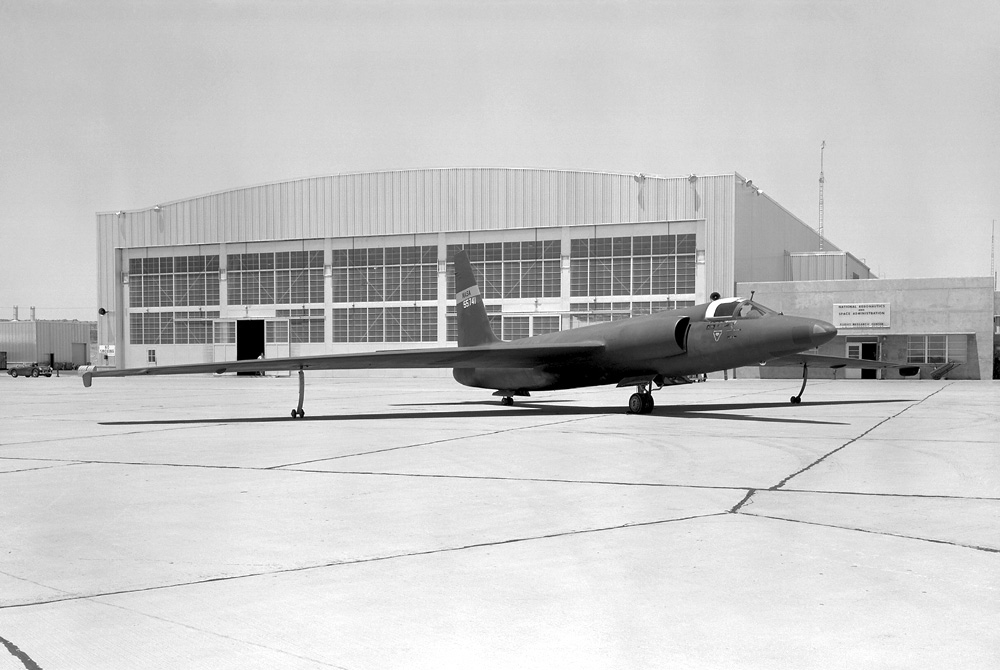
| Subject:
U-2A - US Air Force #56-6711 - NASA
#55-0741 (Fake) |
| Location: NASA
Dryden FRC - Edwards AFB, CA |
| Date: 5/6/1960 |
| Credit: NASA |
|
Notes: When
Francis Gary Powers was shot down
over the Soviet Union during a CIA
spy flight, NASA issued a press
release inferring it had been their
U-2 conducting weather research that
had strayed off course. The U-2A in
this photo was quickly painted with
fake serial number and NASA
markings, and then parked on the
NASA ramp, in hopes of bolstering
the story. This ship was never flown
by NASA.
|
|
|
|