










|
Prototype YC-17A 'T-1' Reaches
1,000 Flight Milestone
|
|
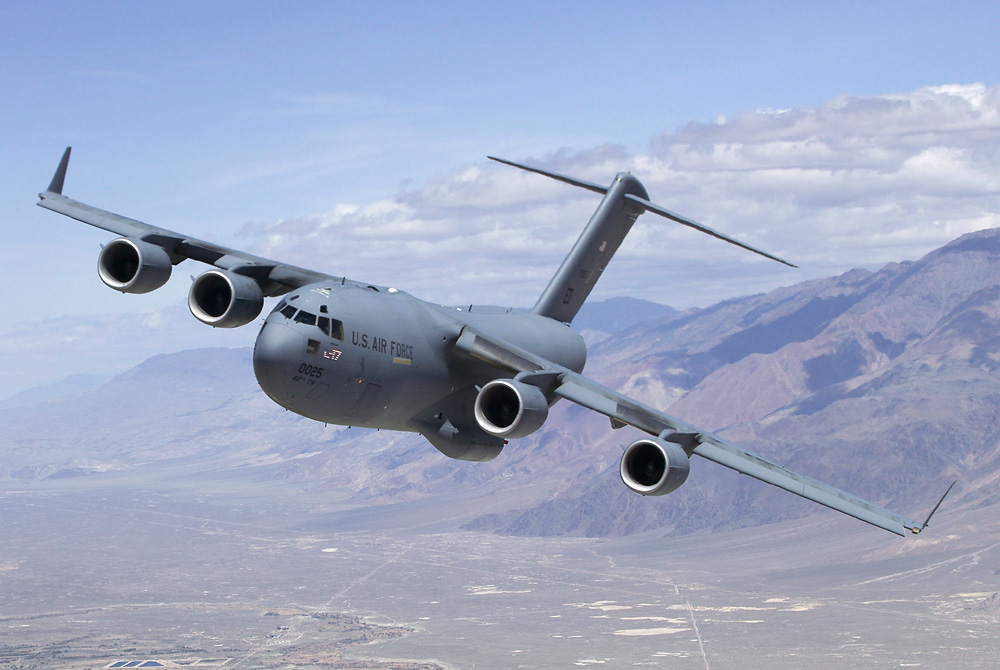
3/20/2008 - EDWARDS AIR FORCE BASE, CA -- Edwards own T-1, The Air Force's first test aircraft for the C-17 Globemaster III, reached a milestone when it was flown for its 1,000th flight here March 10. T-1, produced in 1991, is the first test aircraft to conduct developmental and experimental flight tests. "The C-17 is a dedicated test vehicle that was produced originally for the developmental testing program," said Lt. Col. Robert Poremski, 412th Test Support Squadron director of projects. "After 15 years of service and its 1,000th flight, this aircraft is still a vital piece to the C-17 test program." During the 1,000th flight, the T-1 conducted tests on a hybrid air delivery system, which is a developmental test of a new rigging system for Army air delivery parachutes. Over the past 15 years, the T-1 has been used for avionic flight test, basic flight envelope expansions and a wide variety of tests. "I would have to say that T-1's first flight was the most important flight its ever had," said Gary Briscoe, Boeing loadmaster. "It helped us use T-1 as a test bed for all types of air drop tests and improvements in avionics over the years." In 2007, T-1 was also used for the alternative fuel testing of the C-17 using Fischer-Tropsch synthetic fuel blend. Since T-1 is a developmental test aircraft, the C-17 was built with several unique configurations, said Chris Webber, 418th Flight Test Squadron air drop test engineer. "It has the original design of the C-17 built into it, but it has certain features specific to flight test like an emergency crew escape slide if they would have needed it during its first flight," Mr. Webber said. Over its history, T-l has accumulated 4,623 flight hours including the hour for the 1,000th mission, Colonel Poremski said. Although the aircraft is the first C-17 ever built, it is still the most current and up-to-date aircraft. "T-1 has undergone several upgrades, modifications, and software and hardware changes to make it the tremendous airlifter it is today," Colonel Poremski said. "This C-17 is currently in block 17, which is the most up-to-date aircraft as if it were coming right off the production line." As for the future of T-1, Mr. Webber said the aircraft plans to support NASA Dryden Flight Research Center's parachute tests for the next generation of spacecraft. Source: USAF Edwards AFB Press Release by Airman Senior Airman Stacy Sanchez |
|
|
All original content Copyright © 2006 - 2008 The North Spin