










|
NASA Rededicates Flying
Observatory on Lindbergh Anniversary
|
|
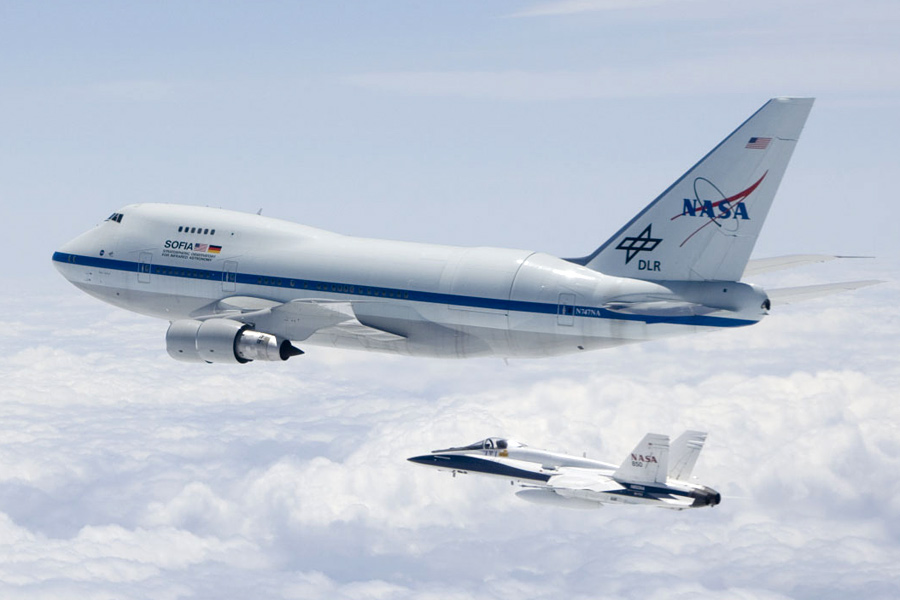
5/21/2007 - WACO, Texas – NASA dedicated a unique astronomy aircraft Monday to pioneering aviator Charles Lindbergh on the 80th anniversary of his historic transatlantic flight. Erik Lindbergh, the pilot's grandson, joined NASA for the event May 21, in Waco, Texas. NASA's new Stratospheric Observatory for Infrared Astronomy (SOFIA) is a highly modified 747 airliner that carries a 45,000-pound infrared telescope system. Pan American Airways originally christened the plane the "Clipper Lindbergh" in 1977. At the rededication ceremony, NASA officials discussed the similarities between Lindbergh's accomplishments and SOFIA's potential to capture scientifically important infrared images unavailable to earthbound telescopes. The SOFIA aircraft was modified at L-3 Systems in Waco and is wrapping up a series of functional checkout flights before heading to NASA's Dryden Flight Research Center, Edwards Air Force Base, Calif., for further tests and systems integration. Erik Lindbergh unveiled a plaque commemorating Clipper Lindbergh. "This project is a fantastic blend of a 20th century legacy aircraft and a 21st century platform for exploration," he said. Intended to fly above 40,000 feet, SOFIA will place its infrared telescope above nearly 99 percent of the Earth's atmospheric water vapor, greatly enhancing its abilities to study the cosmos. Its state-of-the-art telescope will be able to carry out scientific missions with greater flexibility and ease of upgrade than a satellite-borne observatory. NASA's partner in SOFIA is the German Aerospace Center, which provided the telescope. NASA modified the aircraft. A 16-foot-high opening has been cut into the aft fuselage to permit observations to be made at altitude. Once it arrives at Dryden, SOFIA will continue flight and systems testing for about two years while its observatory system hardware and software are integrated with the aircraft. The telescope's first images are expected in 2009. Source: NASA Dryden Press Release |
|
|
All original content Copyright © 2006 - 2008 The North Spin